eBookMarket Library
Fetching digital archives...
Fetching digital archives...
Explore our hand-picked series, organized by literary movement and thematic resonance. Every collection is a journey.

In the heart of every home, there exists a silent yearning—a longing for spaces that radiate peace, clarity, and purpose. Whether you dwell in a sprawling suburban house, a compact city apartment, or anything in between, the universal need for organization transcends square footage, architectural style, or personal taste. It is less about strict minimalism or the pursuit of perfection, and more about creating a living environment that supports your life, reflects your values, and empowers your daily choices. This book, "The Fresh Steps of Home Organization," is an invitation not only to declutter your physical surroundings but also to reinvigorate your relationship with your living space. Why Home Organization Matters Home organization is more than a trend fueled by glossy magazines or viral videos showing miraculous transformations. At its core, it is an act of self-care and intentional living. Our homes are the backdrop to our most intimate moments and the crucible where our habits, relationships, and aspirations take shape. When clutter accumulates and chaos creeps in, it subtly erodes our focus, productivity, and even our emotional well-being. Scientific research has shown a strong correlation between a tidy, organized space and reduced stress levels, improved sleep, and heightened creativity. Think of the last time you walked into a freshly cleaned room—the sense of calm, the easy breathing, and the urge to tackle the next project. Organization provides a psychological anchor, a feeling of control in a world that often feels unpredictable. Dispelling Myths and Setting Intentions Before diving into the practical steps, it is crucial to dispel common myths about organization. Many believe it is a one-time event, a marathon weekend of sorting and discarding, after which life resumes as usual. In reality, home organization is a dynamic, evolving process. It adapts to life's milestones: marriages, births, career changes, moves, and losses. Another misconception is that organization equates to rigid minimalism. While minimalism can be liberating for some, the goal of this book is not to strip your home of personality or comfort. Rather, it is to help you curate a space where every item serves a purpose, tells a story, or brings joy. Organization is not about deprivation—it is about selection. In these pages, you will find a philosophy grounded in flexibility, self-awareness, and sustainability. The methods are not meant to impose a universal standard but to empower you to craft a home that works for your unique needs and aspirations. The Psychological and Emotional Aspects The process of organizing a home is as much about the mind as it is about the material. Our possessions often carry emotional weight: a chipped mug from college, a faded T-shirt from a memorable concert, a box of letters from a relative now gone. Letting go can provoke anxiety, guilt, or nostalgia. Conversely, holding on to too much can create stagnation and overwhelm. This book will guide you through the emotional terrain of organization, offering gentle prompts and reflective exercises to help you identify what truly matters. The aim is to build a home that honors your past while making room for your future. Tip: As you embark on this journey, remember that organization is not about achieving a magazine-worthy showcase. It is about creating a home that feels right for you—a sanctuary that nurtures your best self. What You Will Find in This Book "The Fresh Steps of Home Organization" is structured to accompany you through every phase of the organizational process, from the initial assessment to long-term maintenance. Each chapter delves into a specific aspect of home organization, providing: Foundational principles to help you reframe your mindset about your space and your possessions. Room-by-room strategies tailored to the unique challenges and opportunities of each part of your home, from entryways to attics. Hands-on techniques for sorting, storing, and maintaining order, including best practices for decluttering, categorizing, and labeling. Realistic case studies drawn from a diverse range of households, illustrating common pitfalls and creative solutions. Psychological insights into the emotional barriers to organization and how to overcome them with self-compassion. Sustainable practices for organizing in an eco-conscious way, including recycling, upcycling, and mindful consumption. Guided exercises and action plans at the end of each chapter to reinforce learning and motivate progress. Organization as a Lifestyle, Not a Chore One of the central themes woven throughout this book is the idea that organization is not a singular task to be checked off a list, but a lifestyle—a set of habits, rituals, and mindsets that evolve with you. The most successful organizational systems are those that are living, able to grow and shift with the rhythms of your life. You will learn how to: Establish routines that maintain order with minimal daily effort. Involve family members or housemates in the process, fostering a shared sense of responsibility. Designate spaces for incoming and outgoing items, reducing the "pile-up" that can quickly spiral out of control. Use organization as a means of expressing creativity and personality, making your home uniquely yours. The Ripple Effect: Beyond the Four Walls While the primary focus is on your physical space, the principles of home organization often spill over into other aspects of life. Readers frequently report that as their homes become more orderly, their minds feel clearer, their schedules less chaotic, and their relationships more harmonious. The skills you will develop—decision-making, prioritization, letting go—are invaluable in navigating the complexities of modern life. Reminder: Organization is not about impressing others. It is about investing in yourself and those you love, creating a foundation for growth, connection, and joy. Your Journey Begins Here Transformation does not happen overnight. There will be moments when progress feels slow or setbacks occur. You may encounter resistance from within or from others who share your home. This is natural and expected. What matters is persistence, patience, and a willingness to adapt. As you turn the page to Chapter 1, take a moment to set your intention. What do you hope to gain from this process? What does an organized home mean to you? Write it down, make it vivid, and revisit it whenever motivation wanes. In the chapters ahead, you will find not only practical guidance but also encouragement, inspiration, and the reassurance that you are not alone in this journey. Every step you take, however small, is a fresh step toward a home—and a life—filled with clarity, purpose, and peace. Action Step: Before proceeding, walk through your home with a notebook. Jot down your first impressions of each room—what feels good, what feels overwhelming, and what you wish could change. This simple exercise will serve as your personal map as we embark on the fresh steps of home organization together. Welcome to your journey. Let us begin.
Victoria Danielle Glover
$1.00

The Dawn of Renewal Fresh starts are a universal phenomenon. Whether prompted by external forces or internal urgings, they represent the moments in life when we step away from what was and step toward what could be. The prospect of a new beginning stirs hope, excitement, and perhaps a touch of anxiety. The truth is that fresh starts are not exclusive to any one group of people—they are woven into the fabric of human experience, arising in the aftermath of loss, at the edge of opportunity, or at the crossroads of personal transformation. This book, The Fresh Steps of Fresh Starts, is a journey into the anatomy of new beginnings—how to recognize them, harness their energy, and transform them into lasting change. Whether you are facing a major life shift, seeking to reinvent yourself professionally, or yearning for a more meaningful existence, this guide will serve as a practical and philosophical companion on your path. The Myth and Reality of Fresh Starts There is a widespread myth that a fresh start is a dramatic event—a complete erasure of the past, a clean slate upon which to write an entirely new story. In reality, fresh starts are often subtler and more complex. They can be as quiet as a decision made in the privacy of your thoughts or as momentous as moving to a new country. Sometimes, they arrive as a gentle nudge; other times, they thunder in as upheavals that leave us breathless. The idea of starting over carries both promise and peril. Promise, because the opportunity to begin anew is full of potential and growth. Peril, because letting go of the familiar—even when it no longer serves us—can be terrifying. The challenge, then, is to navigate this duality with courage and wisdom. Why Fresh Starts Matter Why do we crave fresh starts? At their core, they are expressions of our innate desire for growth, renewal, and meaning. We long to shed the weight of old regrets, to outgrow self-imposed limitations, and to find a deeper sense of purpose. Each fresh start is a testament to our resilience and our refusal to be defined solely by our past. Research in psychology, neuroscience, and behavioral science underscores the power of new beginnings. The so-called “fresh start effect” describes the psychological phenomenon wherein people are more likely to initiate positive changes at temporal landmarks—such as the start of a new week, month, year, or life phase. These moments create a mental separation between our “old” selves and the selves we aspire to become. But the journey is rarely linear. Progress is often punctuated by setbacks and self-doubt. What distinguishes those who thrive from those who falter is not the absence of obstacles, but the ability to persist, adapt, and learn. The Anatomy of a Fresh Start What does it take to embark on a fresh start? The process might look different for each person, but certain elements are universal: Recognition: Awareness of the need for change, often sparked by dissatisfaction or longing. Release: Letting go of what no longer serves you—habits, beliefs, relationships, or environments. Reorientation: Defining what you want to move toward, even if the path is unclear. Action: Taking concrete steps, however small, in the direction of your new beginning. Resilience: Bouncing back from setbacks and learning from failure. Reinforcement: Cultivating habits and environments that support ongoing growth. Throughout this book, each chapter will delve deeply into these elements, providing tools, stories, and exercises to help you transform intention into reality. Common Catalysts for New Beginnings The triggers for fresh starts are as diverse as the human experience itself. Some of the most common include: Career transitions: Changing jobs, starting a business, or pursuing a new field. Relationships: Ending or beginning romantic partnerships, friendships, or familial roles. Geographical moves: Relocating to a new city, country, or community. Personal loss: Grieving the death of a loved one, divorce, or other significant changes. Health crises: Facing illness, injury, or recovery. Spiritual awakenings: Reevaluating beliefs, values, or life purpose. Major milestones: Graduations, retirements, or “milestone” birthdays. No matter the catalyst, the underlying challenge remains: how do we navigate the uncertainty and harness the opportunities of a new chapter? The Emotional Terrain Fresh starts are not just logistical—they are deeply emotional. The journey is often marked by a tumultuous blend of hope, fear, grief, relief, and excitement. It is normal to feel ambivalent or even conflicted about leaving the familiar behind. You may grieve what is lost, even as you reach for what is possible. One of the most insidious obstacles is self-doubt—the nagging voice that asks, “Who am I to try something new?” or “What if I fail?” Recognizing and addressing these internal barriers is essential for any authentic new beginning. Tip: Remember, the emotions that accompany a fresh start are not a sign of weakness; they are a sign that you are alive, invested, and growing. Lessons from the Field Over the past two decades, I have had the privilege of working with individuals and organizations in the throes of transformation. I have witnessed people rebound from devastating losses, reinvent their careers in midlife, and carve out new identities after years of stagnation. Their stories, woven throughout this book, are a testament to the indomitability of the human spirit. One thing is clear: There is no single formula for a successful fresh start, but there are patterns, principles, and practices that increase the likelihood of lasting change. These include setting clear intentions, cultivating self-compassion, seeking support, and maintaining a sense of curiosity. The Core Themes of This Book This book is organized around several core themes, each explored in depth in the chapters ahead: The Power of Perspective: How mindset shapes the possibilities of a new beginning. Letting Go: The art and science of releasing what no longer serves you. Intentional Action: Turning vision into reality through purposeful steps. Building Resilience: Strategies to weather setbacks and persist through challenges. Community and Connection: The role of relationships in supporting lasting change. Each chapter will combine research, real-world stories, and practical exercises to help you internalize and apply the principles of effective fresh starts. How to Use This Book This is not a book to be read passively. It is an interactive guide, designed to be revisited as you move through various phases of your journey. Each chapter concludes with exercises, reflection prompts, or action steps. I encourage you to keep a journal, engage with the material, and adapt the lessons to your unique circumstances. You may find that certain chapters resonate more strongly at different times. That is normal—personal growth is a cyclical process, and you may return to earlier lessons as you encounter new challenges or opportunities. An Invitation to Begin If you are holding this book, chances are you are on the threshold of a new beginning or contemplating one in the near future. Perhaps you feel stuck, restless, or simply curious about what else is possible. Whatever your reason, know this: You are not alone. The desire to reinvent, to grow, and to create a life that feels authentic and meaningful is a universal human inclination. Reminder: The first step is often the hardest, but it is also the most powerful. Every journey begins with a single, courageous decision to move forward. Looking Ahead As we embark together on the fresh steps of fresh starts, remember that you are the author of your own story. The chapters that follow will equip you with the insights, strategies, and encouragement you need to navigate change with confidence and grace. Whether your fresh start is voluntary or imposed, big or small, this book is your companion for the road ahead. The path may be winding, but it is rich with possibility. Let us begin.
Victoria Danielle Glover
$1.99
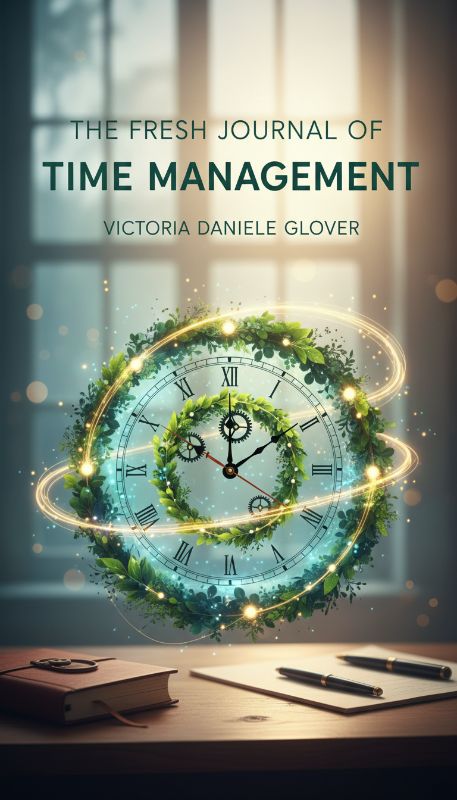
Time. It is the one resource every individual possesses in precisely equal measure, yet it feels both infinite and fleeting. The clock ticks as a steady metronome in our lives, marking moments that slip irrevocably into the past. Time management is not simply a skill to be learned; it is a philosophy and a daily practice that shapes the quality of our existence. In the ever-accelerating rhythm of the modern world, where distractions multiply and demands compete relentlessly for our attention, mastering time management is no longer a luxury—it is a necessity. The Value and Paradox of Time Time’s paradox lies in its dual nature: it is both rigid and elastic. We cannot create more hours in a day, but how we use them determines the outcomes we achieve and the satisfaction we derive from life. Every person, regardless of background, ambition, or circumstance, is granted 24 hours each day. The difference between those who thrive and those who merely survive often hinges on how these hours are invested. This book, The Fresh Journal of Time Management, is not just a compendium of tips and tricks, nor is it a mere recitation of productivity hacks. Rather, it is a comprehensive exploration of time management as a living, evolving discipline. Through its chapters, you will discover not only the practical tools to organize your days but also the deeper mindset shifts required to transform your relationship with time itself. Why Time Management Matters More Than Ever At no previous point in history have humans been bombarded by such a relentless torrent of information and opportunity. Smartphones, social media, and always-on connectivity have blurred the lines between work and personal life, making it easier than ever to be busy—but not necessarily productive. Many of us feel stretched thin, perpetually distracted, and unsure if our daily activities align with our deepest values and long-term goals. Time management matters because it is the gateway to clarity, purpose, and fulfillment. It empowers us to: Prioritize what truly matters, instead of reacting to the urgent but unimportant. Reduce stress and reclaim a sense of calm amidst chaos. Achieve goals—both grand and granular—by turning intention into consistent action. Cultivate presence, allowing us to engage more fully in our relationships and passions. Build routines and systems that support resilience in the face of setbacks. A Fresh Perspective: Beyond Schedules and To-Do Lists Many books and seminars reduce time management to a mechanical process of scheduling tasks, making lists, and using planners. While these are valuable tools, they represent only the surface. True mastery arises when we go deeper—exploring the psychological, emotional, and even philosophical dimensions of how we perceive and allocate time. In these pages, you will encounter a holistic approach that integrates: Self-awareness: Understanding your natural rhythms, strengths, and tendencies. Goal setting: Designing meaningful objectives that motivate and inspire. Prioritization: Distinguishing the truly important from the merely urgent. Boundaries: Learning to say no gracefully and protect your focus. Habits and routines: Harnessing the power of consistency for lasting change. Mindfulness: Developing the capacity to be present, attentive, and intentional. This journey is not about squeezing more tasks into your day, but about expanding the quality and impact of each moment. Who This Book Is For Whether you are a student striving to balance coursework and personal growth, a professional navigating the demands of a fast-paced career, an entrepreneur juggling multiple ventures, or a parent seeking harmony between work and family, the principles outlined here are universally applicable. This book is for anyone who has ever felt that there is never enough time, anyone who yearns for greater balance, and anyone who believes—deep down—that life can be lived with greater purpose and less regret. Equipped with evidence-based strategies, insightful case studies, and practical exercises, you will be empowered to craft a time management system tailored to your unique circumstances. You will learn from stories of those who have succeeded (and failed), drawing lessons from their journeys to inform your own. Core Themes and Structure of the Book The Fresh Journal of Time Management is structured to guide you step by step, from foundational insights to advanced techniques. The book unfolds across three broad arcs: Foundations of Time Management: These chapters explore how our beliefs, values, and self-awareness shape our use of time. We will examine the psychological barriers that sabotage our best intentions, such as procrastination, perfectionism, and decision fatigue. Tools and Techniques: Here, we delve into the practical side—systems, frameworks, and actionable methods that help manage tasks, set priorities, and build effective routines. You will learn about tools like the Eisenhower Matrix, Pomodoro Technique, and time-blocking, as well as digital aids and analog strategies. Each chapter concludes with a summary, reflection prompts, and exercises to help you internalize and apply what you have learned. You are encouraged to treat this book as both a source of inspiration and a practical manual—a journal in which you chart your evolving relationship with time. Key Questions to Guide Your Journey Before we begin, it is worth pausing to reflect on a few foundational questions. As you progress through this book, revisit these questions often. Your answers will evolve along with your understanding: What does time mean to you? Is it a scarce resource, a friend, an enemy, or something else? Where does your time currently go? Are your days shaped by intention or by default? What would you do if you had more time? What activities, relationships, or ambitions would you nurture? What, if anything, prevents you from managing your time as you wish? Are these barriers external, internal, or a mix of both? How would your life change if you mastered time management? What would be possible that currently feels out of reach? Write your answers in a notebook or journal. These reflections will serve as a touchstone throughout your exploration. The Myth of Perfect Time Management It is tempting to believe that with the right system, we can achieve perfect efficiency—that every minute will be harnessed, every task completed, and every goal reached without friction. This is a seductive illusion. Life, in all its unpredictability, resists such neat order. Interruptions, setbacks, and surprises are inevitable. The goal, therefore, is not perfection, but progress. It is about developing resilience—the ability to adapt, recover, and refocus when plans unravel. It is about cultivating self-compassion, recognizing that productivity is not the sole measure of a life well-lived. Reminder: “You cannot control the wind, but you can adjust your sails.” The art of time management is about adjusting your approach, not controlling every outcome. The Fresh Journal Approach: Active Engagement Unlike passive reading, the act of journaling your thoughts, experiences, and discoveries will deepen your learning. Each chapter encourages you to record insights, set intentions, and track your progress. This is not just a book—it is an interactive companion for transformation. You will find: Reflection prompts at the end of each chapter to guide your thinking. Case studies that illustrate real-world applications and lessons learned. Action exercises to translate theory into practice. Common pitfalls and how to avoid them, ensuring your journey is as smooth as possible. A Personal Note As the author, my journey with time management has been anything but linear. I have experienced the frustration of missed deadlines, the anxiety of overcommitment, and the quiet despair of feeling unproductive despite constant busyness. But I have also discovered the joy of reclaiming agency over my days, the satisfaction of meaningful accomplishment, and the peace that comes from aligning action with purpose. This book is the distillation of years of research, teaching, and personal experimentation. It is an invitation to you—to experiment, adapt, and ultimately, to thrive. Your Commitment Before you turn the page to Chapter 1, I invite you to make a commitment—not to perfection, but to curiosity and growth. Promise yourself that you will engage with these ideas, try the exercises, and reflect honestly on your progress. Time is your most valuable asset. Let us begin, together, the journey to manage it wisely, intentionally, and joyfully. Let the pages ahead serve as your guide, your mirror, and your map. The journey to mastering time starts now.
Victoria Danielle Glover
$1.00
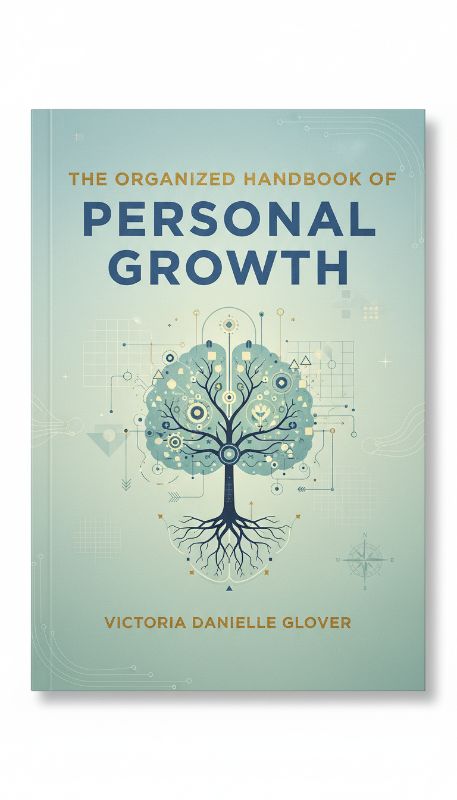
Personal growth is not a destination; it is a lifelong journey. In a world that pushes us to move faster, climb higher, and achieve more, the quest for self-improvement can sometimes feel overwhelming, even chaotic. Yet, beneath the surface of this relentless pace lies a universal truth: genuine progress comes not from scattered bursts of effort, but from organized, intentional action. The Organized Handbook of Personal Growth is designed to be your trusted companion on this journey—an anchor of clarity, structure, and actionable wisdom amid the noise. The Call for Personal Growth From the earliest days of human civilization, people have been drawn to the pursuit of betterment—seeking to understand themselves, to connect with others, to master new skills, and to find meaning in their daily lives. Today, this pursuit is more relevant than ever. We are surrounded by information and opportunity, yet also by distraction and doubt. Many of us feel pulled in countless directions, unsure where to focus our energy or how to measure our progress. Personal growth, in its essence, is about becoming more fully ourselves—embracing our strengths, overcoming our limitations, and moving closer to our potential. It is not simply about achievement or self-optimization, but about living a life of greater purpose, connection, and fulfillment. It is also about resilience: the ability to face adversity, adapt to change, and emerge stronger from our challenges. Yet, the path toward growth is rarely straightforward. We encounter setbacks, conflicting advice, and the ever-present resistance of our own habits. Without a clear framework, it’s all too easy to get lost or discouraged. That is why this book exists: to bring order, structure, and practical guidance to the pursuit of personal development. Why an Organized Approach? The concept of organization is foundational to personal growth. Organization is not about rigidity, but about creating systems and habits that support our goals. It is about clearing the mental and emotional clutter that keeps us stuck, and about making conscious choices in line with our deepest values. An organized approach empowers us to: Clarify our priorities so we invest our time and energy wisely. Set realistic, meaningful goals and break them into actionable steps. Track our progress and celebrate our successes. Identify obstacles and develop strategies to overcome them. Maintain balance between different areas of life—work, relationships, health, and personal passions. By structuring our efforts, we transform personal growth from an abstract ideal into a concrete, achievable reality. What to Expect from This Book The Organized Handbook of Personal Growth is more than a collection of tips—it is a comprehensive roadmap for transformation. Each chapter builds upon the last, guiding you through a sequence of core topics designed to address every major aspect of personal development. This book is organized into the following sections, each serving a unique and essential function: Foundations of Personal Growth: Understanding the psychology, science, and philosophy behind self-improvement. Goal-Setting and Motivation: Practical frameworks for envisioning your future and maintaining momentum. Habits and Routines: How to build lasting habits and break destructive cycles. Emotional Intelligence: Cultivating self-awareness, empathy, and emotional resilience. Mindset Mastery: Rewiring your beliefs and attitudes for sustained success. Productivity and Focus: Time management techniques and systems to maximize your output. Communication and Relationships: Building deeper connections and resolving conflicts effectively. Wellness and Self-Care: Balancing growth with rest, nutrition, and physical health. Purpose and Meaning: Finding your “why” and aligning your actions with your core values. Adapting to Change: Embracing uncertainty and thriving through transitions. Creativity and Innovation: Unlocking your creative potential and applying it to all areas of life. Financial Growth: Developing a healthy relationship with money and building financial security. Leadership and Influence: Inspiring others while continuing your own evolution. Overcoming Obstacles: Strategies for dealing with setbacks, failure, and self-doubt. Integration and Lifelong Growth: Sustaining your progress and making personal development a way of life. Within these chapters, you will find: Clear explanations of key concepts and scientific research. Real-world examples and case studies to illustrate principles. Actionable exercises and step-by-step techniques. Reflective prompts to deepen your self-awareness. Common pitfalls to watch out for—and how to avoid them. The Mindset for Your Journey Before you begin, it’s important to approach this handbook with a particular mindset. Growth is not linear. There will be times of rapid progress and times of stagnation. There will be moments of clarity and moments of confusion. This is normal. The most successful individuals are not those who never fail, but those who persist through failure, learning and adapting as they go. Reminder: Progress is personal. Your journey may not look like anyone else’s—and that’s not just acceptable, it’s essential. Celebrate your uniqueness, and use this book as a framework, not a prescription. A growth mindset is grounded in a belief that abilities and intelligence can be developed through effort, strategy, and support. This mindset is the bedrock of all meaningful change. When you encounter challenges or setbacks while working through this book, return to this foundational belief: You are capable of growth, no matter where you begin. How to Use This Handbook Every reader will bring their own goals, experiences, and preferences to this book. Some may wish to read it cover to cover, while others may choose to focus first on the areas most relevant to their lives. Both approaches are valid. For best results: Engage actively. Treat this handbook as a workbook. Pause to complete the exercises and reflect on your answers. Take your time. Personal growth is not a race; allow yourself space to absorb and apply each lesson. Let go of perfection. You do not need to master every concept immediately. Small, consistent improvements are more powerful than sporadic bursts of effort. Revisit chapters as needed. As you evolve, your needs and challenges will change. This handbook is designed to grow with you. The Science and Art of Personal Growth Personal growth is both a science and an art. It draws on research from psychology, neuroscience, sociology, and other disciplines, but it is also deeply personal and subjective. What works for one person may not work for another. The key is self-experimentation—trying new techniques, reflecting on the outcomes, and adjusting your approach as needed. Throughout this book, you’ll encounter evidence-based strategies and tools, but you’ll also be encouraged to develop your own systems. The most lasting change occurs when we integrate knowledge into our daily lives, making it our own. The Promise of Organized Growth Imagine a version of yourself who is not only more productive and successful, but also more fulfilled, resilient, and joyful. Imagine waking up each day with a sense of purpose, clear about your priorities, and confident in your ability to handle whatever life brings. This is the promise of organized personal growth. An organized approach does not eliminate uncertainty or challenge—it equips you to face them with clarity and courage. It empowers you to make choices that are aligned with your values, to foster deeper relationships, to create meaningful impact, and to live with greater intention. Tip: Every great transformation begins with a single, organized step. Use this book as your launchpad. Your Journey Begins As you embark on this journey, remember: you are both the architect and the builder of your life. The chapters ahead are not just instructions—they are invitations to explore, experiment, and evolve. Whether you are seeking to overcome a specific obstacle, to unlock your creative potential, or to cultivate a more balanced and meaningful life, The Organized Handbook of Personal Growth is here to guide you. Let us begin this journey together, with intention, organization, and the unwavering belief in the possibility of growth.
Victoria Danielle Glover
$1.00
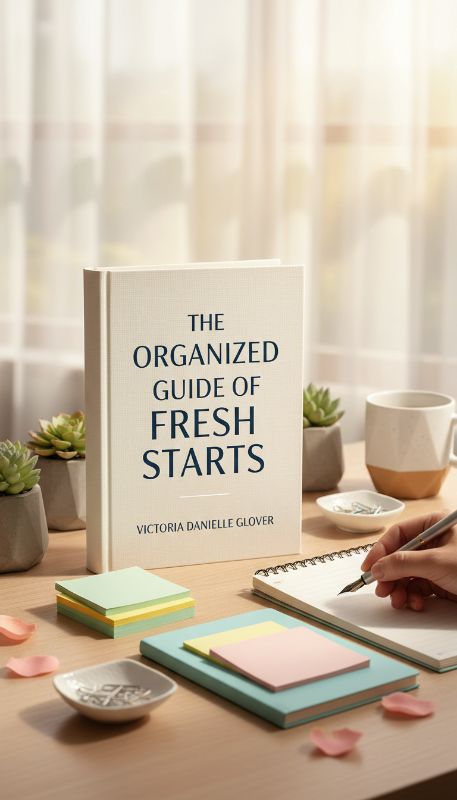
Life is a series of beginnings. Some are subtle, emerging quietly in the spaces between old habits and new desires. Others are monumental, marked by a resounding need or a pivotal event that changes everything in an instant. Whether whispered or thunderous, beginnings are the pulse of human experience—each one a chance to redefine, to rebuild, and to rediscover who we are and what we are capable of. The Organized Guide of Fresh Starts is your map for navigating these critical junctures, providing the tools, strategies, and mindset shifts necessary to not only survive change but to thrive because of it. The Power and Promise of Fresh Starts We often associate fresh starts with obvious milestones: the New Year, a new job, the end of a relationship, or a move to a different city. Yet, the truth is that fresh starts are available to us every single day. The concept is not limited to dramatic transformations; sometimes, a true fresh start is a subtle pivot—a shift in attitude, a commitment to a healthier routine, or a decision to let go of what no longer serves us. Fresh starts capture the essence of hope and possibility. They are invitations to leave behind the weight of past mistakes, outdated beliefs, and limiting narratives. When we embrace fresh starts, we acknowledge that our stories are not set in stone. We recognize our agency, our capacity to imagine, and our right to change direction at any moment. But why, despite these powerful opportunities, do so many people struggle with the idea of starting over? The answer lies in our relationship with uncertainty and fear. Change, even when positive, disrupts the familiar. It asks us to relinquish comfort and step into the unknown. This book is designed to equip you with the confidence, clarity, and organizational skills needed to make fresh starts less daunting and more exhilarating. Why Organization Matters Starting over is more than a mental or emotional process; it is an organizational challenge. The way we structure our thoughts, time, environment, and goals directly affects our ability to make meaningful change stick. Chaos breeds confusion, but organization breeds action, focus, and momentum. In every chapter of this guide, you will learn how to: Assess and clarify your motivations for change Set realistic, actionable goals Create supportive routines and environments Anticipate and overcome obstacles Sustain progress beyond the initial surge of motivation Each section blends practical advice with psychological insights, drawing on the latest research in neuroscience, habit formation, productivity, and personal development. The Universal Need for Renewal No matter your age, background, or circumstances, the need for renewal is universal. We all experience seasons of stagnation or dissatisfaction. Sometimes the world changes around us—jobs end, health falters, relationships evolve—and we must adapt whether we feel ready or not. Other times, the push for a fresh start comes from within, a persistent yearning for something more aligned with our true selves. Throughout history, some of the most successful people have been those who mastered the art of beginning again. They recognized that endings are not failures but transitions—opportunities to apply wisdom gained and to approach the next chapter with greater intentionality. Myths and Misconceptions about Fresh Starts Before we dive into the actionable content, it is important to address some common myths that often sabotage our efforts: Myth 1: Fresh starts require dramatic change.In reality, small, consistent actions often lead to the most lasting transformations. Myth 2: You get only one shot at starting over.Life is not a single-use opportunity; you can begin again as many times as needed. Myth 3: Starting over means admitting failure.On the contrary, it takes courage and humility to recognize when a new path is necessary. Myth 4: Motivation is enough.While motivation helps, it is fleeting. Systems, habits, and support are what sustain change over time. Myth 5: Organization is just for the hyper-disciplined.Organization is a skill anyone can learn, regardless of personality type or past experience. By dismantling these myths, you free yourself to approach fresh starts with realistic expectations and a sense of possibility, rather than dread. The Structure of This Guide The Organized Guide of Fresh Starts is divided into comprehensive chapters, each focused on a crucial element of successful reinvention. The journey will take you through: Understanding the psychology of change Crafting a vision for your new beginning Building habits that support your goals Managing setbacks and self-doubt Cultivating resilience and adaptability Creating supportive routines and environments Leveraging tools and technology for organization Navigating relationships and social dynamics during change Developing financial and career strategies for new chapters Prioritizing health and well-being during transitions Each chapter includes real-world examples, case studies, and exercises designed to help you apply the concepts to your own life. At the end of each section, you’ll find summaries and action steps to reinforce your learning and keep you moving forward. The Importance of Self-Compassion One of the most overlooked aspects of starting over is the need for self-compassion. Change is rarely linear. There will be setbacks, moments of doubt, and times when progress feels invisible. Be gentle with yourself. Growth requires patience, self-forgiveness, and the willingness to try again. Reflect on these guiding principles as you embark on your journey: Progress over perfection:Aim for improvement, not flawlessness. Every step counts. Curiosity over criticism:Approach mistakes with a learning mindset rather than harsh judgment. Flexibility over rigidity:Be willing to adapt your strategies as you learn more about yourself and your circumstances. Tip: Whenever you feel overwhelmed, pause and remind yourself that every day is a chance to start anew. Even the smallest action can reignite your momentum. What You Will Gain By the end of this book, you will possess: A clear framework for approaching any fresh start Practical tools for organizing your goals, time, and environment Proven strategies for sustaining motivation and overcoming obstacles The confidence to embrace change as a natural and valuable part of life You will see that starting over is not a punishment or a setback, but a privilege and a path to growth. Your Commitment This book is not just a manual; it is a companion for your journey. Its effectiveness depends on your willingness to engage with the exercises, reflect on your experiences, and apply what resonates. There will be challenges, but there will also be breakthroughs. Make a commitment now: to show up for yourself, to embrace your capacity for change, and to organize your fresh start with intention. Final Thoughts Before We Begin The chapters ahead are designed to support you whether you are at the very beginning of a new chapter or somewhere in the messy middle. You might be seeking a fresh start in your career, relationships, health, or personal growth. Whatever your motivation, you are in the right place. Remember, you are not alone. Every person you admire has faced moments of uncertainty and reinvention. What sets them apart is not luck or talent, but their willingness to keep going, to stay organized amid the chaos, and to believe in the power of new beginnings. Let this book be your guide. Together, we will explore the art and science of fresh starts, equipping you with the knowledge and tools to craft the life you envision—one organized, intentional step at a time. Prepare yourself for the journey ahead. A fresh start awaits.
Victoria Danielle Glover
$0.5

Resilience is a word that conjures images of strength, unwavering determination, and the ability to withstand adversity. For many, it’s synonymous with toughness—a kind of emotional armor, a hardened exterior that repels hardship. Yet, the true essence of resilience is far more nuanced, more humane, and, paradoxically, more gentle. This book, The Kind Way of Resilience, is an exploration of that subtle, transformative power: the ability to persist, adapt, and flourish not through brute force or denial of vulnerability, but through compassion, flexibility, and profound self-understanding. The Heart of Resilience The journey to resilience begins not with a call to arms, but with a call to kindness. Kindness—to oneself, to others, to the very circumstances that challenge us—is the cornerstone of genuine, sustainable resilience. It is a stance that invites us to soften where we have been rigid, to listen where we have shut down, and to nurture where we have neglected. This approach does not seek to erase pain or erase challenges; rather, it offers us tools to engage with life's inevitable ups and downs in a way that preserves our well-being and deepens our sense of connection. Resilience, then, is the capacity to move forward in the face of difficulty, not because we are unbreakable, but because we are willing to bend, to yield, and to adapt. This kind of resilience is not about refusing to fall; it is about learning how to rise, again and again, with greater wisdom and compassion. Why a Kind Approach Matters In a world that often prizes stoicism, achievement, and relentless progress, the idea of approaching adversity with gentleness can seem counterintuitive. We are repeatedly told to “toughen up,” “push through,” or “never let them see you sweat.” These messages, while well-intentioned, can leave us feeling isolated, ashamed of our struggles, and disconnected from others who are fighting their own battles. But what if the path through hardship was not a solitary march, but a communal journey? What if our greatest strength lay not in shielding ourselves from pain, but in opening ourselves to it—acknowledging our wounds, accepting help, and offering support in return? The kind way of resilience recognizes that true strength is not the absence of vulnerability, but the willingness to embrace it with openness and care. The science of psychology increasingly supports this perspective. Research on post-traumatic growth, emotional intelligence, and positive psychology reveals that those who practice self-compassion—the ability to treat oneself with understanding and patience during times of failure or suffering—are more likely to recover from setbacks, maintain healthy relationships, and pursue meaningful goals. Resilience, in this view, is not a rare trait reserved for a lucky few, but a skill that can be cultivated by anyone willing to approach themselves and their experiences with kindness. The Journey Ahead This book is your guide to developing a kind, robust, and adaptable resilience. It is organized into a series of chapters that each address different dimensions of resilience—emotional, mental, social, and physical—while emphasizing the central role of compassion throughout. You will find practical strategies, compelling stories, and reflective exercises designed to help you: Understand the true nature of resilience and why kindness amplifies its power Build emotional awareness and regulate difficult feelings without self-judgment Reframe setbacks as opportunities for learning and growth Cultivate supportive relationships that foster collective resilience Develop habits that sustain well-being in the face of ongoing stress Recognize and address cultural narratives that hinder self-compassion Harness mindfulness, gratitude, and other evidence-based techniques for resilience Identify and avoid common pitfalls that undermine your progress Create a personalized resilience toolkit tailored to your unique needs and values The Myths We Must Challenge As we begin, it is important to confront some pervasive myths about resilience that may have shaped your beliefs: Myth 1: Resilience means never showing weakness. Reality: Resilience thrives on the honest acknowledgment of vulnerability. Denying pain or struggle only delays healing. Myth 2: Resilience is innate—you either have it or you don’t. Reality: Resilience is a set of skills and attitudes that can be learned, practiced, and strengthened over time. Myth 3: Kindness is a sign of softness or weakness. Reality: Kindness, especially in the face of adversity, is a profound act of courage and strength. Myth 4: Resilience means handling everything alone. Reality: We are inherently social beings; seeking and offering support are vital components of resilient living. These myths are not only false but actively harmful. They can keep us trapped in cycles of self-criticism, isolation, and burnout. Throughout this book, you will learn to recognize and release these limiting beliefs, replacing them with attitudes and behaviors that empower growth and healing. Stories of Kind Resilience Resilience comes alive in stories—of individuals who have faced illness, loss, discrimination, or disappointment and emerged with a deeper sense of purpose and humanity. These stories are not tales of superheroes, but of ordinary people who chose, in moments of darkness, to respond with gentleness rather than harshness, curiosity rather than judgment, hope rather than despair. You will meet: A teacher who, after losing her job, rebuilt her life and sense of identity through acts of service and gratitude. A single parent who learned to embrace imperfection, asking for help and finding strength in community. An athlete who, after a career-ending injury, discovered new forms of meaning by mentoring others on their own journeys. Survivors of trauma who found hope and healing not by “getting over” their pain, but by integrating their experiences and extending compassion to themselves and others. Each narrative illustrates the central thesis of this book: that the kind way of resilience is not a detour from real strength, but its purest expression. Your Role: Active Participant, Not Passive Reader This book is not meant to be read passively. You are invited to engage deeply with the material, to reflect on your own experiences, and to experiment with the practices offered. Each chapter concludes with reinforcement exercises—practical steps you can take to begin integrating the principles of kind resilience into your daily life. These exercises are not tests of endurance or willpower; they are invitations to curiosity, experimentation, and gentle self-exploration. As you move through the chapters, you may encounter resistance—old habits of self-judgment, skepticism about the value of kindness, or discomfort with vulnerability. This is natural. Change is seldom linear, and setbacks are part of the process. The kind way of resilience asks only that you meet these moments with patience and a willingness to try again. Preparing for the Journey Before we embark, take a moment to consider your own relationship to resilience. Ask yourself: When have you demonstrated resilience in your life? What helped you through those times? How do you typically respond to stress, failure, or disappointment? What messages have you received about resilience, toughness, or vulnerability—at home, at work, or in society at large? Where might kindness—toward yourself or others—shift your experience of adversity? Write your answers in a journal, or simply hold them in your mind as we proceed. These reflections will serve as anchors as you encounter new ideas and practices. Tip: There is no “perfect” way to be resilient. The journey is unique for everyone, shaped by personality, culture, experiences, and circumstances. Trust that you are exactly where you need to be. A New Definition of Resilience In the chapters ahead, we will define resilience not as a rigid attribute, but as a dynamic process—a way of relating to oneself, others, and the world that is flexible, responsive, and, above all, kind. This new definition honors the full spectrum of human experience: joy and sorrow, strength and vulnerability, action and rest. Resilience, at its core, is the willingness to keep growing, even when it hurts. Welcome to The Kind Way of Resilience. May this journey offer you tools, insights, and inspiration to meet life’s challenges with compassion, courage, and grace. Turn the page. The adventure begins.
Victoria Danielle Glover
$1.00

The Quiet Power: Reimagining Confidence Through Kindness In a world that often celebrates bold declarations, assertive personalities, and relentless self-promotion, confidence is frequently misunderstood. Many of us have been taught, implicitly or explicitly, that confidence is synonymous with dominance, loudness, or even arrogance. We are told to "fake it till you make it," to speak up first and loudest, to never show hesitation. Yet, beneath the surface of these cultural messages lies a subtler, deeper, and infinitely more sustainable form of confidence—one rooted not in bravado, but in kindness. The Kind Routine of Confidence is not just a title; it is a gentle revolution. It is an invitation to transform the way you perceive yourself and the way you interact with the world. This book is for everyone who has ever doubted themselves, for those who feel invisible in crowded rooms, and for those who yearn to believe that confidence can coexist with gentleness. Rethinking Confidence: Beyond the Stereotypes Consider for a moment the individuals you truly admire. Are they the ones who dominate the conversation, or are they the ones who listen deeply, who make you feel seen and valued? Real confidence is not about overpowering others or silencing dissent. It is about standing firmly in your values, expressing your truth with clarity and calm, and having the humility to admit when you are wrong. At its core, confidence is about self-respect—and the genuine respect of others. This book challenges the stereotypes around confidence by introducing a daily practice—a routine—anchored in kindness. Through deliberate, small acts of self-compassion, mindful self-talk, and empathetic engagement with others, you can build a foundation of unshakable confidence. This is not a quick fix. It is not a list of hacks or shortcuts. Instead, it is a sustainable blueprint for personal growth, resilience, and joy. Why Kindness Unlocks True Confidence Kindness and confidence may seem like unrelated virtues, but they are deeply intertwined. When you treat yourself with kindness, you create a safe space within your own mind. You become your own ally rather than your harshest critic. This inner environment allows you to take risks, make mistakes, and learn without fear of self-punishment. It is from this nurturing soil that authentic confidence grows. Moreover, kindness towards others is a natural extension of self-kindness. When you are secure in yourself, you no longer need to compete relentlessly for validation. You become generous with your attention, your encouragement, and your support. People are drawn to you—not because you are the loudest voice in the room, but because you are a steady presence. This is the quiet power of the kind routine. The Promise of a Routine Routines are powerful. They anchor us in times of chaos and uncertainty. They give structure to our days and, by extension, to our lives. But not all routines are created equal. Some routines drain us, reinforcing self-doubt and insecurity. The kind routine is different. It is a carefully designed sequence of thoughts, actions, and reflections that you can integrate into your daily life. It is flexible, adaptable, and deeply personal. Within these pages, you will discover: How to identify and dismantle the inner critic that undermines your confidence. Practical exercises for cultivating self-compassion and mindful self-acceptance. Communication strategies that foster connection and dissolve social anxiety. Techniques for setting healthy boundaries without guilt or resentment. Stories and case studies of individuals who have transformed their lives through kindness-based confidence. A Journey for Every Reader Whether you are a student struggling with imposter syndrome, a professional navigating high-pressure environments, a parent seeking to model healthy self-esteem, or simply someone searching for a more peaceful relationship with yourself, this book is for you. The principles and practices within are universal. They have been distilled from cutting-edge psychological research, timeless wisdom traditions, and the lived experiences of countless individuals. This is not a one-size-fits-all manual. As you read, you will find tools and ideas that resonate with your unique circumstances. Some chapters may challenge you. Others may feel like a comforting conversation with an old friend. What matters most is your willingness to engage with the material, to experiment, and to reflect. The Structure of This Book The journey begins with an exploration of what confidence truly means and why traditional approaches often fall short. Each subsequent chapter delves into a specific aspect of the kind routine, offering both theoretical insights and actionable steps. You will encounter: Deep dives into the psychology of self-worth and belonging. Real-world stories of transformation and resilience. Step-by-step guides for developing new habits and mindsets. Reflection prompts and exercises designed to reinforce your learning. Setting Intentions: How to Use This Book Before we embark together, I invite you to pause and set an intention. Why are you reading this book? What do you hope to gain? Perhaps you want to silence your inner critic, to speak up more in meetings, to feel more at ease in your own skin, or to build deeper connections with others. Whatever your motivation, know that you are not alone. The desire for confidence—real, sustainable, kind confidence—is universal. As you move through each chapter, I encourage you to: Read with an open mind and a compassionate heart. Engage with the exercises, even if they feel unfamiliar at first. Reflect honestly on your experiences, celebrating progress over perfection. Return to chapters as needed; growth is rarely linear. The Science of Kindness and Confidence The ideas in this book are grounded in scientific research. Studies on self-compassion by psychologists like Dr. Kristin Neff have shown that kindness towards oneself leads to greater resilience, motivation, and emotional well-being. Neuroscience has revealed that positive self-talk and mindfulness can literally rewire the brain, reducing anxiety and increasing feelings of safety and self-assurance. Social psychology teaches us that people who exude calm, empathetic confidence are more likely to be trusted and respected, both personally and professionally. In other words, kindness is not a weakness—it is a superpower. Embracing Vulnerability One of the greatest myths about confidence is that it requires invulnerability. In truth, the most confident people are those who are willing to be vulnerable. They admit when they do not know something. They ask for help. They share their struggles and, in doing so, give others permission to do the same. Vulnerability is not a liability; it is the birthplace of connection and authenticity. Throughout this book, you will find stories of people who dared to be vulnerable—and discovered confidence on the other side. These stories are reminders that your struggles do not make you less worthy. They make you human. The Ripple Effect Kindness is contagious. When you treat yourself with compassion, you naturally extend that kindness to others. This creates a ripple effect, transforming your relationships, your workplace, and your community. Confidence, too, is contagious. When you show up with quiet assurance, you inspire others to do the same. Imagine a world where confidence is measured not by volume, but by depth. A world where kindness is the foundation of every interaction. This is the world we are building together, one routine at a time. Your Invitation This book is an invitation—to rethink, relearn, and rebuild your confidence from the inside out. It is an invitation to practice kindness, not as an afterthought, but as the cornerstone of your daily routine. It is an invitation to become the kind of person who inspires trust, fosters connection, and navigates life’s challenges with grace and resilience. You are ready. The kind routine of confidence awaits. Let us begin this journey together—with curiosity, with courage, and, above all, with kindness. In the following chapters, we will explore the roots of confidence, debunk common myths, and lay out a practical, actionable path for integrating kindness into every aspect of your life. As you turn the page, remember: the quiet power of confidence is already within you, waiting to be awakened.
Victoria Danielle Glover
$1.00

A new year dawns not just with a flip of the calendar but with a surge of hope, the palpable energy of possibility, and a sacred invitation to begin again. The notion of a fresh start is both timeless and urgent, a universal longing that bridges cultures, ages, and circumstances. Whether it is the aftermath of a challenging season, the gentle nudge of curiosity, or the unyielding desire to become better versions of ourselves, the call for renewal echoes within us all. This book, The Inspired Year of Fresh Starts, is your companion for that journey—a guided exploration into the art and science of starting anew, again and again, throughout the tapestry of a single year. The Power and Psychology of Fresh Starts Why are fresh starts so compelling? The answer is rooted in both psychology and human experience. Researchers have identified what is known as the "Fresh Start Effect"—the tendency for people to take action toward goals after temporal landmarks, such as the start of a new year, a birthday, or even the first day of a new month. These moments act as psychological reset buttons, separating us from our past shortcomings and creating a sense of a new chapter. In these moments, our minds become more open to change, more receptive to optimism, and more forgiving of past mistakes. But the magic of a fresh start is not just a matter of turning a page; it is a matter of rewriting the story. Neuroscience reveals that our brains are remarkably plastic, capable of forging new pathways and habits at any stage of life. The old adage "you can't teach an old dog new tricks" is less a law and more a myth. With the right mindset, tools, and support, renewal is possible—not just once a year, but every day. The Myth of the Perfect Beginning Too often, we are stalled by the myth that a fresh start must be perfect, dramatic, or complete. The truth is, most transformations begin quietly—seeded by a whisper of hope, nurtured by small, consistent actions, and realized through persistence more than inspiration. The chapters ahead will illuminate this reality, dispelling the paralyzing ideal of the "perfect start" and offering instead a blueprint for meaningful, sustainable change. The art of beginning again is not reserved for the extraordinary; it is the birthright of the ordinary. It is found in the single parent returning to school, the retiree learning a new craft, the entrepreneur pivoting after failure, the artist rediscovering their muse after years of creative drought, and the everyday individual simply seeking more joy, connection, or purpose. Why This Book? This book was born from years of research, observation, and personal journeys—both mine and those of countless others who have dared to begin again. As an expert in the study of personal transformation, goal-setting psychology, and behavioral change, I have witnessed the remarkable power contained within intentional new beginnings. I have also seen the obstacles that derail even the most earnest attempts: fear of failure, the weight of past regrets, the confusion of where to start, and the fatigue of repeated setbacks. The Inspired Year of Fresh Starts is not a one-size-fits-all manual. Rather, it is a living guide—a collection of strategies, stories, exercises, and insights designed to meet you wherever you are. You’ll find practical frameworks, real-life case studies, reflective prompts, and step-by-step techniques. Each chapter is carefully crafted to walk with you through the seasons of change: from clarifying your vision and setting powerful intentions, to overcoming resistance, building new habits, navigating setbacks, and celebrating your progress. What to Expect from This Journey Over the course of the chapters, you will: Examine the psychological underpinnings of fresh starts—why they work, how to harness them, and pitfalls to avoid. Clarify what you truly want to renew, revitalize, or reinvent in your life—be it your career, relationships, health, mindset, creativity, or sense of purpose. Learn actionable frameworks like the “Fresh Start Formula,” the “30-Day Reboot,” and the “Micro-Change Method.” Explore inspiring stories of individuals who have undertaken bold and subtle fresh starts, learning from their stumbles and triumphs. Practice exercises that move you from intention to action, from dreaming to doing, and from surviving to thriving. Reflect deeply on the barriers—internal and external—that have held you back, and how to dismantle them with courage and compassion. Celebrate the small wins, the quiet progress, and the resilience that comes from picking yourself up, again and again. This is not just a book to be read—it is a book to be lived. The Anatomy of a Fresh Start Before we embark, let’s define what constitutes a fresh start. It is not merely a change in circumstances; it is an intentional reset—a decision to pursue a new direction, mindset, or pattern of behavior. A fresh start may be catalyzed by external events (a new job, a move, a loss, or a milestone), but its essence lies within: a conscious choice to begin anew, with hope and determination. A fresh start can be: A dramatic life overhaul, such as switching careers, relocating, or ending a long-standing relationship. A subtle but powerful shift, like adopting a new perspective, breaking a minor habit, or rediscovering a neglected passion. A series of micro-renewals, woven into daily routines—small acts of recommitment, forgiveness, or self-care. In truth, every day holds the seeds of a fresh start. The sunrise itself is nature’s reminder that renewal is always possible. Facing the Barriers Let us name, without shame, the forces that make fresh starts daunting: Fear of failure: The dread that history will repeat itself, that effort will not yield results. Perfectionism: The belief that if a new beginning cannot be flawless, it is not worth attempting. Overwhelm: The paralysis that comes from not knowing where to start, or how to sustain momentum. Regret and guilt: The weight of past decisions clouding the possibility of a different future. External circumstances: The reality of obligations, limited resources, or unsupportive environments. These barriers are real, but they are not insurmountable. Throughout this book, we will address each one, offering both practical solutions and compassionate encouragement. The Promise of Renewal: A Year Like No Other Imagine a year in which you do not simply wish for change, but actively create it. A year in which each month, each week, each day becomes an opportunity to renew a part of your life, however big or small. This is the promise of The Inspired Year of Fresh Starts—to transform the abstract hope of renewal into a lived reality. You may choose to focus on a single area—your health, relationships, creativity, or career. Or you may find that as you make progress in one domain, momentum spills naturally into others. The process is dynamic, not static; cyclical, not linear. There will be advances and setbacks, surges of motivation and periods of doubt. But with the right tools and mindsets, you can navigate these ebbs and flows, emerging not just unchanged, but expanded. How to Use This Book This book is structured to be both sequential and modular. You may read it cover to cover, following the arc of the year and the logical progression of renewal. Or you may dip into chapters as needed, returning to sections that speak to your current season. Each chapter closes with reflection prompts, exercises, or action steps—tools to move you from inspiration to implementation. Throughout, you will encounter the voices of those who have walked this path before you. Their stories are not offered as blueprints, but as beacons—proof that renewal is possible, that courage grows in the doing, and that every ending contains the seeds of a new beginning. A Note on Compassion A year of fresh starts is not a call to relentless self-improvement, nor an invitation to shame yourself for what has not yet been achieved. It is, above all, a practice of compassion—toward yourself and others. To begin again is to acknowledge your own humanity, to forgive missteps, to celebrate effort as much as outcome, and to offer yourself the grace you would extend to a dear friend. Tip: As you move through this book, treat yourself with gentleness. Self-criticism rarely fuels lasting change; self-compassion, on the other hand, is a powerful catalyst for growth. The Journey Ahead In the coming chapters, we will delve into: The science and art of starting anew Clarifying your vision and intentions for the year Overcoming the inertia of the past Building habits that stick Navigating setbacks and relapses Drawing inspiration from real-life stories of renewal Creating structures for accountability and support Celebrating milestones, both great and small By the end, you will not only have a roadmap for your own inspired year of fresh starts, but the confidence and resilience to reinvent yourself whenever life calls for it—be it in January, July, or on an ordinary Tuesday. An Invitation Let this be your year. Not the year you simply wish for change, but the year you create it. Not the year you wait for the perfect moment, but the year you seize the imperfect ones. Not the year you measure yourself by past limitations, but the year you expand into new possibilities. The journey begins now. Turn the page. The story of your inspired year awaits.
Victoria Danielle Glover
$1.99
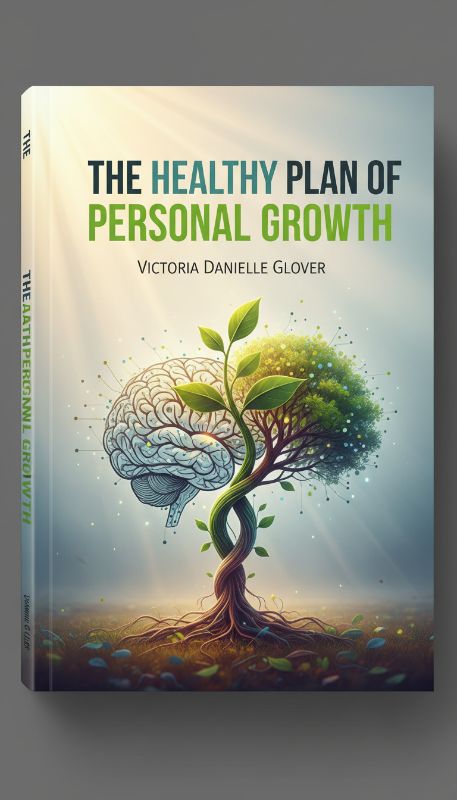
Personal growth is often spoken about in hushed, almost reverent tones. We hear stories of remarkable transformations and feel a rush of hope, imagining ourselves breaking through barriers, living life at its fullest, and becoming our best selves. But what does personal growth actually mean? And more importantly, how can we cultivate it in real, tangible ways? This workbook is designed not just to inspire but to empower you with the tools, frameworks, and insights needed for profound, enduring personal transformation. The Nature of Personal Growth At its core, personal growth is the ongoing process of understanding and developing oneself to achieve one’s fullest potential. It is deeply individual yet universally relevant. The journey looks different for everyone, but its essence is the same: a commitment to self-awareness, learning, and positive change. Personal growth is not a destination but a continuous journey. Life throws challenges our way—sometimes expected, often surprising. Through these moments, our responses shape who we become. The way we think, act, and reflect determines not just our success in the world, but our inner sense of fulfillment and meaning. Why a Workbook? We live in an age of information overload. Self-help articles, motivational videos, and quick-fix tips are everywhere, promising transformation in 10 easy steps. Yet, true growth rarely happens through passive consumption. It requires active participation, honest introspection, and repeated practice. That’s why this is a workbook—not just a book to read, but a space for you to engage, reflect, and take action. Each chapter blends in-depth explanation with exercises, questions, and prompts meant to make you pause, dig deeper, and translate ideas into lived experience. You’ll be encouraged to revisit old patterns, challenge assumptions, and celebrate wins along the way. The Philosophy Guiding This Book This workbook is grounded in several foundational beliefs: Every person is capable of growth, regardless of age, background, or circumstance. Growth is not linear. There are ups, downs, plateaus, and periods of rapid change. Self-awareness is the cornerstone of progress. The better you understand your thoughts, emotions, and behaviors, the more empowered you are to change them. Sustainable change comes from small, consistent actions. Grand gestures are inspiring, but real progress is built on daily habits. Compassion—especially for yourself—is essential. Growth is hard. You will stumble. Self-kindness is not indulgence; it is necessity. What You Will Find Inside This workbook is structured to guide you step-by-step through essential dimensions of personal growth. Each chapter explores a core area, such as: Self-awareness and identity Mindset and beliefs Goal setting and motivation Emotional intelligence Resilience and adaptability Communication and relationships Habits and routines Meaning and purpose For each topic, you’ll find: Deep dives into the theory and science Real-world examples and case studies Common traps and how to avoid them Actionable strategies and exercises Reflection prompts to personalize your journey At the end of each chapter, you’ll have space to summarize insights, set intentions, and track progress. The goal is for you to finish this workbook not just with new knowledge, but with a transformed way of seeing yourself and your place in the world. Who This Book Is For This workbook is for anyone who wants to grow—whether you’re just starting out or you consider yourself a seasoned student of self-development. You might be: Feeling stuck or overwhelmed and longing for change Seeking more meaning or purpose in your daily life Eager to strengthen your relationships, confidence, or well-being Curious about what makes you tick and how to unlock your potential Committed to lifelong learning and personal mastery No matter your starting point, the tools and insights in these pages are meant to meet you where you are and help you move forward. How to Use This Workbook There is no single “right” way to use this workbook, but here are some suggestions to maximize your experience: 1. Go at Your Own Pace Some chapters may resonate deeply and invite immediate action. Others may challenge you to re-examine old habits or beliefs. Take the time you need with each section. Rushing through will only limit your growth. Let insights sink in, and revisit exercises as needed. 2. Be Honest—Especially With Yourself The exercises in this workbook are only as powerful as the honesty you bring to them. Resist the urge to write what you “should” feel or think. Instead, aim for authenticity. There are no right or wrong answers—only what is true for you in this moment. 3. Celebrate Progress, Not Perfection Personal growth is not about becoming perfect. It is about becoming more yourself, more aware, more intentional. You will have setbacks and moments of doubt. Notice them, learn from them, and keep moving forward. Every small step counts. 4. Use a Dedicated Journal or Notebook While this workbook provides space for notes and exercises, you might find it helpful to use a separate journal for longer reflections or ongoing tracking. Documenting your journey can offer powerful insights over time. 5. Engage With Others Growth is often accelerated through connection. Share insights with a trusted friend, join a discussion group, or find an accountability partner. Hearing different perspectives can spark new ideas and keep you motivated. The Promise of Transformation If you commit to this process, you will not be the same person at the end of this book as you were at the beginning. You will have: Greater self-knowledge Stronger emotional skills A clearer vision for your life Concrete strategies for overcoming obstacles But perhaps most importantly, you will have demonstrated to yourself that you are capable of change—and that, ultimately, is the heart of personal growth. Setting Your Intention Before you turn the page, pause for a moment. Consider the following questions. Write your answers in the space provided or in your personal journal. Why did you pick up this workbook? What are you hoping to gain from it? What areas of your life feel most in need of growth or renewal? What is one small, positive change you would like to commit to during this process? How will you celebrate your progress along the way? Tip: The clearer your intentions, the more powerful your growth journey will be. Return to these answers as you move through the book to stay grounded and motivated. The Journey Begins Personal growth is not reserved for the extraordinary few; it is the birthright of every human being. As you embark on this journey, remember: the most important step is the one you take today. Your willingness to explore, reflect, and act sets the stage for everything that follows. Let’s begin—one page, one insight, one courageous step at a time.
Victoria Danielle Glover
$1.00

Resilience has become one of the most essential attributes for thriving in the modern world. In the face of relentless change, uncertainty, and adversity, resilience is often cited as the difference between those who falter and those who flourish. Yet, for all the attention it receives, resilience is still widely misunderstood. Is it an inborn trait? A skill to be learned? A resource to be replenished, or a state of mind to be cultivated? This book, The Inspired Practice of Resilience, seeks to answer these questions with depth, clarity, and practical wisdom. The Age of Adversity We live in times marked by unpredictability. Global events—a pandemic, economic downturns, technological upheaval, and social transformations—have underscored the reality that change is the only constant. On a personal level, each of us encounters our own unique challenges: the loss of a loved one, a career setback, health struggles, or the cumulative effects of stress and anxiety. These challenges do not discriminate; they are the shared threads of the human experience. What distinguishes those who emerge stronger from adversity? Why do some individuals and communities appear to bend without breaking, to adapt and even grow amid hardship, while others become overwhelmed? The answer, in a word, is resilience. However, to reduce resilience to a mere buzzword or a simplistic concept is to overlook its profound complexity and power. Defining Resilience: Beyond the Buzzword At its core, resilience is often described as the ability to “bounce back” from difficulties. But in truth, resilience is much more than a reactive capacity. It is the proactive, dynamic, and ongoing process of adapting well in the face of adversity, trauma, tragedy, threats, or even significant sources of stress. Resilience involves behaviors, thoughts, and actions that can be learned and developed in anyone. It is not a fixed trait; rather, it is a set of skills, attitudes, and resources that are honed through conscious practice, reflection, and perseverance. In other words, resilience is as much about how we prepare for and respond to challenges as it is about recovery. Key elements of resilience include: Emotional regulation: The ability to manage emotions effectively, rather than being overwhelmed by them. Cognitive flexibility: Adapting one’s thinking in response to new information or experiences. Meaning-making: Finding purpose or learning in the midst of hardship. Connection: Building supportive relationships and communities. Self-efficacy: Belief in one’s ability to influence events and outcomes. These elements, among others, will be explored in detail throughout this book. Why Resilience Matters Now More Than Ever In the 21st century, rapid technological change, a 24-hour news cycle, and the global interconnectedness of crises create environments filled with volatility, uncertainty, complexity, and ambiguity (VUCA). Organizations and individuals alike face relentless demands to adapt, innovate, and endure. Resilience is not only a personal asset but a collective necessity. For leaders, educators, parents, and communities, cultivating resilience is integral to fostering environments where people can learn, recover, and thrive. In workplaces, resilience underpins adaptability and sustained performance. In families and friendships, it forms the foundation for mutual support and growth. On a societal level, resilience enables communities to withstand shocks and rebuild stronger. Debunking Myths About Resilience Before embarking on a deeper exploration, it is important to dispel common myths and misconceptions about resilience: Myth 1: Resilience means never feeling pain or distress.In reality, resilient people experience the full range of emotions—fear, sadness, anger, disappointment. What sets them apart is their capacity to face these emotions honestly and navigate through them. Myth 2: Resilience is an innate trait—some have it, others do not.While genetics and temperament may play a role, resilience is largely shaped by experiences, mindset, and deliberate practice. Myth 3: Being resilient means going it alone.On the contrary, resilience is often strengthened through connection with others—family, friends, colleagues, mentors, and community. Myth 4: Resilience is about simply toughing it out.True resilience is not about stoicism or suppressing vulnerability. It is about engaging with difficult realities, seeking help when needed, and learning from adversity. The Structure and Promise of This Book The Inspired Practice of Resilience is designed as both a comprehensive guide and a practical toolkit. Each chapter delves into a distinct dimension of resilience, from the psychological and physiological foundations to the real-world applications in daily life, work, and society. This book is not a collection of platitudes, nor is it a one-size-fits-all manual. Instead, it offers: In-depth explanations of core concepts, so that you understand not just the “how” but the “why” of resilience. Realistic examples and case studies drawn from diverse fields—psychology, business, sports, the arts, and community life—that illustrate resilience in action. Actionable exercises, strategies, and reflection prompts at the end of each chapter, allowing you to practice and personalize your journey. Common pitfalls and barriers to resilience, with guidance on how to avoid or overcome them. Resources for further exploration for those who wish to deepen their understanding. This book is for anyone who: Faces ongoing stress or uncertainty and seeks practical ways to cope. Leads teams, organizations, or communities and wishes to foster collective resilience. Has experienced loss, failure, or trauma and desires to rebuild with strength and hope. Wants to cultivate a more resilient mindset for themselves and those they care about. The Journey Ahead: Cultivating an Inspired Practice Why the word practice in the title? Because resilience is not a destination, but a lifelong process. Like any meaningful skill—music, athletics, leadership, or craft—resilience is honed through deliberate practice, ongoing learning, and engagement with both successes and setbacks. It is not about achieving a mythical state of invulnerability, but about developing the internal and external resources to respond, adapt, and grow through life’s inevitable challenges. Inspired practice means approaching resilience with curiosity, creativity, and purpose—not merely as a means of survival, but as a pathway to deeper fulfillment, connection, and meaning. Throughout this book, you will be encouraged to reflect, experiment, and adapt the practices to the realities of your own life. A Call to Reflection Before you turn the page, take a moment to consider your own relationship with resilience. Reflect on moments in your life when you have faced adversity: How did you respond? What resources, internal or external, did you draw upon? What did you learn about yourself in the process? Where do you feel strong, and where do you seek growth? This book is an invitation—to explore, to question, and to practice. The journey of resilience is both universal and utterly unique. It is the thread that connects us across time, culture, and circumstance, and the key to unlocking a life of deeper purpose and possibility. Let us begin.
Victoria Danielle Glover
$1.99

Home. For many, the word conjures images of warmth, safety, love, and a sanctuary from the world outside. Yet, for countless others, home also elicits feelings of chaos, overwhelm, or even embarrassment—triggered by the persistent struggle to keep living spaces organized, functional, and inviting. If you have ever found yourself searching for lost keys in a cluttered kitchen drawer, feeling frustrated by overflowing laundry baskets, or wishing your home could be a haven of peace rather than a source of stress, then this book is for you. Welcome to The Inspired Manual of Home Organization. This book is not simply a guide to tidying up or hiding the mess; it is a comprehensive roadmap to transforming your home into a place that reflects your values, supports your life, and nurtures your well-being. In the chapters that follow, you will discover not only how to organize, but why organization matters, and how it is intimately connected to your happiness, productivity, and overall quality of life. The Call for Order: Understanding the Need for Home Organization In an era defined by information overload, relentless schedules, and constant connectivity, our homes have become more than mere shelters. They are workspaces, classrooms, gyms, and sanctuaries—often all at once. This evolution has magnified the importance of organization, making it less about aesthetic perfection and more about functionality, efficiency, and emotional equilibrium. Clutter is not just a physical phenomenon; it is deeply psychological. Numerous studies link an organized environment to lower stress levels, improved focus, and greater feelings of control. When our homes are in chaos, our minds follow suit. Conversely, when our spaces are intentionally arranged, we invite clarity, creativity, and calm into our lives. This relationship between external order and internal peace is a foundational truth explored throughout this manual. Moving Beyond the Myths: What Organization Is—and Isn’t One of the most persistent myths about organization is that it is the domain of the naturally tidy, the minimalist, or the perfectionist. In reality, organization is a skill—a set of habits and systems that anyone can learn, regardless of personality or past experience. It is not about rigid rules, sterile spaces, or obsessive control; rather, it is about creating environments that serve your unique needs and aspirations. Another misconception is that organizing is a one-time event—a weekend blitz that solves all problems with a few labeled bins and a trip to the donation center. True, sustainable organization is a journey, not a destination. It is a process of continual assessment, adaptation, and refinement—a dance between your evolving life and the space you inhabit. Tip: Organization is personal. The systems that work for your neighbor, favorite influencer, or even your own family members may not fit your lifestyle. The key is to experiment, observe, and craft solutions that truly support you. What This Book Offers This manual is designed to be your coach, companion, and confidant on the path to a more organized home. Each chapter delves deeply into specific topics, providing: Practical Strategies: Step-by-step guidance for tackling every area of your home, from the entryway to the attic, with real-world solutions for common challenges. Mindset Shifts: Insights into the psychological barriers that keep us stuck and tools for cultivating a more positive, empowered approach to organization. Case Studies: Relatable stories of individuals and families who have transformed their spaces—and their lives—by embracing the principles within these pages. Actionable Exercises: Reflection prompts, checklists, and challenges to reinforce learning and inspire immediate progress. Expert Advice: Tips from professional organizers, designers, and even behavioral scientists to ensure your efforts are effective and sustainable. At the heart of this manual is the belief that organization is not about imposing order for its own sake, but about creating a home that reflects and supports your best self. The Journey Ahead: An Overview Every home is unique, and so is every journey to organization. This book is structured to walk you through the entire process, whether you are starting from scratch or looking to fine-tune existing systems. Here’s a preview of what lies ahead: Laying the Foundation: We begin by exploring the psychology of clutter, helping you understand the deeper reasons behind disorganization and how to cultivate a mindset for lasting change. Crafting Your Vision: Next, you will learn to define your ideal home environment, set meaningful goals, and map out your organizational journey. Room-by-Room Transformation: The core chapters provide in-depth strategies for organizing every space, including: Entryways and Mudrooms Kitchens and Pantries Living and Family Rooms Bedrooms and Closets Bathrooms and Linen Storage Home Offices and Workspaces Kids’ Spaces and Playrooms Garages, Basements, and Attics Storage Solutions for Small Spaces Systems for Daily Living: Special chapters address routines for maintenance, paper management, digital organization, and cultivating habits that keep your home running smoothly. Navigating Life Transitions: Guidance for organizing during major life changes—moving, downsizing, welcoming children, or aging in place. Sustaining Success: The final sections focus on troubleshooting, ongoing motivation, and building a resilient, adaptable home organization system. Each chapter is crafted to blend inspiration with action, ensuring you not only learn but apply the lessons to your own home. The Emotional Landscape: Letting Go, Creating Space Perhaps the most challenging and transformative aspect of home organization is the emotional journey of letting go. Our possessions are not just objects; they are repositories of memories, hopes, and sometimes, regrets. Sorting through them can stir up powerful feelings—nostalgia, guilt, anxiety, even grief. This manual approaches decluttering with compassion and respect, recognizing that every item in your home has a story. You will find gentle guidance for navigating these emotions, making thoughtful decisions about what to keep, and discovering the freedom that comes from creating space for what truly matters. Reminder: Letting go is not about loss; it is about making room for the life you want to live. Every item you release creates space for new experiences, relationships, and opportunities. The Ripple Effect: Organization and Well-Being The benefits of an organized home extend far beyond tidy shelves and clear countertops. Research shows that effective home organization can: Reduce stress and anxiety Improve sleep quality Boost productivity and focus Enhance relationships Support healthier habits Increase feelings of self-efficacy and accomplishment In other words, when you transform your home, you transform your life. The systems and strategies you build here will ripple outward—shaping your days, influencing your mindset, and empowering you to pursue your goals with greater energy and confidence. How to Use This Book While you can read this manual cover to cover, it is also designed as a flexible reference. Feel free to jump to chapters that address your immediate needs or revisit sections as your circumstances change. Each chapter stands alone, but together they create a holistic framework for sustainable home organization. At the end of each chapter, you will find action steps and reflection prompts to encourage real progress. I urge you to pause, engage with these exercises, and celebrate your milestones—no matter how small. Tip: Progress, not perfection, is the true measure of success. Organization is not a finish line, but a lifelong practice. Your First Step By picking up this book, you have already taken the most important step: choosing to invest in your home, your well-being, and your future. Whether you are facing mountains of clutter or merely seeking greater efficiency, know that transformation is possible—and that you are not alone. As you turn the page, you will begin a journey of discovery, empowerment, and, ultimately, freedom. The tools, insights, and inspiration within these pages are yours to use, adapt, and share. May this manual be a trusted companion as you create a home that is not only organized, but inspired—a place where you can truly thrive. Let’s begin.
Victoria Danielle Glover
$1.00

The Universal Struggle From the busy executive juggling deadlines to the university student balancing coursework and social life, from the stay-at-home parent coordinating the family’s schedule to the entrepreneur striving to build a dream, the struggle to master time is universal. We all receive the same 24 hours in a day—no more, no less—but the gulf between those who feel perpetually behind and those who stride confidently toward their goals is vast. Why is it that some people seem to achieve so much, while others are perpetually overwhelmed? The answer is not found in mystical productivity hacks or superhuman willpower. It rests in a set of principles, mindsets, and actionable strategies that anyone can learn, practice, and master. This book is your guide to that mastery. The Purpose of This Book The Inspired Journey of Time Management is not just another collection of tips, tricks, or empty platitudes about “working smarter, not harder.” It is a comprehensive exploration of the psychology, science, and practical realities of time management. Throughout these pages, we will embark on a journey together—a journey that will challenge your assumptions, illuminate hidden obstacles, and provide you with a toolkit for genuine transformation. You will discover: The core principles underlying effective time management, from the value of clarity and prioritization to the subtle art of saying no. Common myths and misconceptions that sabotage our efforts before we even begin. Real-world case studies and stories that bridge theory and lived experience, revealing how others have overcome adversity and found success. Actionable techniques for organizing your days, eliminating distractions, conquering procrastination, and building habits that last. Reflective exercises and self-assessment tools to personalize your journey and anchor your progress. This is not a one-size-fits-all system. Life is too complex, and individuals too unique, for any rigid formula to suffice. Instead, you will gain the insight and flexibility to adapt timeless time management wisdom to the ever-shifting demands of your own life. The High Cost of Poor Time Management Let us begin by facing a hard truth: time lost is never regained. Mismanaged time exacts a steep toll—not only in missed deadlines or unfulfilled goals, but also in stress, strained relationships, lost opportunities, and diminished well-being. The cost accumulates quietly, sometimes invisibly, until we find ourselves wondering where the days, months, or even years have gone. Consider these all-too-common scenarios: The talented professional who dreams of writing a novel, but finds years slipping by without a single chapter completed. The diligent student whose to-do list grows ever longer, yet grades and motivation steadily decline. The loving parent who yearns to be present with their children, but is constantly pulled away by work and obligations. What unites these stories is not a lack of ambition or talent, but a lack of structure, clarity, and intentionality in the way time is approached. By learning to manage time with care and purpose, we reclaim agency over our lives and open the door to growth, achievement, and fulfillment. Dispelling Myths: Time Management Is for Everyone Many people believe that effective time management requires a certain personality type—that it is only for the obsessively organized, the naturally driven, or the chronically busy. Nothing could be further from the truth. Time management is a universal discipline, accessible to anyone willing to learn and practice. In fact, the people who benefit most from these skills are often those who feel least “naturally” inclined toward order and structure. Throughout this book, you will encounter stories of individuals from all walks of life who overcame chaos, distraction, and self-doubt—not by becoming someone else, but by discovering new ways to harness their strengths and compensate for their weaknesses. The Evolution of Time Management Time management is not a modern invention, nor is it a static field. From the ancient philosophers who pondered the fleeting nature of existence to the industrial titans of the 19th century who pioneered productivity systems, humanity has always sought ways to make the most of its days. In recent decades, advances in psychology, neuroscience, and technology have deepened our understanding of how attention, motivation, and behavior interact. Yet, for all our progress, the fundamentals remain unchanged. The core challenges—knowing what matters, making intentional choices, resisting distraction, and sustaining effort—are as old as civilization itself. This book will draw upon both timeless wisdom and cutting-edge research, weaving them together into a framework that is practical, flexible, and deeply human. What You Will Learn Each chapter of this book will build upon the last, guiding you through a carefully structured journey: Self-Awareness: Understanding your current relationship with time, including strengths, weaknesses, and hidden beliefs that shape your habits. Goal Setting and Prioritization: Learning to define what truly matters, set meaningful goals, and distinguish the essential from the trivial. Planning and Organization: Mastering the tools and techniques that bring order to chaos, from daily routines to long-term projects. Focus and Attention: Cultivating the ability to concentrate deeply, manage distractions, and enter states of flow. Overcoming Procrastination: Identifying the roots of avoidance and building systems to keep yourself moving forward. Energy and Well-being: Recognizing the interplay between time, energy, and health—and learning to manage them in harmony. Adaptability and Resilience: Navigating setbacks, embracing change, and sustaining progress over the long haul. Along the way, you will wrestle with common pitfalls, experiment with new approaches, and reflect on your own growth. Each chapter will offer practical exercises, checklists, and prompts to ensure that learning leads to action. The Mindset of the Inspired Journey Why call this an inspired journey? Because time management is not simply a matter of efficiency, but of meaning. To manage your time is to shape your life, and to shape your life is to honor your deepest values, passions, and purpose. Inspiration is the fuel that sustains change. Without it, even the best systems become mechanical and lifeless. With it, ordinary moments become the building blocks of extraordinary days. Throughout this book, you will be encouraged not only to manage your time, but to do so with a sense of curiosity, creativity, and joy. A Personal Invitation As you begin this journey, I invite you to bring an open mind and a willingness to experiment. There is no single right way to manage time, and your path will be uniquely your own. You may find that certain techniques resonate immediately, while others require adjustment or reflection. That is not a sign of failure, but of growth. Remember: progress, not perfection, is the true measure of success. Small, consistent steps—sustained over time—can produce extraordinary results. Tip: As you read, keep a journal or notebook nearby. Capture your insights, questions, and ideas. The act of writing will deepen your understanding and provide a record of your journey. How to Use This Book This book is designed to be both a guide and a companion. You can read it straight through, or dip into chapters as needed. Each section stands alone, but together they form a holistic approach to mastering time. At the end of each chapter, you will find: Key Takeaways: A summary of the most important principles and techniques. Reflection Questions: Prompts to help you apply the material to your own life. Action Steps: Practical assignments to reinforce your learning. Feel free to adapt these tools to your own needs. The goal is not to impose a rigid system, but to empower you to build habits and routines that support your unique goals and aspirations. A Glimpse Ahead Over the coming chapters, we will explore: The real reasons time slips through our fingers—and how to reclaim it. The difference between urgent and important tasks, and why most people get trapped in the “urgency trap.” How to design daily and weekly rituals that create lasting momentum. The surprising science of attention, and how to train your brain for deep work. The art of graceful boundaries, and how saying “no” can be the most productive act of all. You will meet people who overcame impossible odds, organizations that transformed chaos into calm, and ordinary individuals who became extraordinary through the power of intentional time management. The First Step Every journey begins with a single step. By opening this book, you have already taken that step. Whether you are seeking greater productivity, more balance, or a deeper sense of meaning, the tools and insights you find here will help you chart a path forward. Let us begin—not with the pressure to do more, but with the invitation to be more: more present, more focused, more intentional, and more fulfilled. Welcome to The Inspired Journey of Time Management. Your time is your life. Let’s make it count.
Victoria Danielle Glover
$1.00

Confidence is often spoken of as a shining beacon, an internal flame that guides us through life’s uncertainties and challenges. To many, it seems elusive—something only a select few possess in abundance while the rest merely aspire to grasp it, if only for fleeting moments. Yet, what if confidence is not an unattainable gift, but rather a journey—one that anyone can embark upon, nurture, and master through deliberate steps, reflection, and inspired action? This book, The Inspired Journey of Confidence, is a roadmap for anyone eager to transform their relationship with themselves and the world around them. It is not a collection of trite platitudes or empty affirmations. Rather, it is a comprehensive exploration of confidence as both a skill and a state of being, drawing on cutting-edge research, real-life stories, and actionable strategies. Whether you are struggling with self-doubt, eager to tackle new challenges, or simply seeking to deepen your self-awareness, this journey is as much about rediscovering what lies within as it is about overcoming external obstacles. The Myth and Reality of Confidence The modern world is saturated with images, stories, and narratives of confident people—entrepreneurs who seize opportunities, speakers who captivate audiences, athletes who perform at their peak under pressure. These examples often set an impossibly high bar, fueling the myth that confidence is synonymous with being fearless, assertive, and unwavering at all times. This myth, pervasive and persistent, can be paralyzing. Many internalize the belief that if they feel uncertainty, anxiety, or hesitation, they are somehow lacking or broken. The reality could not be further from the truth. Confidence is not the absence of fear, but the willingness to move forward despite it. It is not a static state, but a dynamic process—one influenced by our experiences, environment, mindset, and choices. Even the most accomplished individuals wrestle with moments of insecurity and doubt. What sets them apart is their ability to navigate these moments with self-compassion, resilience, and a toolkit of practical strategies. The Purpose of This Book The Inspired Journey of Confidence is designed to demystify the concept of confidence and provide a step-by-step guide for cultivating it at every stage of life. This is not a quick fix or a one-size-fits-all solution. Instead, it is an invitation to embark on a transformative journey—one that honors your unique background, values, and aspirations. Throughout these pages, you will discover: The psychological and neurobiological foundations of confidence The role of self-awareness, self-acceptance, and self-compassion Techniques for overcoming fear, failure, and self-doubt Tools for building resilience and grit Practical exercises to foster authentic self-expression and assertiveness Real-world examples and case studies illustrating the principles in action Strategies for sustaining and reinforcing confidence over the long term Each chapter is structured to provide both theoretical insights and practical application, ensuring that you not only understand the concepts but can also implement them in your daily life. Why Confidence Matters It is tempting to view confidence as a luxury—nice to have, but not essential. In reality, confidence underpins almost every aspect of our well-being and success. It shapes how we approach opportunities, relationships, challenges, and setbacks. It influences our willingness to take risks, our capacity to learn from mistakes, and our ability to advocate for ourselves and others. Studies in positive psychology have repeatedly shown that confidence is closely linked to: Higher levels of achievement and performance Greater resilience in the face of adversity Improved mental and physical health More fulfilling relationships Enhanced problem-solving and creativity Perhaps most importantly, confidence is a catalyst for agency—the belief that you can influence your circumstances and create meaningful change. It empowers you to dream bigger, act boldly, and persist in the pursuit of your goals. The Universal Struggle Despite its importance, the struggle with confidence is universal. It transcends age, gender, culture, and background. Children learning to ride a bike, teenagers navigating social dynamics, adults seeking career advancement, artists sharing their work, leaders inspiring teams—at every stage, confidence is both a challenge and an opportunity. Consider the following scenarios: A student who hesitates to raise their hand in class, fearing they will sound foolish A professional who passes up a promotion because they doubt their abilities An entrepreneur paralyzed by the possibility of failure A parent questioning their competence to guide their child An athlete who chokes under pressure despite years of training In each case, the underlying fear is not just about external outcomes, but about internal beliefs—about worth, capability, and belonging. The journey of confidence, therefore, is as much about healing and reframing these beliefs as it is about mastering new skills. The Journey Ahead As you turn the pages of this book, you will notice a recurring motif: the journey. Confidence is not a destination that can be reached and left behind—it is an ongoing process, marked by growth, setbacks, and renewal. Like any meaningful journey, it requires preparation, intention, and a willingness to confront discomfort. You will be encouraged to: Reflect honestly on your current relationship with confidence Identify the experiences and narratives that have shaped your beliefs Set realistic, meaningful goals for your growth Practice new behaviors and attitudes, even when they feel unfamiliar or uncomfortable Celebrate progress, however small, and learn from setbacks Seek support and inspiration from others who have walked similar paths Throughout, you will find exercises, journal prompts, and reflection questions designed to deepen your self-understanding and reinforce your progress. These are not mere add-ons, but integral parts of the journey—tools to help you bridge the gap between knowledge and action. Core Themes and Structure This book is divided into a series of comprehensive chapters, each addressing a key aspect of confidence: Foundations of Confidence: Understanding what confidence truly is, and debunking common myths. Self-Awareness: Exploring your strengths, values, and unique story. The Inner Critic: Recognizing and transforming self-doubt and negative self-talk. The Role of Mindset: Developing a growth-oriented approach to challenges and learning. Resilience: Building the capacity to bounce back from setbacks. Courage and Vulnerability: Embracing imperfection and taking risks. Communication: Expressing yourself authentically and assertively. Body Language and Presence: Harnessing non-verbal cues to project and foster confidence. Overcoming Fear of Judgment: Navigating the opinions and expectations of others. Performance Under Pressure: Thriving in high-stakes situations. Goal Setting and Action: Translating confidence into tangible achievements. Relationships and Social Confidence: Building connections and navigating social dynamics. Sustaining Confidence: Reinforcing habits and practices for lasting change. Helping Others: Inspiring and nurturing confidence in those around you. The Lifelong Journey: Embracing confidence as a continuous path of growth and discovery. Each chapter is crafted to offer a blend of scientific insight, practical techniques, and real-world inspiration. You will meet individuals from diverse backgrounds who have navigated their own journeys of confidence—sometimes stumbling, often persisting, always learning. What This Book Is Not Before we embark, it is important to clarify what The Inspired Journey of Confidence is not. It is not a promise of instant transformation or a guarantee that you will never experience doubt again. It does not minimize the complexity of human experience or suggest that confidence alone can solve all problems. Rather, it is a companion and guide—a resource to empower you, challenge you, and support you as you carve your own path. Confidence, like any worthwhile pursuit, requires patience, persistence, and self-compassion. There will be moments of discomfort and resistance, but also moments of profound growth and joy. How to Use This Book To get the most from this journey, approach each chapter with an open mind and a willingness to engage fully. Complete the exercises, reflect on the questions, and give yourself permission to move at your own pace. Some chapters may resonate more deeply than others; that is natural. Return to them as needed, and remember that growth is rarely linear. You may wish to keep a journal as you progress—recording insights, challenges, and milestones. Over time, this will become a powerful testament to your journey and a source of encouragement when doubts resurface. TIP: Confidence is not about being perfect. It is about being present, authentic, and courageous in the face of imperfection. An Invitation As you stand at the threshold of this journey, take a moment to acknowledge the courage it takes to begin. Whether you are driven by a desire for personal growth, professional advancement, or deeper fulfillment, know that confidence is within your reach. It is not a fixed trait, but a living, breathing part of who you are—waiting to be discovered, nurtured, and celebrated. Let us embark together on this inspired journey—one step, one chapter, one insight at a time. The path ahead may be challenging, but it promises transformation, empowerment, and a renewed sense of possibility. Welcome to The Inspired Journey of Confidence. Your adventure begins now.
Victoria Danielle Glover
$1.99
The Power of Beginnings There is something profoundly hopeful about the notion of a fresh start. Whether it’s the promise of a new year, the quiet resolve of a Monday morning, or the silent turning of a calendar page, beginnings captivate our imagination and fuel our ambitions. In these moments, we sense a rare and precious opportunity: a chance to rewrite our story, to make choices that align with our deepest values, and to move closer to the life we aspire to live. Yet, despite our best intentions, many of us struggle to sustain the energy and commitment required for meaningful change. New Year’s resolutions fade by February. Gym memberships gather dust. Habits, so carefully planned, dissolve under the pressures of daily life. Why does this happen? What stands in the way of real, lasting transformation? More importantly, how can we harness the power of a fresh start—not just once a year, but every single day? This book, The Healthy Year of Fresh Starts, is an invitation and a guide to living your healthiest, most purposeful year yet. It is not a manual for quick fixes or fleeting trends, but a comprehensive, practical roadmap for embracing consistent renewal—physically, mentally, emotionally, and spiritually. It is about cultivating a lifestyle where every day is an opportunity to start anew, and every setback is simply a stepping stone toward lasting success. What Does It Mean to Live a Healthy Year? Modern society often equates health with numbers: weight, calories, cholesterol, steps, hours of sleep. But true health is more nuanced and multidimensional. It encompasses not only the state of our bodies, but also our thoughts, our relationships, our work, and our sense of purpose. It is the harmonious integration of physical vitality, mental clarity, emotional resilience, and spiritual fulfillment. A healthy year is not a year free from challenges, mistakes, or setbacks. Rather, it is a year marked by intentional choices, mindful habits, and the courage to begin again—no matter how many times life demands it. It is a year in which you learn to see each day as a new beginning, and each moment as an opportunity to realign with your highest goals. Why Fresh Starts Matter Science confirms what ancient wisdom has long suggested: we are creatures of habit, but we are also capable of change. The concept of the "fresh start effect"—a term coined by behavioral scientists—refers to the psychological boost we experience at temporal landmarks like New Year’s Day, birthdays, or even the start of a month. These moments separate our past selves from our present, making it psychologically easier to let go of previous failures and pursue new goals. Tip: “Don’t wait for the perfect moment. Any moment can become your fresh start.” This effect is powerful, but it is not limited to the calendar. With intention and practice, you can create your own fresh starts any time you need them. This book will show you how. The Structure of This Book The Healthy Year of Fresh Starts is organized to mirror the natural rhythm of a year—one chapter for each major area of life where fresh starts can catalyze profound change. Each chapter is designed not only to inform but to transform, offering in-depth exploration, real-world examples, and practical exercises tailored to help you put theory into practice. You will discover: The science behind why we struggle with change—and how to overcome it. Proven strategies for building sustainable habits, not just temporary resolutions. Ways to nurture your body, mind, and spirit through evidence-based practices. Techniques for recovering from setbacks, building resilience, and sustaining motivation. Tools to foster deeper connections with yourself and others. Approaches to aligning your daily actions with your core values and long-term vision. Each chapter concludes with action steps and reflection prompts, empowering you to turn insights into lasting behavioral shifts. Who This Book Is For This book is for anyone who has ever longed for a fresh start—and wondered how to make it last. Whether you are: Seeking to improve your physical health or fitness, Hoping to break free from unhelpful habits, Craving more clarity, peace, or joy in your daily routine, Navigating a major life transition or healing from adversity, Or simply yearning to live more intentionally— You will find guidance, encouragement, and practical tools within these pages. My Journey to Fresh Starts My own path to writing this book was not a straight line. As a specialist in health and personal development, I have spent decades studying the mechanics of behavior change—both in the laboratory and in the messy reality of everyday life. I have witnessed, time and again, how the promise of a fresh start can ignite hope, but also how quickly that hope can be extinguished by self-doubt, overwhelm, or lack of support. Early in my career, I was obsessed with the idea of willpower: the belief that if people simply tried harder, they could change. But over time, I learned that willpower is just one piece of the puzzle. Environment, mindset, community, and self-compassion are equally—if not more—important. True transformation is never about perfection; it is about progress, persistence, and the willingness to begin again. The strategies and stories in this book are drawn from research, clinical practice, and personal experience. They are rooted in science, but also in the messy, beautiful reality of being human. What to Expect (and What Not to Expect) This is not a book of empty promises or miracle cures. You will not find quick fixes or one-size-fits-all solutions here. Instead, you will find: Evidence-based principles for making meaningful, sustainable change. Realistic advice tailored to busy, imperfect lives. Gentle encouragement to embrace self-compassion, not self-criticism. Tools for reflection and growth, no matter where you are starting from. You will not be asked to overhaul your entire life overnight. Instead, you will be invited to take small, manageable steps—each one a fresh start, each one moving you closer to your healthiest year. The Journey Ahead As you move through the chapters that follow, I encourage you to read with curiosity and openness. Notice what resonates. Experiment with the exercises. Be gentle with yourself when you stumble. Remember, the journey to a healthy year is not a sprint—it is a series of small, intentional choices, made day after day. Reminder: “Progress, not perfection. The only failure is giving up on yourself.” If you finish this book having made even one positive change—no matter how small—you have succeeded. And if you find yourself starting over, again and again, know that you are not alone. Each fresh start is a testament to your resilience and your unwavering hope. Your Commitment Before you turn the page, I invite you to make a quiet commitment to yourself. Not a grand declaration or a list of impossible goals, but a simple promise: to show up for yourself, day after day, and to honor your own capacity for renewal. Write it down. Speak it aloud. Hold it close. “This year, I will give myself the gift of fresh starts. I will approach each day as an opportunity to grow, to learn, and to become the healthiest version of myself—one step, one choice, one moment at a time.” Let’s begin this journey together—toward a year of fresh starts, and a lifetime of well-being.
Victoria Danielle Glover
$1.00

Time is the most democratic resource on earth. Each of us receives exactly 24 hours in a day, and yet, the ways we use these hours dramatically shape the quality, productivity, and meaning of our lives. In an era marked by an unending stream of notifications, the pressure to multitask, and the ever-increasing speed of life, the quest for effective time management has become not just a professional necessity, but a fundamental pillar of a healthy, balanced existence. This book, The Healthy Method of Time Management, is not just another treatise on planners, productivity hacks, or rigid scheduling. Instead, it is a comprehensive exploration of time as a living, breathing element of our day-to-day experience—one that can be managed, yes, but also nurtured, respected, and harmonized with our deepest values and aspirations. Why Another Book on Time Management? You may wonder, with shelves bulging with books on time management, why yet another? The answer lies in the glaring omission at the heart of most existing literature: health. Most time management strategies focus exclusively on output, squeezing ever more tasks into shrinking blocks of time, often at the expense of our well-being, relationships, and peace of mind. The result? Burnout, anxiety, and a nagging sense that life is slipping through our fingers. The Healthy Method of Time Management seeks to turn this paradigm on its head. Here, we are not just concerned with doing more, but with doing well: sustaining energy, fostering creativity, maintaining emotional balance, and living with intention. This is a method that aligns the management of your time with the nourishment of your body, mind, and spirit. The Modern Time Dilemma Let’s paint a picture familiar to so many: You wake up to a blaring alarm, already thinking about the avalanche of emails waiting for you. You rush through breakfast, half-listening to your loved ones, scrolling through your phone. The day unfolds in a blur of back-to-back meetings, urgent requests, and a relentless stream of tasks. By evening, you are exhausted, your to-do list longer than ever, and you fall into bed wondering where the day went. This scenario is not the exception; it is the norm for millions. The digital age, with all its conveniences, has also unleashed a tyranny of immediacy. Work follows us home. Social media siphons our attention. The boundaries between "work time" and "personal time" have all but vanished. The result is a chronic sense of overload and a loss of control over our most precious asset: time. A Holistic Approach: The Pillars of Healthy Time Management The Healthy Method proposes a holistic framework that integrates the following essential pillars: Self-awareness: Understanding your natural rhythms, strengths, and vulnerabilities. Prioritization: Aligning your daily actions with your deepest values and long-term vision. Boundaries: Creating and maintaining healthy divisions between work, rest, and play. Energy management: Recognizing that time is only useful when coupled with physical and mental vitality. Mindfulness: Cultivating presence and focus, reducing mindless busyness. Rest and recovery: Scheduling downtime not as an afterthought, but as a strategic asset. Tools and techniques: Using planners, apps, and other aids without letting them become our masters. Growth mindset: Embracing adaptability, resilience, and continuous learning. Throughout this book, each of these pillars will be examined in depth, with practical strategies, case studies, and exercises to help you not just manage your time, but transform your relationship with it. The Cost of Poor Time Management Ignoring time management has real, measurable costs. These are not merely professional, but profoundly personal. Health: Chronic stress, sleep deprivation, and burnout are direct consequences of poor boundary-setting and overcommitment. Relationships: The people we love most often receive our least focused attention when our schedules spiral out of control. Creativity: The white space necessary for innovation and inspiration disappears in a life packed to the brim. Joy and meaning: A rushed life is rarely a fulfilled one. If you have ever felt overwhelmed, guilty for resting, or perpetually behind, you are not alone. The good news is that these patterns are not destiny—they can be changed. The Science Behind Time Management The Healthy Method is grounded in a rich body of research from fields as diverse as psychology, neuroscience, productivity science, and health studies. Recent advances have shed new light on: The circadian rhythms that drive individual productivity peaks and valleys. The effects of multitasking and constant interruptions on cognitive performance. The power of habit formation and small, consistent changes. The crucial role of sleep, nutrition, exercise, and emotional well-being in supporting sustainable productivity. This book distills this research into actionable insights, always with an eye toward practicality and sustainability. Who Is This Book For? Perhaps you are a busy professional juggling competing demands. Or a student trying to balance academics, work, and social life. Maybe you are a parent, entrepreneur, caregiver, or creative, struggling to carve out time for what matters most. Whatever your stage of life, if you yearn for more clarity, purpose, and peace in how you use your days, this book is for you. Tip: The methods shared here are not one-size-fits-all. As you read, give yourself permission to experiment, adapt, and evolve. Your healthiest way of managing time is as unique as your fingerprint. What You Will Learn By the end of this book, you will be able to: Assess your current relationship with time—identifying your strengths and growth areas. Build a personalized time management system that supports both your goals and your well-being. Use practical tools—from daily planners to digital detox strategies—to reclaim your focus. Set and protect boundaries with confidence and compassion. Understand and nurture your energy cycles for peak performance and recovery. Develop an inner compass for prioritization—choosing what truly matters, every single day. Embrace self-compassion and the power of rest, without guilt. Cultivate resilience and adaptability in a fast-changing world. Why Health-Centered Time Management Matters Now We are living through a period of unprecedented change. The rise of remote work, the blending of professional and personal spheres, and the relentless march of technology have redefined what it means to be productive. At the same time, the world is grappling with a crisis of stress, burnout, and disengagement. The old models—based on squeezing out every spare minute—are no longer sustainable. A health-centered approach to time management is not just a luxury; it is a necessity for thriving in the 21st century. It is the foundation for sustainable success, creativity, and—most importantly—joy. How to Use This Book You will find this book structured for both linear reading and practical application. Each chapter builds upon the previous, gradually layering concepts, strategies, and real-life stories. At the end of most chapters, you will find: Reflection prompts: Questions to help you personalize the material. Action steps: Practical exercises to translate ideas into habits. Pitfalls to avoid: Common mistakes and how to steer clear of them. Feel free to pause, reflect, and revisit chapters as needed. The journey to healthy time management is ongoing, and this book is meant to be a companion, not just a manual. A Personal Note As someone who has spent decades studying the intersection of productivity, health, and human potential, I have witnessed firsthand the transformative power of healthy time management. The most fulfilled, successful people are not those who do the most, but those who do what matters—with heart, presence, and care. In writing this book, I have drawn not only on research and professional experience, but on the stories of countless individuals who have reclaimed their time, their energy, and their lives. My hope is that, in these pages, you will find both practical wisdom and inspiration for your own journey. Reminder: There is no "perfect" way to manage time. There is only the ongoing practice of aligning your hours with your values and your well-being. Give yourself grace as you learn, experiment, and grow. What Lies Ahead In the chapters to come, we will: Explore the roots of our time-related challenges. Demystify the myths and traps of conventional time management. Learn to build a personalized, flexible system that adapts to your unique life. Discover the art of saying "no"—with kindness and conviction. Integrate rest, renewal, and play as non-negotiables. Harness the tools and technology that serve you, not enslave you. Foster a mindset of growth, adaptability, and joy. You are about to embark on a journey that will not only change how you manage your time, but how you experience your days, your work, and your life. Let us begin.
Victoria Danielle Glover
$1.00
Resilience. The word itself conjures images of bouncing back, of standing tall amid adversity, and of journeying forward despite life’s many obstacles. In a world that often seems to demand more from us than we sometimes feel able to give, resilience becomes not simply a trait, but a necessity—one of our most vital companions on the path to a healthy, fulfilling life. This book, The Healthy Companion of Resilience, is born from the intersection of two crucial realities: our inherent human vulnerability and our extraordinary capacity for adaptation and strength. To be resilient is not to be invulnerable. Rather, it is to be intimately acquainted with challenge, to acknowledge pain and disappointment, and yet to persevere with purpose and hope. In this introduction, we will explore what resilience truly means, why it matters in every domain of life, and how cultivating resilience is inexorably linked to physical, mental, emotional, and even social well-being. The Nature of Resilience At its core, resilience refers to the ability to withstand, recover from, and grow in the face of life’s stressors. It is not a singular, static quality, but a dynamic process—a set of behaviors, thoughts, actions, and attitudes that evolve over time. Resilience is both innate and acquired. Some people appear to possess it naturally, while others build it deliberately through experience, reflection, and practice. The Myths and Realities One of the most pervasive myths about resilience is that it implies a stoic, unflappable attitude, or a life unmarked by fear, grief, or failure. In truth, resilient individuals experience all the emotions and setbacks that others do. The difference lies in their responses. Rather than being derailed by adversity, they find ways to adapt, to learn, and to maintain their sense of purpose. Another misconception is that resilience is something you either have or you don’t. In reality, resilience can be developed. Like any skill, it is honed through intention and effort. Genetics and upbringing play a role, but anyone can become more resilient through conscious practices and supportive environments. The Importance of Resilience in Modern Life We live in an era characterized by rapid change, uncertainty, and unprecedented challenges. Global events—pandemics, economic crises, social upheavals—collide with the everyday stresses of work, relationships, health, and self-doubt. Never before has the capacity to adapt, recover, and persist been so critical. Resilience is not simply about “surviving.” It is about thriving in the face of adversity. Studies across psychology, medicine, organizational behavior, and education consistently show that resilient individuals are healthier, happier, and more successful. They are less likely to suffer from depression or anxiety, more likely to maintain strong relationships, and better equipped to navigate professional and personal setbacks. In the workplace, resilience fosters innovation and agility. In families, it builds stronger bonds and greater emotional security. In communities, it creates networks of mutual support and collective healing. On a societal scale, resilience is the antidote to polarization and despair. Resilience and Health: An Inseparable Bond Why is resilience so intimately tied to health? The answer lies in the profound connections between mind, body, and environment. Physical Health Medical research has established clear links between chronic stress and a host of physical ailments, including heart disease, obesity, diabetes, and weakened immune function. Resilience does not remove stress from our lives, but it transforms our relationship to it. Resilient people manage stress more effectively, reducing its harmful impact on the body. They are more likely to engage in health-promoting behaviors—regular exercise, balanced nutrition, adequate sleep—because they are able to maintain motivation and optimism even in difficult times. Mental and Emotional Health Resilience acts as a buffer against anxiety, depression, and burnout. It equips individuals with coping strategies, emotional regulation skills, and the ability to reframe negative experiences. Resilient people view setbacks as temporary and surmountable, rather than permanent and pervasive. This mindset, known as “optimistic explanatory style,” is a powerful predictor of psychological well-being. Social Health Human beings are inherently social creatures. Resilience is both fostered by and expressed through relationships. Supportive networks—family, friends, mentors, colleagues—provide the scaffolding that sustains us during hardship. Conversely, resilient individuals contribute meaningfully to their communities, spreading hope, humor, and practical assistance. The healthiest societies are those in which resilience is woven into the fabric of collective life. The Structure of This Book The Healthy Companion of Resilience is designed as both a guide and a toolkit. Each chapter delves deeply into an essential aspect of resilience, blending scientific insight with real-world examples, practical exercises, and actionable strategies. The journey will be comprehensive, moving from foundational concepts to advanced techniques for personal, professional, and community resilience. What You Will Learn The science of stress and adaptation The habits and mindsets of resilient people Proven methods for building resilience in daily life Ways to foster resilience in children and families Tools for resilience in the workplace and broader society How to harness adversity for growth and transformation Throughout the book, case studies will illustrate resilience in action—from individuals overcoming illness or loss, to organizations rebounding from failure, to communities healing after crisis. You will also find reflection exercises and practical steps to start building your own resilience, regardless of your starting point. The Journey Ahead Before we embark on this exploration, it is important to acknowledge that the path of resilience is neither linear nor uniform. Your experience will be unique, shaped by your history, values, and aspirations. There will be moments of doubt, setbacks, and perhaps even the urge to give up. That is part of the process. Resilience is not about perfection, but persistence. It is about finding meaning in the struggle, and growth in the aftermath. You may be reading this book in a time of peace or a season of hardship. Perhaps you seek resilience for yourself, or wish to nurture it in others. Whatever your motivation, you have already taken the first step by seeking understanding and growth. Tip: As you read, keep a journal of your thoughts, reactions, and insights. Notice where you resonate most strongly, and where you feel resistance. These are signposts on your personal path of resilience. The Call to Resilience In a famous Japanese proverb, “Fall seven times, stand up eight.” This is the spirit that animates resilience—not the avoidance of hardship, but the courage to rise again and again, strengthened by each experience. Resilience is your healthy companion, not only in times of crisis, but in the quiet, everyday moments where choices are made, habits are formed, and character is revealed. It is the unseen force that turns wounds into wisdom, and setbacks into stepping stones. As you turn the page to Chapter 1, know that you are not alone. The journey of resilience is a universal one. By understanding, practicing, and embodying resilience, you equip yourself—and those around you—with the tools to face life’s uncertainties with hope, strength, and grace. Welcome to The Healthy Companion of Resilience. Let us begin.
Victoria Danielle Glover
$1.00

Confidence. A word so simple, yet so profound in impact. It’s a trait universally admired, quietly coveted, and, often, deeply misunderstood. The journey to genuine self-assurance is not a straight line, nor is it a single revelation. Instead, confidence is a collection—an ever-evolving set of beliefs, experiences, and habits that together form the backbone of our lives. Welcome to The Healthy Collection of Confidence, a comprehensive exploration designed to empower, enlighten, and transform your understanding of what it means to be confident in today’s complex world. The Myth of Innate Confidence Let’s begin by dispelling a common myth: confidence is not something you either have or don’t have. Too often, society paints confidence as an innate characteristic—something bestowed upon a select few from birth, like an inborn talent or a genetic gift. This misconception is not only discouraging but fundamentally untrue. Scientific research, psychological studies, and countless personal stories all point to the same truth: confidence is cultivated, not inherited. Confidence comes in many forms. For some, it’s the ability to speak up in a crowded room; for others, it’s the quiet resilience to keep going in the face of adversity. It’s the artist daring to display their work, the entrepreneur risking failure for a dream, the parent navigating uncertainty for their child. Confidence is contextual—it grows, shrinks, and transforms based on environment, experiences, and personal history. This book is built on the premise that confidence is healthy when it is balanced, authentic, and sustainable. It is not brash arrogance or reckless bravado. Nor is it the absence of fear, doubt, or vulnerability. Instead, healthy confidence is rooted in self-awareness, reinforced by small victories, and strengthened by ongoing growth. Why Confidence Matters Why dedicate an entire book to confidence? Because its influence stretches into every corner of our lives: Career Advancement: Confident people are more likely to pursue opportunities, advocate for themselves, and exhibit leadership. Relationship Health: Confidence enables honest communication, deeper intimacy, and the ability to set healthy boundaries. Personal Well-being: Self-assurance helps manage stress, combat anxiety, and foster resilience in the face of setbacks. Learning and Growth: Confidence encourages risk-taking in learning, openness to feedback, and greater curiosity. Tip: The first step toward building confidence is recognizing where it already shows up in your life, no matter how small. Celebrate those moments. What to Expect in This Book The Healthy Collection of Confidence is not a quick-fix guide or a list of shallow platitudes. Instead, it is an immersive guide grounded in research, enriched by real-life stories, and shaped by practical, actionable methods. This book is structured to walk you through every aspect of confidence—starting from the basics and gradually delving into more nuanced and advanced topics. You will discover: The science behind confidence: how our brains, bodies, and social environments shape our sense of self Common myths and misconceptions that may be holding you back Practical strategies for building and maintaining confidence in different areas of life Tools for overcoming self-doubt, imposter syndrome, and fear of failure Exercises, case studies, and reflection prompts to reinforce learning and catalyze change Each chapter stands alone, yet together they create a robust framework—a collection of wisdom and tools that you can revisit whenever needed. Confidence in Context: Personal, Social, and Professional It’s important to acknowledge that confidence is not a “one-size-fits-all” phenomenon. What works in a professional context might not translate seamlessly to personal relationships or creative pursuits. This book will explore confidence through various lenses: Personal Confidence: Exploring self-worth, self-acceptance, body image, and emotional intelligence. Social Confidence: Navigating friendships, romantic relationships, networking, and social anxiety. Professional Confidence: Public speaking, leadership, decision-making, and career transitions. By contextualizing confidence, you’ll gain clarity on where your strengths lie and which areas need cultivation. The Role of Vulnerability A recurring theme in this book is the interplay between confidence and vulnerability. Contrary to popular belief, true confidence isn’t about being impervious to criticism or immune to self-doubt. Rather, it’s about embracing vulnerability—acknowledging fears and limitations, and moving forward anyway. Reminder: Vulnerability is not a weakness; it is the foundation upon which healthy confidence is built. The Confidence Trap: Avoiding Pitfalls Just as a lack of confidence can undermine success and happiness, overconfidence and false bravado can be equally destructive. The book will address common pitfalls, such as: Mistaking arrogance for confidence Ignoring constructive criticism Overestimating abilities and underpreparing Relying on external validation By learning to recognize and avoid these traps, you’ll cultivate a confidence that is both grounded and adaptive. Building Your Healthy Collection Think of confidence as a collection—a carefully curated set of beliefs, skills, and habits. Each new experience, each challenge overcome, and each lesson learned adds to this collection. Some items may be worn and familiar; others, shiny and new. Over time, your collection grows richer, more diverse, and uniquely yours. You will be invited to: Reflect: Journaling prompts and self-assessment tools will help you identify strengths and growth areas. Practice: Each chapter features actionable exercises designed to reinforce concepts. Apply: Real-life case studies illustrate how strategies work in practice. Revisit: As you evolve, return to these pages to refresh your skills and perspective. Tip: Keep a “confidence journal” as you go through this book. Track your progress, insights, and challenges—it will become your personal record of growth. Who Is This Book For? Anyone seeking personal growth: Whether you struggle with self-doubt or simply want to fine-tune your self-assurance, this book offers value. Professionals aiming for advancement: If you wish to lead, influence, or communicate more effectively, you’ll find targeted strategies here. Students and learners: For those facing new environments, unknown challenges, or academic pressure, confidence is a vital tool. Parents, educators, and leaders: Learn how to nurture confidence in others as well as yourself. There is no prerequisite for reading this book—only a willingness to engage, reflect, and challenge old patterns. The Scientific Backbone: Confidence and the Brain Modern neuroscience reveals that confidence is not just a “feeling” but a constellation of processes involving the prefrontal cortex, amygdala, and reward pathways in the brain. Our beliefs about ourselves influence the way we perceive threats, evaluate risks, and interpret success or failure. This book integrates the latest research, translating complex science into practical insights. For example, studies show that self-efficacy—the belief in one’s ability to succeed—can be strengthened through intentional practice and positive reinforcement. Neuroplasticity ensures that our brains remain adaptable, capable of rewiring old thought patterns and building new ones well into adulthood. A Note on Diversity and Inclusion Confidence is shaped by culture, gender, race, socioeconomic status, and lived experiences. What boosts confidence for one individual may not work for another. Throughout this book, diverse perspectives and experiences are honored and represented. The aim is to provide a broad, inclusive framework that respects your unique context. Your Journey Begins Here As you open the first page of this book, you’re making an investment—in yourself, your future, and your capacity to lead a fuller, more authentic life. The tools and stories you’ll encounter are not theoretical abstractions, but practical blueprints for real change. Remember, the path to healthy confidence is not linear. There will be setbacks, doubts, and moments of discomfort. But with every step, your collection grows—a testament to your courage, resilience, and determination. Reminder: Confidence is not a destination. It is a journey—a collection of choices, actions, and beliefs you build and refine every day. Let’s embark, together, on this transformative journey to unlock, nurture, and celebrate the healthiest, most authentic confidence within you.
Victoria Danielle Glover
$1.99

The Journey Begins: Understanding the Landscape of Personal Growth Personal growth is the evergreen pursuit of becoming the best version of oneself—a journey characterized by discovery, transformation, resilience, and fulfillment. The process is as ancient as humanity itself, yet as relevant as the next breath you take. In an era saturated with information and rapid change, the desire for genuine self-improvement has never been more pronounced. The Fresh Steps of Personal Growth is not a collection of shallow platitudes or fleeting motivational catchphrases. Instead, it is a practical, deeply-researched guide for anyone willing to take a bold step toward lasting change. Why Personal Growth Matters Every individual craves meaning and purpose, yet so many of us find ourselves drifting, weighed down by routines, fears, and unexamined beliefs. The pursuit of personal growth is not a luxury for the privileged few or a pastime for idle dreamers. It is a necessity for anyone who aspires to lead a fulfilling, resilient, and impactful life. In today’s dynamic world, adaptability, emotional intelligence, and lifelong learning are not just desirable—they are essential. The journey of growth is deeply personal. The steps are unique for each person, yet certain universal principles, patterns, and tools exist that make progress possible and sustainable. This book aims to illuminate those principles, providing a step-by-step framework for anyone committed to genuine transformation. The Core Principles of This Book Before setting forth, it is crucial to establish the foundational principles that will guide your journey through these pages: Self-awareness is the cornerstone. True growth starts with understanding who you are—your strengths, weaknesses, values, and beliefs. Change is incremental but cumulative. Small, consistent steps lead to profound transformations over time. Action trumps intention. Knowledge is powerful, but application is what drives results. Reflection and feedback fuel growth. Regular self-examination and openness to feedback are necessary for sustained development. Personal growth is holistic. The mind, body, emotions, relationships, and environments are all interconnected. The Modern Challenge: Navigating a World of Distraction and Overload In the past, personal growth was often a byproduct of necessity. Survival, community, and tradition shaped individuals. Today, many of us live in environments of abundance and comfort, yet we are bombarded by distractions, competing narratives, and the tyranny of choice. The digital age offers unprecedented resources for learning and connection but can also foster comparison, anxiety, and paralysis. Tip: The first step to thriving in the modern world is to become intentional about where you place your attention and energy. The paradox of our age is that while tools for growth are everywhere, true transformation has never been more elusive. We are tempted by quick fixes, “hacks,” and superficial solutions. Real growth, however, requires patience, persistence, and a willingness to confront discomfort. A New Paradigm: The Fresh Steps Approach What sets this book apart is its pragmatic, science-backed, and compassionate approach. Each chapter is designed to be both reflective and actionable, weaving together insights from psychology, neuroscience, philosophy, and real-life case studies. You’ll discover not only what works but why it works, and how you can tailor each lesson to your unique journey. This approach moves away from the notion of personal growth as a one-time event or a straight line. Instead, it embraces the reality that growth is cyclical, adaptive, and deeply personal. There will be setbacks, plateaus, and unexpected breakthroughs. The aim here is not perfection, but progress—measured not just by milestones achieved, but by the depth of your self-understanding and the quality of your day-to-day life. Who This Book Is For Aspiring professionals seeking clarity, confidence, and leadership skills. Students and lifelong learners hungry for purpose and motivation. Parents and caregivers wishing to nurture both themselves and those they support. Anyone at a crossroads—whether facing loss, transition, or a new opportunity. Seasoned self-improvers looking for fresh frameworks, deeper insight, and renewed momentum. Regardless of your starting point, you will find tools, stories, and prompts that speak to your experience. The Structure of the Book The book is divided into distinct chapters, each focusing on a critical aspect of the personal growth journey: Self-awareness: The essential foundation for any transformation. Mindset and belief systems: How the stories we tell shape our potential. Goal setting and vision: Moving from wishful thinking to purposeful action. Habits and routines: The art and science of sustained change. Emotional intelligence: Navigating feelings, reactions, and relationships. Resilience and adversity: Learning from failure and bouncing back stronger. Learning and adaptation: Cultivating a growth-oriented life. Relationships and connection: Building support systems for growth. Time and energy management: Maximizing focus and productivity. Creativity and innovation: Unleashing your unique contributions. Health and well-being: Integrating body, mind, and spirit. Purpose and meaning: Anchoring growth in what matters most. Contribution and legacy: Creating impact beyond the self. Reflection and renewal: Embracing the cyclical nature of growth. Navigating setbacks: Overcoming obstacles and sustaining momentum. Celebrating progress: Acknowledging wins and renewing motivation. Reminder: You may not move through these steps in a linear fashion. Growth often requires revisiting earlier stages with fresh eyes. The Power of Stories and Practical Application Throughout this book, you will encounter stories—both real and hypothetical—designed to bring abstract concepts to life. These narratives serve as mirrors and windows: mirrors for self-reflection, and windows for seeing new possibilities. You’ll also find practical strategies: exercises, checklists, and guided reflections to help you integrate each lesson into your daily life. Tip: Don’t just read—engage. Pause after each section to reflect, jot down your thoughts, and apply new insights. Common Pitfalls and How to Avoid Them Many embark on the path of personal growth with enthusiasm, only to be thwarted by common obstacles: Perfectionism: Waiting for the ideal moment or outcome before acting. Comparison: Measuring progress against others rather than your own journey. Overwhelm: Trying to change everything at once, leading to burnout. Impatience: Underestimating the time required for real change. Neglecting the inner world: Focusing only on external achievements. This book addresses these pitfalls head-on, offering techniques to sidestep or recover from them. A Call to Action: Your Fresh Steps Imagine yourself standing at the trailhead of a great journey. The landscape ahead is vast and sometimes uncertain, but also rich with promise. Whether you seek dramatic transformation or subtle refinement, the first step is always the most important. This book will be your companion, map, and source of encouragement for each stride you take. As you turn the page to Chapter 1, bring with you an open mind, a willingness to experiment, and a deep respect for your own unique path. Growth is not about becoming someone else—it’s about uncovering the best and most authentic version of yourself. Reminder: Personal growth is a journey, not a destination. The steps may be fresh, but the wisdom is timeless. Your Commitment If you commit to engaging with the exercises, reflecting honestly, and taking consistent action, you will experience change—not just in what you do, but in how you see and relate to the world and yourself. The Fresh Steps of Personal Growth is an invitation to step boldly into that future. Let us begin.
Victoria Danielle Glover
$1.99