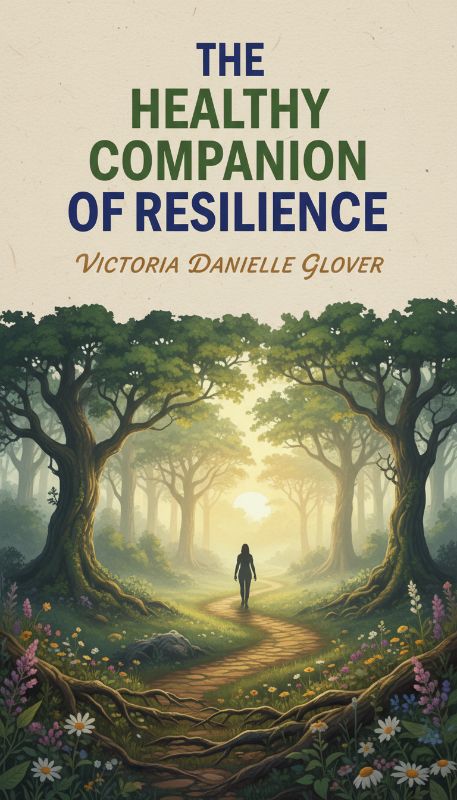
Resilience. The word itself conjures images of bouncing back, of standing tall amid adversity, and of journeying forward despite life’s many obstacles. In a world that often seems to demand more from us than we sometimes feel able to give, resilience becomes not simply a trait, but a necessity—one of our most vital companions on the path to a healthy, fulfilling life.
This book, The Healthy Companion of Resilience, is born from the intersection of two crucial realities: our inherent human vulnerability and our extraordinary capacity for adaptation and strength. To be resilient is not to be invulnerable. Rather, it is to be intimately acquainted with challenge, to acknowledge pain and disappointment, and yet to persevere with purpose and hope. In this introduction, we will explore what resilience truly means, why it matters in every domain of life, and how cultivating resilience is inexorably linked to physical, mental, emotional, and even social well-being.
The Nature of Resilience
At its core, resilience refers to the ability to withstand, recover from, and grow in the face of life’s stressors. It is not a singular, static quality, but a dynamic process—a set of behaviors, thoughts, actions, and attitudes that evolve over time. Resilience is both innate and acquired. Some people appear to possess it naturally, while others build it deliberately through experience, reflection, and practice.
The Myths and Realities
One of the most pervasive myths about resilience is that it implies a stoic, unflappable attitude, or a life unmarked by fear, grief, or failure. In truth, resilient individuals experience all the emotions and setbacks that others do. The difference lies in their responses. Rather than being derailed by adversity, they find ways to adapt, to learn, and to maintain their sense of purpose.
Another misconception is that resilience is something you either have or you don’t. In reality, resilience can be developed. Like any skill, it is honed through intention and effort. Genetics and upbringing play a role, but anyone can become more resilient through conscious practices and supportive environments.
The Importance of Resilience in Modern Life
We live in an era characterized by rapid change, uncertainty, and unprecedented challenges. Global events—pandemics, economic crises, social upheavals—collide with the everyday stresses of work, relationships, health, and self-doubt. Never before has the capacity to adapt, recover, and persist been so critical.
Resilience is not simply about “surviving.” It is about thriving in the face of adversity. Studies across psychology, medicine, organizational behavior, and education consistently show that resilient individuals are healthier, happier, and more successful. They are less likely to suffer from depression or anxiety, more likely to maintain strong relationships, and better equipped to navigate professional and personal setbacks.
In the workplace, resilience fosters innovation and agility. In families, it builds stronger bonds and greater emotional security. In communities, it creates networks of mutual support and collective healing. On a societal scale, resilience is the antidote to polarization and despair.
Resilience and Health: An Inseparable Bond
Why is resilience so intimately tied to health? The answer lies in the profound connections between mind, body, and environment.
Physical Health
Medical research has established clear links between chronic stress and a host of physical ailments, including heart disease, obesity, diabetes, and weakened immune function. Resilience does not remove stress from our lives, but it transforms our relationship to it. Resilient people manage stress more effectively, reducing its harmful impact on the body. They are more likely to engage in health-promoting behaviors—regular exercise, balanced nutrition, adequate sleep—because they are able to maintain motivation and optimism even in difficult times.
Mental and Emotional Health
Resilience acts as a buffer against anxiety, depression, and burnout. It equips individuals with coping strategies, emotional regulation skills, and the ability to reframe negative experiences. Resilient people view setbacks as temporary and surmountable, rather than permanent and pervasive. This mindset, known as “optimistic explanatory style,” is a powerful predictor of psychological well-being.
Social Health
Human beings are inherently social creatures. Resilience is both fostered by and expressed through relationships. Supportive networks—family, friends, mentors, colleagues—provide the scaffolding that sustains us during hardship. Conversely, resilient individuals contribute meaningfully to their communities, spreading hope, humor, and practical assistance. The healthiest societies are those in which resilience is woven into the fabric of collective life.
The Structure of This Book
The Healthy Companion of Resilience is designed as both a guide and a toolkit. Each chapter delves deeply into an essential aspect of resilience, blending scientific insight with real-world examples, practical exercises, and actionable strategies. The journey will be comprehensive, moving from foundational concepts to advanced techniques for personal, professional, and community resilience.
What You Will Learn
The science of stress and adaptation
The habits and mindsets of resilient people
Proven methods for building resilience in daily life
Ways to foster resilience in children and families
Tools for resilience in the workplace and broader society
How to harness adversity for growth and transformation
Throughout the book, case studies will illustrate resilience in action—from individuals overcoming illness or loss, to organizations rebounding from failure, to communities healing after crisis. You will also find reflection exercises and practical steps to start building your own resilience, regardless of your starting point.
The Journey Ahead
Before we embark on this exploration, it is important to acknowledge that the path of resilience is neither linear nor uniform. Your experience will be unique, shaped by your history, values, and aspirations. There will be moments of doubt, setbacks, and perhaps even the urge to give up. That is part of the process. Resilience is not about perfection, but persistence. It is about finding meaning in the struggle, and growth in the aftermath.
You may be reading this book in a time of peace or a season of hardship. Perhaps you seek resilience for yourself, or wish to nurture it in others. Whatever your motivation, you have already taken the first step by seeking understanding and growth.
Tip: As you read, keep a journal of your thoughts, reactions, and insights. Notice where you resonate most strongly, and where you feel resistance. These are signposts on your personal path of resilience.
The Call to Resilience
In a famous Japanese proverb, “Fall seven times, stand up eight.” This is the spirit that animates resilience—not the avoidance of hardship, but the courage to rise again and again, strengthened by each experience.
Resilience is your healthy companion, not only in times of crisis, but in the quiet, everyday moments where choices are made, habits are formed, and character is revealed. It is the unseen force that turns wounds into wisdom, and setbacks into stepping stones.
As you turn the page to Chapter 1, know that you are not alone. The journey of resilience is a universal one. By understanding, practicing, and embodying resilience, you equip yourself—and those around you—with the tools to face life’s uncertainties with hope, strength, and grace.
Welcome to The Healthy Companion of Resilience. Let us begin.