
eBookMarket Library
Fetching digital archives...
Fetching digital archives...
Explore our hand-picked series, organized by literary movement and thematic resonance. Every collection is a journey.
The Promise of Renewal: Why Fresh Starts Matter There is an undeniable allure to the idea of a fresh start. At the turning of each season, as winter’s chill gives way to the gentle warmth of spring, or as the calendar year flips to a new page, countless people across the globe experience a surge of hope, a sense of possibility, and the urge to begin again. This phenomenon—the universal longing for renewal—transcends cultures, ages, and backgrounds. It is the foundation upon which we build resolutions, make bold decisions, and pursue the lives we aspire to lead. This book, The Clear Season of Fresh Starts, is a comprehensive exploration of this powerful human impulse. Its pages are dedicated to understanding why fresh starts matter so deeply, how we can harness their transformative energy, and how to maintain momentum when the initial excitement fades. Whether you are yearning for a dramatic life overhaul or seeking subtle shifts in everyday routines, this book aims to be your guide, your companion, and your catalyst for meaningful change. The Anatomy of a Fresh Start What is it about beginnings that stirs the human heart? Why does the arrival of spring, the dawn of a new week, or even the start of a new day inspire so many to try again? The answer lies in the intersection of psychology, biology, and culture—a rich tapestry of influences that shape our responses to the passage of time. Beginnings signal opportunity. They allow us to leave behind what no longer serves us—unproductive habits, tired routines, and unfulfilled dreams—and step into a space of potential. The phrase “clean slate” is more than a metaphor; it is a psychological construct that offers relief from the burden of past failures, disappointment, or inertia. Scientific research supports the concept of the “fresh start effect.” Studies demonstrate that temporal landmarks—such as the first day of the month, birthdays, or even Mondays—motivate individuals to pursue goals with renewed vigor. These moments create a psychological distance from our past selves, allowing us to redefine our identity and reimagine our future. Yet, as universal as the desire for a fresh start is, the path from intention to lasting change is rarely straightforward. Too often, resolutions wither under the weight of old habits. Enthusiasm fades, obstacles emerge, and we are left wondering how to recapture the hope that inspired us. What This Book Offers The Clear Season of Fresh Starts is more than a motivational manifesto. It is a practical, evidence-based roadmap for anyone who wishes to harness the energy of new beginnings—whether in the context of personal growth, relationships, career, creativity, health, or spiritual renewal. Each chapter is designed to take you deeper into the mechanics of change, equipping you with both the insight and the tools you need to sustain your momentum beyond the initial burst of inspiration. You will discover: The psychological underpinnings of why and how fresh starts work. Real-life stories of individuals who successfully reinvented their paths. Practical frameworks for initiating and sustaining change in various domains. Actionable exercises and self-reflective prompts to personalize your journey. Common pitfalls that derail progress—and strategies to overcome them. The role of environment and community in supporting your transformation. My intention is to demystify the process of starting over, to offer you strategies rooted in research and real experience, and to empower you to create your own clear season—no matter what time of year it is. The Four Seasons of Renewal Throughout this book, you will encounter the metaphor of the seasons—not just as a backdrop, but as an organizing principle for personal growth. Each season brings its own lessons: Spring is the season of awakening, of hope, and of planting new seeds. Summer is a time for growth, resilience, and nurturing what we have begun. Autumn teaches us to harvest, reflect, and let go. Winter is the season of rest, consolidation, and inner preparation for what comes next. This cyclical approach reminds us that renewal is not a one-time event, but a lifelong process. By embracing the rhythms of beginnings, growth, reflection, and rest, we can sustain our progress and remain flexible in the face of change. Origins of the Clear Season The inspiration for this book came not just from observing the world or reading research, but from lived experience. Years ago, I found myself yearning for a new direction after a period of profound stagnation. Despite my knowledge and skills, I struggled to break free from old routines—until I recognized the subtle but significant power of “temporal landmarks.” The arrival of spring, with its longer days and blossoming trees, signaled a turning point. I embraced the season as a metaphorical reset, and gradually rebuilt my habits, my relationships, and my sense of purpose. As I shared this process with friends, colleagues, and clients, I noticed a pattern: everyone has their own “clear season.” Sometimes it coincides with the calendar; other times, it emerges from moments of crisis, opportunity, or inspiration. The common thread is the decision to step forward, to reclaim agency, and to envision a different future. How to Use This Book You may be at the threshold of a major life transition, or you may simply wish to make small, positive adjustments. This book is designed to meet you where you are. It is structured to allow for both sequential reading and modular exploration. Each chapter builds upon the last, but you may also dip into chapters that are most relevant to your current circumstances. At the end of each chapter, you will find: Reflection questions to deepen your understanding. Action steps to translate insight into practice. Summaries to reinforce key concepts. I encourage you to keep a journal or notebook as you read. The act of writing—of articulating your hopes, your challenges, and your progress—is itself a powerful tool for transformation. A Note on Perfectionism A common barrier to fresh starts is the belief that change must be perfect, complete, or immediate. This book invites you to release perfectionism and embrace the reality that progress is often incremental, nonlinear, and marked by setbacks as well as successes. The goal is not to become a flawless version of yourself, but to move consistently toward the life you desire, one clear season at a time. Tip: Allow yourself to begin imperfectly. The desire for a perfect start often prevents us from starting at all. The Journey Ahead Over the coming chapters, we will journey together through the landscape of fresh starts. We will examine: The science behind the fresh start effect. How to set meaningful intentions and actionable goals. Strategies to overcome resistance and self-sabotage. The importance of environment and community. Techniques for sustaining momentum during setbacks. The art of letting go and embracing change as a lifelong practice. You will read the stories of people who reinvented their paths in middle age, of young adults who found purpose after failure, of teams and communities who collectively embraced renewal. You will also encounter exercises designed to help you clarify your own vision of a fresh start—whether it means changing careers, healing relationships, pursuing a creative dream, or simply living with greater authenticity. An Invitation As you turn the page, I invite you to pause and consider: What does a fresh start mean to you? Is there an area of your life calling for renewal? What would it look like to embrace this season with openness and courage? This book is both a map and a mirror. It will offer direction, but it will also reflect back the unique possibilities within you. Every day, every moment, holds the promise of a new beginning. The clear season of fresh starts is not bound by the calendar—it is an invitation you can accept at any time. Welcome to your journey of renewal. Let’s begin.
Savanah Peake
$12.99
Home. The word alone invokes a multitude of images, feelings, and memories. It is more than just a shelter from the elements; it is our sanctuary, our creative haven, our space for rest and connection. Yet, for many, the home can also become a source of stress—a battleground of clutter, lost objects, and unfinished projects. In the modern era, where demands on our time and attention seem to grow exponentially, the state of our living spaces often mirrors the chaos or calm within ourselves. This book, The Clear Lessons of Home Organization, is dedicated to transforming not only your environment but also your daily life, peace of mind, and sense of control through the art and science of home organization. The Modern Challenge of Clutter Never before has the average person had access to so many possessions. The variety of goods, conveniences, and technologies at our fingertips is both a blessing and a burden. While our grandparents may have struggled to fill their cupboards, we now battle to find space for everything we own. The result? Drawers that refuse to close, garages that double as storage units, and the persistent feeling that there is never enough time or room to manage it all. But clutter is not simply a physical inconvenience. Clutter is mental noise. It interrupts our ability to think, focus, and relax. Studies have repeatedly demonstrated that a disorganized environment can increase feelings of anxiety, sap our productivity, and even strain our relationships. This book does not approach organization as an aesthetic luxury, but as a foundational pillar of well-being and effectiveness. When our homes are organized, they become more than functional spaces—they become supportive environments that amplify our goals and nurture our spirits. Why Home Organization Matters The stakes of home organization are higher than many realize. Consider these critical benefits: Reduced Stress: Research shows that tidy environments lower cortisol levels, which are linked to stress. Increased Productivity: An organized home frees up mental space and time, allowing you to focus on what truly matters. Enhanced Creativity: When visual and physical clutter is minimized, the mind is more free to explore, dream, and create. Financial Savings: Knowing what you own prevents duplicate purchases and helps you maintain what you have. Stronger Relationships: Shared spaces that are orderly reduce household conflict and nurture cooperation. Organization is not about perfection; it is about creating systems that work for you and your unique lifestyle. Whether you live alone in a studio apartment or with a bustling family in a sprawling house, the core principles remain the same. This book is your guide to understanding, designing, and sustaining order in any living situation. The Science and Art of Organization Some may assume that organizational skills are innate, a talent bestowed upon a lucky few. In reality, effective organization is both an art and a science—one that anyone can learn. The science lies in understanding human behavior, habits, and cognitive biases that lead to clutter and disarray. The art comes in crafting systems that are beautiful, intuitive, and personal. This book draws on insights from psychology, neuroscience, design, and time management to offer a comprehensive view of why disorganization happens and, most importantly, how to conquer it for good. You will encounter practical strategies, case studies, actionable checklists, and real-world examples drawn from my decades of experience as both a non-fiction author and a specialist in home organization. Common Myths and Misconceptions Before we embark on this journey, let’s dispel some persistent myths that keep many people stuck: “I’m just not an organized person.” Organization is a skill, not a personality trait. With guidance and practice, anyone can improve. “Organization requires expensive products.” Systems matter more than stuff. Clever solutions often cost little or nothing. “Neat equals organized.” A space can look tidy on the surface yet hide chaos in drawers, closets, or digital files. “It’s a one-time project.” True organization is a lifestyle, not a destination. It evolves as your life changes. This book will address these and other misconceptions head-on, equipping you with both the mindset and the methods to create lasting change. What to Expect in This Book Each chapter is designed to build upon the last, providing a cohesive roadmap from clutter and confusion to clarity and confidence. Here’s a preview of what you will uncover: Foundational Mindsets: How to reframe your relationship with your possessions and your home. Decluttering Techniques: Proven methods for letting go, sorting, and making decisions. Space Planning: Strategies to maximize function and flow in any room. Organizational Systems: Step-by-step guides for creating storage solutions that stick. Room-by-Room Solutions: Targeted advice for kitchens, bedrooms, bathrooms, garages, offices, and more. Maintaining Order: Habits and routines to keep clutter at bay for good. Throughout, you’ll find reinforcement exercises, pitfalls to avoid, and motivational reminders to support you at every phase. Tip: As you read, keep a notebook or digital document handy. Jot down insights, ideas, or questions that arise. The act of engaging with these concepts actively will dramatically increase your success. The Emotional Side of Organization No discussion of home organization would be complete without acknowledging the emotional terrain involved. Our belongings are more than objects; they are repositories of memory, symbols of identity, and sometimes sources of guilt or regret. The act of decluttering and organizing can unearth challenging feelings—fear of letting go, nostalgia, anxiety about change. This book offers compassionate guidance for navigating these emotional complexities. You will learn techniques for mindful decision-making, emotional attachment, and self-compassion as you reshape your space. Organization, at its best, is not about stripping away what matters—it is about making space for what matters most. The Ripple Effect Organized homes have a ripple effect that goes far beyond tidy shelves. When you gain mastery over your environment, you develop confidence in your ability to tackle other areas of life. You will find that the lessons of home organization—clarity, intentionality, adaptability—translate into improved work performance, better health, and richer relationships. Many readers have shared how, after transforming their homes, they felt emboldened to pursue new careers, start creative projects, or simply enjoy more restful, connected family time. The impact of home organization is profound because it touches every facet of how we live and who we become. Your Commitment Transformation is possible, but it requires commitment. There will be moments of resistance, fatigue, and doubt. However, the rewards—freedom, peace, and empowerment—are worth every ounce of effort. Approach this book as a companion and guide; return to its pages whenever you need inspiration or practical solutions. Reminder: Progress, not perfection, is the goal. Each small improvement in your environment is a victory worth celebrating. Let’s Begin As you turn the page, prepare to see your home—and your life—with fresh eyes. The journey ahead is one of discovery, creativity, and meaningful change. Whether you seek a complete overhaul or a subtle tune-up, the principles within The Clear Lessons of Home Organization will serve you for years to come. Welcome to the first step toward clarity, order, and a home that truly supports the life you wish to lead.
Savanah Peake
$5.00
Resilience is a word that resonates deeply in the collective consciousness of humanity, yet it is more than just a buzzword or a fleeting concept. It is the bedrock of personal growth, the engine of societal progress, and the invisible scaffolding that supports us as we weather the inevitable storms of life. In an era marked by relentless change, unforeseen challenges, and growing complexity, the capacity to endure, adapt, and ultimately thrive in the face of adversity is not just a desirable trait; it is essential. Welcome to The Wise Handbook of Resilience, a comprehensive exploration of what it truly means to be resilient—a guide not only to surviving the slings and arrows of fate but also to converting hardship into wisdom and setbacks into stepping stones. This handbook is designed for anyone who aspires to cultivate resilience, whether you are facing personal hardship, professional obstacles, or simply wish to fortify yourself against the uncertainties ahead. The Essence of Resilience At its core, resilience is the ability to recover from difficulties, adapt to change, and keep moving forward in the face of setbacks. It is not merely about enduring hardship; it is about responding to adversity in ways that foster growth, learning, and strength. Resilience is dynamic—a process that involves thoughts, behaviors, and actions that can be learned, developed, and reinforced over time. Many people mistakenly believe that resilience is an inherent trait, something you are either born with or without. This could not be further from the truth. While genetics and early life experiences can play a role, resilience is largely shaped by choices, habits, and mindsets that anyone can develop. Through intentional practice and self-awareness, it is possible to build an inner reservoir of strength that enables you to respond constructively to whatever life throws your way. Why Resilience Matters Why focus on resilience now? The answer lies in the world around us. We are living in a time of rapid technological advancement, social upheaval, and economic uncertainty. The ways in which we work, connect, and navigate our lives are constantly shifting. Natural disasters, political unrest, pandemics, and personal crises remind us with increasing frequency that stability is often an illusion. However, with challenge comes opportunity. Those who are resilient are better equipped to harness change rather than be overwhelmed by it. They are able to see possibilities where others see only obstacles, find meaning in suffering, and emerge from periods of turmoil not weakened, but strengthened. “The oak fought the wind and was broken, the willow bent when it must and survived.”— Robert Jordan This handbook aims to empower you to be more like the willow—flexible yet unbreakable, able to bend without losing your core integrity. The Structure of This Book The Wise Handbook of Resilience is meticulously structured to guide you on a comprehensive journey through every facet of resilience. The book begins with an examination of the foundational principles—what resilience is, how it is formed, and why it matters. Each subsequent chapter delves deeper into the practicalities, exploring the psychological, emotional, physical, and social dimensions of resilience. You will encounter real-world case studies, evidence-based techniques, and exercises designed to help you internalize key concepts. Along the way, you will learn to identify common pitfalls, avoid self-sabotage, and cultivate habits that reinforce your capacity to endure and flourish. This book is not merely academic or theoretical; it is intensely practical. Whether you are a student, a professional, a parent, or someone seeking personal transformation, you will find tools and insights here that are immediately applicable to your unique circumstances. The Science and Spirit of Resilience Modern research in psychology, neuroscience, and behavioral science has vastly expanded our understanding of resilience. We now know that resilience is closely linked to neuroplasticity—the brain’s remarkable ability to reorganize itself in response to experience. Habits such as mindfulness, reframing negative thoughts, and nurturing social connections can literally reshape our brains and transform our responses to adversity. Yet resilience is not only a matter of science; it is also a matter of spirit. Across cultures and throughout history, stories of resilience have inspired and uplifted us. From the quiet courage of individuals enduring personal loss to the collective resilience of communities rebuilding after disaster, the human capacity for recovery is awe-inspiring. In this handbook, you will find a blend of scientific rigor and timeless wisdom, drawing from both contemporary research and the accumulated knowledge of philosophers, spiritual teachers, and survivors throughout the ages. The Journey Ahead As you embark on this journey, it is vital to recognize that resilience is not about denying or suppressing pain. It is not a call to “tough it out” or pretend that everything is fine. True resilience acknowledges suffering, confronts it honestly, and seeks to learn from it. It is about developing an inner compass that helps you navigate through darkness with courage and hope. Throughout this book, you will be encouraged to reflect deeply on your own life and experiences. You will be invited to challenge limiting beliefs, practice new skills, and step outside your comfort zone. The aim is not to prescribe a one-size-fits-all formula, but to equip you with a diverse toolkit that you can adapt to your own needs. Who This Book Is For This handbook is for anyone who wishes to live with greater strength, grace, and fulfillment. It is for those who have faced hardship and want to find meaning in their struggles, as well as for those who wish to prepare for future challenges. It is for leaders seeking to inspire resilience in others, and for individuals seeking to transform themselves. If you are grappling with personal loss or trauma, you will find validation, guidance, and hope. If you are navigating career transitions, relationship difficulties, or health challenges, you will discover strategies to adapt and persevere. If you are seeking to build resilience within your family, team, or community, you will learn principles that foster collective strength. Key Themes and Promises By reading The Wise Handbook of Resilience, you will: Understand the foundations of resilience across psychological, emotional, physical, and social spheres. Learn practical tools for managing stress, reframing negative experiences, and cultivating optimism. Discover stories of resilience that illuminate the path from adversity to triumph. Engage in exercises that strengthen your resilience and deepen your self-awareness. Recognize common obstacles to resilience and learn how to overcome them. Develop a personalized action plan to integrate resilience into every aspect of your life. “Resilience is not about avoiding the fall, but about rising again and again—each time a little stronger, a little wiser, a little more whole.” The Invitation Resilience is not a destination; it is a lifelong journey. There will be setbacks, detours, and moments of doubt. Yet with each challenge, you have the opportunity to build strength, renew your sense of purpose, and discover capacities within yourself that you never knew existed. As you turn the pages of this handbook, I invite you to approach the material with curiosity, openness, and self-compassion. Allow yourself to be both a student and a teacher—learning from the wisdom of others while also reflecting on your own experiences. Remember, you are not alone on this journey. Every human being, at some point in their life, faces adversity. What distinguishes those who flourish from those who are defeated is not the absence of hardship, but the presence of resilience. May this handbook serve as your companion, your guide, and your source of inspiration as you cultivate the wisdom and strength to thrive—no matter what life brings. Looking Forward In the chapters that follow, we will explore resilience from every angle—its origins, its manifestations, its challenges, and its rewards. You will gain tools, insights, and encouragement to help you become not just a survivor, but a wise and resilient architect of your own destiny. Let us begin.
Savanah Peake
$50.00
Personal growth is the deliberate process of improving oneself—mentally, emotionally, and often spiritually—to live a more fulfilling and purpose-driven life. In a world that is constantly changing, where demands on our attention and energy are relentless, the pursuit of personal growth is both a challenge and an opportunity. This book, The Steady Workbook of Personal Growth, is designed to be your companion on this journey. It is not a quick-fix manual nor a collection of vague platitudes. Instead, it is a practical, evidence-informed, and deeply reflective guide for those ready to engage with their own potential fully. What Is Personal Growth? At its core, personal growth is the ongoing process of understanding and developing oneself in order to reach one’s fullest potential. It is more than just a buzzword—it is a lifelong commitment to becoming the best version of yourself, step by steady step. This process involves building new skills, expanding your knowledge, increasing your self-awareness, and improving your emotional intelligence. It asks you to face your fears, challenge your limiting beliefs, and cultivate habits that promote well-being and resilience. Personal growth is not linear. It is a journey marked by progress and setbacks, moments of clarity, and periods of confusion. The path will look different for everyone, but the principles of growth—commitment, reflection, learning, and action—are universal. Why Pursue Personal Growth? You may wonder: Why invest time and effort in personal growth? The reasons are as diverse as humanity itself, but certain themes recur: Fulfillment: Growth allows us to lead lives that feel meaningful and satisfying, aligned with our values and aspirations. Resilience: The more we understand ourselves and develop inner resources, the better equipped we are to handle life’s inevitable challenges. Relationships: Personal growth improves our ability to connect with others, communicate authentically, and build deeper relationships. Contribution: As we grow, we are able to give more—creatively, emotionally, and practically—to our communities and the world. Health and Well-being: Many aspects of personal growth, such as managing stress, cultivating gratitude, and developing healthy habits, directly contribute to physical and mental health. The Steady Approach: Why Slow and Consistent Wins The philosophy behind this workbook is rooted in the idea that steady, consistent effort outperforms bursts of motivation followed by stagnation. Rapid changes rarely last. Lasting transformation is built on the foundation of small, sustainable steps repeated over time. This approach is supported by a wealth of research in behavioral science, which demonstrates that habits formed gradually are more likely to stick and that self-compassion during setbacks leads to greater long-term success. Tip: Think of personal growth as tending to a garden. Seeds need time, care, and patience to grow into strong, healthy plants. The same is true for habits, skills, and self-understanding. How to Use This Workbook This book is divided into logical, progressive chapters, each focusing on a specific aspect of personal growth. Every chapter will provide: Deep Explanations: Thorough exploration of the core topic, referencing relevant research, theories, and historical perspectives. Practical Context: Real-life examples and case studies to illustrate how these concepts play out. Actionable Techniques: Concrete strategies and exercises you can apply immediately. Common Pitfalls: Warnings about typical mistakes and how to avoid them. Reflection Prompts and Exercises: Designed to reinforce learning and encourage personalized growth. You are encouraged to read at your own pace. Some chapters may resonate more deeply than others at different points in your life. Return to exercises and ideas as often as needed—growth is cyclical, not a one-time achievement. The Foundations of This Workbook This workbook draws from a variety of disciplines, including psychology, neuroscience, philosophy, and the wisdom of lived experience. It is grounded in several key principles: Self-Awareness: The foundation of all growth is the ability to observe oneself honestly, without excessive judgment or denial. Intentionality: Growth does not happen by accident; it requires conscious choices and actions aligned with clear values. Adaptability: The ability to learn, unlearn, and relearn is vital in a changing world. Compassion: True growth is kind, not harsh. It involves treating oneself—and others—with empathy, patience, and understanding. Accountability: Progress is best maintained when you track your actions, reflect on your results, and hold yourself gently accountable for your efforts. Setting Expectations: What This Book Is and Is Not It is important to clarify what you will and will not find in these pages. This is not a book of quick hacks or empty motivational slogans. There are no promises of overnight transformation or universal “secrets” to happiness. Instead, you will find: Evidence-based insights: Concepts and strategies that are supported by research and the experiences of real people. Practical exercises: Tools you can use immediately, tailored to different learning styles and needs. Guided reflections: Prompts to help you deepen your understanding and apply lessons to your own unique context. Support for setbacks: Strategies for handling obstacles and maintaining progress over the long term. Reminder: The most profound changes often come from the smallest shifts, compounded over time. Your Role in This Journey A workbook is different from a passive reading experience. Your active participation is crucial. Be honest with your reflections. Commit to trying the exercises, even (or especially) when they feel challenging. Allow yourself to move at your own pace, and remember that growth is intensely personal—comparison to others is often unhelpful. Consider keeping a dedicated notebook or journal as you move through the chapters. Write down your answers, insights, and questions. Over time, this record will become a powerful testament to your journey. The Benefits Awaiting You By engaging deeply with the material in this workbook, you can expect to: Gain greater clarity about your values, goals, and strengths. Develop a set of practical tools for managing emotions, overcoming obstacles, and building habits. Build deeper self-confidence and a sense of personal agency. Improve your relationships through better communication and empathy. Experience increased resilience, enabling you to navigate setbacks and uncertainty with greater ease. Cultivate a sense of meaning and purpose in everyday life. These benefits do not arrive all at once, nor do they manifest identically for everyone. The journey is uniquely yours. The Structure of the Book Here’s what you can expect as you move through the following chapters: Subsequent chapters will guide you through goal-setting, habit formation, emotional intelligence, resilience, communication skills, decision-making, gratitude, mindfulness, overcoming fear, and more. Each chapter builds on the last, yet can also stand alone, allowing you to focus on the areas most relevant to you at any moment. At the end of the book, you will find a comprehensive conclusion that ties together the lessons learned, with guidance for continuing your growth long after you finish these pages. An Invitation Personal growth is not a destination but an ever-evolving journey. By picking up this book, you have already taken a courageous first step. Allow yourself to be both the architect and the explorer of your life. Approach these chapters with curiosity, patience, and self-compassion. Remember: Progress is not measured by perfection but by persistence. Each small step, no matter how unremarkable it may seem, is a victory. You do not travel this road alone—countless others are walking their own paths, facing their own challenges, and celebrating their own wins. You are part of a vast community of seekers, learners, and growers. Reflection Prompt: Take a few minutes before you turn the page. In your notebook or journal, write down: Why are you drawn to personal growth at this moment in your life? What do you hope to gain from this journey? What would success look like for you, three months from now? Let’s begin the steady, meaningful, and rewarding journey of personal growth—one chapter at a time.
Savanah Peake
$60.00
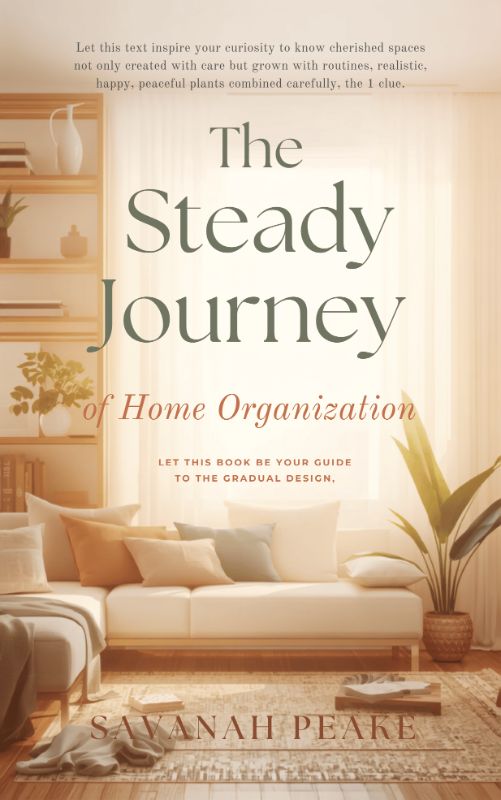
Organizing a home is much more than neatly stacking boxes or color-coding shelves. It is a transformative process that touches the very fabric of our daily lives, influencing not only how we interact with our spaces but also how we feel, think, and perform. The journey to a well-organized home is not a one-time event or a weekend project; it is a steady, ongoing evolution—a practice rooted in self-discovery, discipline, and intention. The Steady Journey of Home Organization is your comprehensive guide, crafted not only to teach you the mechanics of tidying up but also to inspire a lasting, meaningful change in how you relate to your environment. Why Home Organization Matters A cluttered home is rarely just about "too much stuff." It can be a symptom of overwhelmed routines, unexamined habits, or even emotional stress. Clutter can sap our energy, increase anxiety, and diminish productivity. Conversely, an organized home does not merely look appealing—it feels inviting, supports our goals, and offers a foundation for well-being. Numerous studies have linked organized spaces to improved mental clarity, better sleep, and higher overall satisfaction with life. The process of organizing, as you will soon discover, is an act of self-care and empowerment. By taking control of our physical environments, we reclaim a sense of agency and peace. "An organized home is not a destination. It is a dynamic, living system that adapts to your life and grows with you." The Journey Over the Destination Many books and television shows promise instant, dramatic transformations: a room made new in a single afternoon or a closet overhauled before dinner. Yet, these quick fixes rarely last. Real, sustainable organization is a journey—a steady progress that unfolds over time and adapts to the shifting realities of your life. The steady journey means embracing organization as a continuous process. It is not about perfection but about progress, resilience, and learning to enjoy the small victories. This mindset shift is vital because it liberates you from the pressure to “get it all done” and instead encourages you to develop lifelong habits that support your unique needs and goals. The Psychology of Clutter Before you pick up a single box or label a drawer, it is essential to understand why clutter accumulates in the first place. Clutter is not simply the result of laziness or lack of discipline; it often has deep psychological roots. Sentimental attachments, guilt over waste, decision fatigue, and the sheer busyness of modern life all play a role. Sentimental Attachments Many people struggle to part with items that hold memories, even if the objects no longer serve a practical purpose. A faded birthday card, an old sweater, or your child’s first crayon drawing—these items become imbued with emotional significance. Part of the journey is learning to honor memories without being held hostage by them. Decision Fatigue In a world where our brains are bombarded with choices, making a decision about what to keep and what to let go can feel exhausting. This mental fatigue often leads to procrastination and avoidance, causing clutter to accumulate further. The Myth of “Just in Case” A common barrier to organization is the belief that you might need something “someday.” This mentality, while rooted in practicality, often results in homes filled with unused items. Learning to distinguish between real needs and hypothetical scenarios is a crucial skill you will develop throughout this book. The Benefits of an Organized Home The rewards of an organized home extend far beyond a tidy living room or an immaculate pantry. They touch every aspect of life, from relationships to work, creativity, and health. Here are just a few benefits you can expect on your journey: Reduced Stress: A clear space fosters a clear mind. You spend less time searching for lost items and more time enjoying your home. Increased Productivity: Organized environments support better focus, efficiency, and creativity. Enhanced Well-Being: Physical order often translates into emotional and mental harmony. More Time for What Matters: With systems in place, daily chores are streamlined, freeing you to pursue hobbies, connect with loved ones, or simply rest. What to Expect in This Book This book is not just a manual—it is a companion on your journey. It is divided into sequential chapters, each focusing on a vital aspect of home organization, from understanding your unique relationship with your possessions to creating personalized systems and overcoming common obstacles. Each chapter offers: In-depth explanations of the concepts underlying effective organization. Realistic examples and case studies drawn from diverse households. Step-by-step techniques that are flexible and adaptable. Common pitfalls to avoid, along with practical solutions. Reinforcement exercises to help you internalize and apply what you learn. Who This Book Is For Whether you are a busy professional, a parent managing a bustling household, a student living in a small space, or someone navigating a major life transition, this book is for you. Organization is not about adhering to a single rigid standard—it is about discovering what works best for your life, needs, and aspirations. You do not need to be a “naturally organized” person or invest in expensive storage solutions to benefit from this journey. All you need is a willingness to reflect, experiment, and take steady steps forward. The Principles of Steady Progress Throughout this book, we will return again and again to several core principles that underpin the steady journey: Intentionality: Organization begins with clear intentions. What do you want from your home? How do you want to feel in your space? Consistency: Small, regular actions create lasting change. The goal is not to overhaul your home overnight, but to build habits that endure. Adaptability: Life is unpredictable. Systems that work today may need adjustment tomorrow, and that is okay. Self-Compassion: There will be setbacks. Progress is rarely linear. Be kind to yourself and celebrate each step forward. Debunking Organizational Myths Before you embark, let us dispel a few common myths: Myth 1: Organization Means Minimalism: While minimalism is a popular trend, organization is not about owning the least amount possible. It is about curating your belongings so your home supports your life. Myth 2: You Must Be Naturally Tidy: Organization is a skill, not an innate trait. Anyone can learn and improve with the right tools and mindset. Myth 3: You Need Expensive Products: While organizational products can help, the foundation of an organized home is thoughtful systems and behaviors, not gadgets or containers. Myth 4: Once Organized, You’re Done: As life changes, so will your organizational needs. The journey is ongoing, not a one-time event. Creating a Vision for Your Home As you prepare to embark on this journey, take a moment to imagine your ideal home. Not the home in a magazine or on a television show, but your home—one that reflects your values, supports your routines, and brings you joy. Exercise: Close your eyes and picture a typical day in your perfectly organized home. What do you see? How do you feel? What activities are easy and effortless? Write down your vision and keep it handy. This vision will be your north star as you work through the chapters ahead. Overcoming the Fear of Starting For many, the hardest part of organizing is getting started. The sheer scale of the project can feel overwhelming, leading to inertia and frustration. This book will guide you through breaking down large tasks into manageable steps, setting realistic goals, and building momentum. Remember, you are not alone on this journey. Countless others have transformed their homes and lives by taking steady, purposeful steps. With each chapter, you will gain the knowledge, confidence, and motivation to move forward. The Road Ahead In the chapters that follow, we will explore: The foundations of home organization and how to assess your current state. Methods for decluttering with compassion and purpose. Strategies to create and maintain effective organizational systems. Room-by-room guides for tackling specific spaces. Solutions for unique challenges, from shared households to small apartments. Tools for cultivating habits and routines that ensure lasting results. By the end of this book, you will not only understand the principles of home organization but also possess the mindset and skills to sustain it. Most importantly, you will have discovered that the journey to an organized home is also a journey toward greater self-awareness, intentionality, and fulfillment. Take a deep breath, open your mind, and let us begin The Steady Journey of Home Organization together. Your home—and your life—are about to change in profound and lasting ways.
Savanah Peake
$100.00
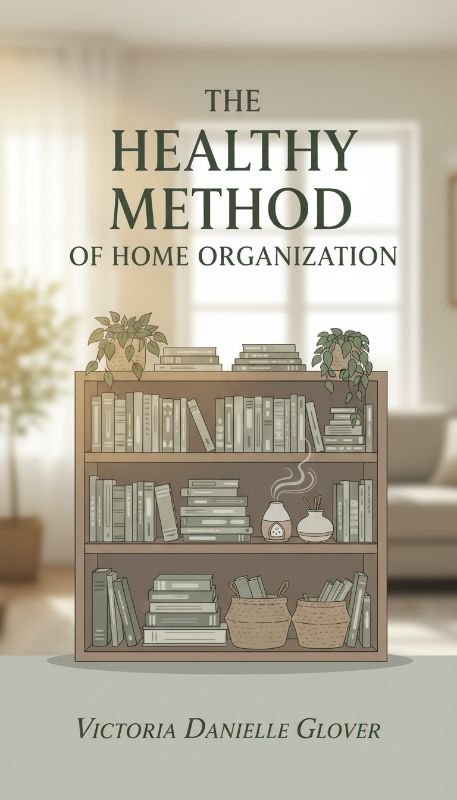
The Foundation of Order: A New Approach to Organizing Your Home In a world that often feels chaotic and overwhelming, the home should serve as a sanctuary—a space of restoration, creativity, and security. Yet, for many, the reality of daily life within our living spaces feels far from peaceful. Clutter accumulates, systems break down, and the stress of disorganization seeps into every aspect of well-being. The Healthy Method of Home Organization was born out of a desire to bridge the gap between the dream of a harmonious home and the practical reality of maintaining one. This book is designed not simply as a guide to tidying up, but as a comprehensive blueprint for cultivating an environment that supports health, happiness, and holistic living. Home organization is more than aesthetics or the superficial arrangement of objects. It is a deliberate, mindful process that shapes how we live, interact, and thrive. The Healthy Method recognizes that the state of our homes directly influences our mental clarity, emotional stability, physical health, and overall satisfaction with life. This approach emphasizes sustainability, personalization, and wellness, moving beyond quick fixes toward nurturing habits and mindsets that endure. Understanding the Link Between Organization and Well-being Before delving into the techniques and strategies that will transform your living space, it is crucial to acknowledge the profound connection between environmental order and personal health. Numerous studies in the fields of psychology, neuroscience, and public health have demonstrated that physical clutter can elevate stress hormones, disrupt sleep, and diminish productivity. Conversely, organized environments foster a sense of control, encourage healthy routines, and create space—both literally and figuratively—for joy, creativity, and meaningful connection. Consider the psychological impact of entering a cluttered room: anxiety rises, focus wanes, and the urge to escape becomes palpable. Now, contrast this with the sensation of stepping into a well-organized space—one where each item has a purpose, surfaces are clear, and the atmosphere feels light and inviting. The difference is not merely visual; it is physiological and emotional. The Healthy Method integrates these insights, weaving wellness principles into every facet of the organizational process. Rethinking Traditional Organization Traditional home organization programs often prescribe rigid systems or advocate for drastic, one-time overhauls. While visually impressive, these methods frequently fail to address the root causes of disorganization or the unique needs of each individual and household. The result? Relapse into clutter, frustration, and a sense of inadequacy. This book takes a different path. The Healthy Method is grounded in flexibility, self-awareness, and incremental progress. It acknowledges that life is dynamic, that homes evolve with their inhabitants, and that true order is not about perfection but about intentionality. Here, you will find principles that adapt to your lifestyle, strategies tailored to different personalities, and techniques that prioritize well-being every step of the way. The Three Pillars of the Healthy Method At the core of this book are three foundational pillars that will guide you through the process: Mindful AssessmentOrganization begins with awareness. By understanding your relationship to your belongings, your routines, and the emotional triggers behind clutter, you can make lasting, meaningful changes. This pillar emphasizes reflection, goal-setting, and the cultivation of a mindset that supports order and self-care. Holistic ActionPractical, hands-on strategies are essential for transformation. The Healthy Method offers room-by-room guidance, creative solutions for challenging spaces, and systems that are easy to maintain. Here, the focus is on simplicity, functionality, and the harmonious integration of organization into daily life. Sustainable MaintenanceTrue organization is not a one-time event, but a continuous journey. This pillar explores the habits, routines, and tools necessary for preserving order, adapting to change, and nurturing an environment that remains supportive over the long term. Who Is This Book For? Every household, regardless of size, culture, or stage of life, can benefit from a healthier approach to organization. Whether you live alone in a city apartment, share a bustling family home, or juggle the demands of remote work and parenting, the principles within this book are designed to be universal, yet customizable. You may be: A busy professional seeking relief from the chaos of daily routines. A parent hoping to create calm and structure for your children. An individual on a journey of self-discovery or personal transformation. Someone facing a life transition—moving, downsizing, or merging households. Anyone yearning for a fresh start, a clearer mind, or a healthier relationship with their home. No matter your circumstances, this book will meet you where you are and empower you to create the environment you deserve. How to Use This Book The Healthy Method of Home Organization is structured to support both linear and flexible reading. The book is divided into comprehensive chapters, each focusing on a vital aspect of the organizational journey. You may choose to read sequentially, building knowledge and momentum as you progress, or you may dip into specific chapters that address your immediate needs or interests. Each chapter includes: In-depth explanations and psychological insights to deepen understanding. Step-by-step guidance for practical application. Real-world examples and case studies to illustrate concepts. Common pitfalls and strategies to overcome them. Exercises and reflection prompts for reinforcing learning and tracking progress. At the end of each chapter, you will find summaries and action steps to help you integrate new habits into your daily routine. What Makes the Healthy Method Different? Many organizational philosophies promise transformation, but few consider the complexity of human behavior, the impact of environment on health, or the importance of sustainable change. The Healthy Method stands apart for several reasons: Integration of Well-beingOrganization is not treated as a separate or superficial task, but as an integral part of a healthy lifestyle. This book explores the interplay between physical environment, mental health, and personal fulfillment. Personalization Over PrescriptionThere is no one-size-fits-all solution. The Healthy Method encourages experimentation, adaptation, and self-compassion, recognizing that each journey is unique. Focus on Long-Term ResultsRather than quick fixes or trendy decluttering fads, this approach builds habits and systems that endure, evolving alongside your life circumstances. Emphasis on Mindfulness and IntentionalityEvery organizational decision is an opportunity for self-reflection and growth. The process is as valuable as the outcome. Preparing for Your Journey As you embark on the organizational process, remember that change requires patience, persistence, and kindness toward yourself and those who share your space. There will be moments of resistance, setbacks, and uncertainty. These are not signs of failure, but natural parts of any transformative journey. Tip: Begin with curiosity, not judgment. Approach each space, item, and habit with a desire to understand, rather than to criticize. The more compassionate your approach, the more sustainable your results will be. Gather a notebook or journal to track your progress, jot down insights, and set intentions. Consider inviting others—family members, housemates, or friends—to join you on this path. Shared goals and mutual support can amplify motivation and enhance accountability. A Glimpse into the Chapters Ahead The chapters that follow will guide you through every room and aspect of your home, from decluttering strategies to designing efficient storage, from cultivating morning routines to managing digital chaos. You will learn how to create spaces that energize and inspire, systems that save time and reduce stress, and habits that foster a sense of peace and accomplishment. Topics will include: Understanding the psychology of clutter and overcoming attachment to possessions. Developing personalized organization plans based on your lifestyle and values. Mastering the art of decluttering with compassion and clarity. Designing functional, beautiful storage solutions for every room. Establishing daily, weekly, and seasonal maintenance routines. Organizing for families, children, and shared living arrangements. Achieving balance between minimalism and meaningful collections. Creating spaces for work, creativity, and relaxation. Integrating eco-friendly and sustainable practices into your organization. Each chapter is crafted to be both practical and inspirational, inviting you to take concrete steps while also reflecting on the deeper reasons behind your choices. The Promise of a Healthy Home A healthy home is not defined by the absence of clutter alone, but by the presence of intentionality, comfort, and support for your well-being. It is a place where you feel energized in the morning, grounded in moments of stress, and genuinely at home within yourself and your surroundings. The Healthy Method of Home Organization is more than a manual; it is an invitation to reconnect with your living space, to honor your needs and aspirations, and to build a foundation of order that supports every dimension of your life. Let us begin this journey together—one mindful decision, one organized corner, and one renewed sense of possibility at a time. In the chapters that follow, you will discover not just how to organize your home, but why it matters and how it can transform your health, happiness, and life. Welcome to the first step of a new chapter—for your home, your mind, and your well-being.
Victoria Danielle Glover
$1.00