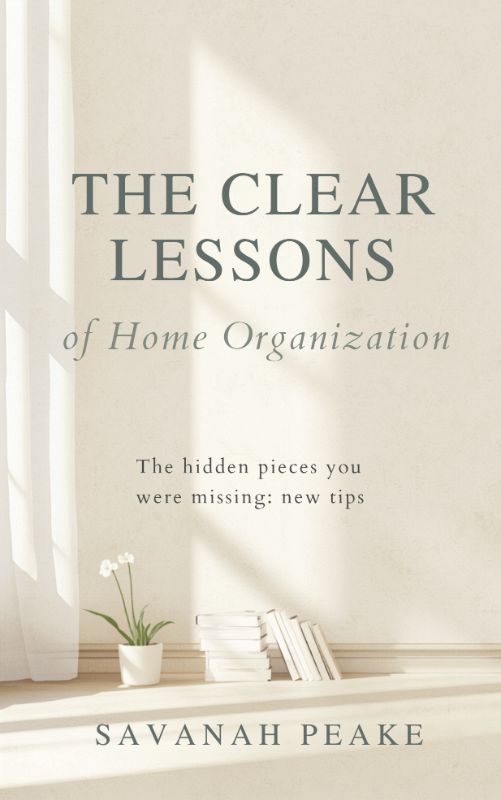
Home. The word alone invokes a multitude of images, feelings, and memories. It is more than just a shelter from the elements; it is our sanctuary, our creative haven, our space for rest and connection. Yet, for many, the home can also become a source of stress—a battleground of clutter, lost objects, and unfinished projects. In the modern era, where demands on our time and attention seem to grow exponentially, the state of our living spaces often mirrors the chaos or calm within ourselves. This book, The Clear Lessons of Home Organization, is dedicated to transforming not only your environment but also your daily life, peace of mind, and sense of control through the art and science of home organization.
The Modern Challenge of Clutter
Never before has the average person had access to so many possessions. The variety of goods, conveniences, and technologies at our fingertips is both a blessing and a burden. While our grandparents may have struggled to fill their cupboards, we now battle to find space for everything we own. The result? Drawers that refuse to close, garages that double as storage units, and the persistent feeling that there is never enough time or room to manage it all.
But clutter is not simply a physical inconvenience. Clutter is mental noise. It interrupts our ability to think, focus, and relax. Studies have repeatedly demonstrated that a disorganized environment can increase feelings of anxiety, sap our productivity, and even strain our relationships. This book does not approach organization as an aesthetic luxury, but as a foundational pillar of well-being and effectiveness. When our homes are organized, they become more than functional spaces—they become supportive environments that amplify our goals and nurture our spirits.
Why Home Organization Matters
The stakes of home organization are higher than many realize. Consider these critical benefits:
Reduced Stress: Research shows that tidy environments lower cortisol levels, which are linked to stress.
Increased Productivity: An organized home frees up mental space and time, allowing you to focus on what truly matters.
Enhanced Creativity: When visual and physical clutter is minimized, the mind is more free to explore, dream, and create.
Financial Savings: Knowing what you own prevents duplicate purchases and helps you maintain what you have.
Stronger Relationships: Shared spaces that are orderly reduce household conflict and nurture cooperation.
Organization is not about perfection; it is about creating systems that work for you and your unique lifestyle. Whether you live alone in a studio apartment or with a bustling family in a sprawling house, the core principles remain the same. This book is your guide to understanding, designing, and sustaining order in any living situation.
The Science and Art of Organization
Some may assume that organizational skills are innate, a talent bestowed upon a lucky few. In reality, effective organization is both an art and a science—one that anyone can learn. The science lies in understanding human behavior, habits, and cognitive biases that lead to clutter and disarray. The art comes in crafting systems that are beautiful, intuitive, and personal.
This book draws on insights from psychology, neuroscience, design, and time management to offer a comprehensive view of why disorganization happens and, most importantly, how to conquer it for good. You will encounter practical strategies, case studies, actionable checklists, and real-world examples drawn from my decades of experience as both a non-fiction author and a specialist in home organization.
Common Myths and Misconceptions
Before we embark on this journey, let’s dispel some persistent myths that keep many people stuck:
“I’m just not an organized person.” Organization is a skill, not a personality trait. With guidance and practice, anyone can improve.
“Organization requires expensive products.” Systems matter more than stuff. Clever solutions often cost little or nothing.
“Neat equals organized.” A space can look tidy on the surface yet hide chaos in drawers, closets, or digital files.
“It’s a one-time project.” True organization is a lifestyle, not a destination. It evolves as your life changes.
This book will address these and other misconceptions head-on, equipping you with both the mindset and the methods to create lasting change.
What to Expect in This Book
Each chapter is designed to build upon the last, providing a cohesive roadmap from clutter and confusion to clarity and confidence. Here’s a preview of what you will uncover:
Foundational Mindsets: How to reframe your relationship with your possessions and your home.
Decluttering Techniques: Proven methods for letting go, sorting, and making decisions.
Space Planning: Strategies to maximize function and flow in any room.
Organizational Systems: Step-by-step guides for creating storage solutions that stick.
Room-by-Room Solutions: Targeted advice for kitchens, bedrooms, bathrooms, garages, offices, and more.
Maintaining Order: Habits and routines to keep clutter at bay for good.
Throughout, you’ll find reinforcement exercises, pitfalls to avoid, and motivational reminders to support you at every phase.
Tip: As you read, keep a notebook or digital document handy. Jot down insights, ideas, or questions that arise. The act of engaging with these concepts actively will dramatically increase your success.
The Emotional Side of Organization
No discussion of home organization would be complete without acknowledging the emotional terrain involved. Our belongings are more than objects; they are repositories of memory, symbols of identity, and sometimes sources of guilt or regret. The act of decluttering and organizing can unearth challenging feelings—fear of letting go, nostalgia, anxiety about change.
This book offers compassionate guidance for navigating these emotional complexities. You will learn techniques for mindful decision-making, emotional attachment, and self-compassion as you reshape your space. Organization, at its best, is not about stripping away what matters—it is about making space for what matters most.
The Ripple Effect
Organized homes have a ripple effect that goes far beyond tidy shelves. When you gain mastery over your environment, you develop confidence in your ability to tackle other areas of life. You will find that the lessons of home organization—clarity, intentionality, adaptability—translate into improved work performance, better health, and richer relationships.
Many readers have shared how, after transforming their homes, they felt emboldened to pursue new careers, start creative projects, or simply enjoy more restful, connected family time. The impact of home organization is profound because it touches every facet of how we live and who we become.
Your Commitment
Transformation is possible, but it requires commitment. There will be moments of resistance, fatigue, and doubt. However, the rewards—freedom, peace, and empowerment—are worth every ounce of effort. Approach this book as a companion and guide; return to its pages whenever you need inspiration or practical solutions.
Reminder: Progress, not perfection, is the goal. Each small improvement in your environment is a victory worth celebrating.
Let’s Begin
As you turn the page, prepare to see your home—and your life—with fresh eyes. The journey ahead is one of discovery, creativity, and meaningful change. Whether you seek a complete overhaul or a subtle tune-up, the principles within The Clear Lessons of Home Organization will serve you for years to come.
Welcome to the first step toward clarity, order, and a home that truly supports the life you wish to lead.