
eBookMarket Library
Fetching digital archives...
Fetching digital archives...
Explore our hand-picked series, organized by literary movement and thematic resonance. Every collection is a journey.

The Journey Begins: Unraveling the Essence of Confidence Confidence is one of those rare qualities that is universally admired, universally sought, and—at times—universally misunderstood. In every corner of the world, across cultures, professions, and personal journeys, the desire for authentic confidence is a driving force behind countless ambitions. Yet, for all its significance, confidence often remains elusive, cloaked in myths, misconceptions, and fleeting moments that seem to slip through our fingers just when we need them most. The Clear Way of Confidence is a book born out of the pressing need to demystify what confidence truly is, to provide a roadmap that is both practical and profound, and to empower anyone—regardless of their background, upbringing, or present circumstances—to cultivate lasting, genuine confidence. This is not a book of empty platitudes or wishful thinking. It is a grounded exploration, blending research, lived experience, and actionable guidance to chart a path forward for those who are ready to claim confidence as a daily reality. Why Confidence Matters We live in a world that constantly challenges us—personally, professionally, and socially. The ability to trust yourself, to stand firm in your convictions, and to navigate adversity with resilience is no longer a luxury; it is a necessity. Confidence is the underpinning of: Effective Communication: The courage to speak up in meetings, express your opinions, and have difficult conversations. Leadership: Inspiring others, making decisions, and leading by example. Personal Growth: Taking on new challenges, learning new skills, and embracing change. Relationships: Building trust, setting boundaries, and expressing vulnerability. Resilience: Bouncing back from setbacks, learning from failure, and maintaining momentum. Without a solid foundation of self-assurance, even the most talented individuals can falter. Conversely, with true confidence, ordinary people often accomplish extraordinary things. The Problem with Confidence “Hacks” A quick search online will yield a million tips, tricks, and “confidence hacks.” Stand tall. Make eye contact. Power pose for two minutes before a presentation. While some of these techniques have merit, they are often band-aids for a deeper wound. They may offer a fleeting sense of empowerment, but they seldom address the core of what it means to be truly confident. This book rejects the notion that confidence can be conjured overnight through superficial changes alone. Instead, it embraces the complexity of human psychology, the richness of our stories, and the importance of aligning external actions with internal beliefs. True confidence is not about faking it until you make it—it is about becoming it, step by step, in a sustainable and authentic way. The Science and Spirit of Confidence Confidence exists at the intersection of mindset, habit, and experience. It is as much an emotional state as it is a set of behaviors. Neuroscientific research tells us that our brains are malleable, capable of rewiring old patterns and building new ones through intentional practice. Psychologists have mapped out the pathways of self-efficacy, showing how beliefs about our abilities profoundly shape our actions. Philosophers have pondered the nature of self-worth, courage, and the pursuit of meaning. This book draws from all these wells of wisdom. You will find: Insights from leading scientific studies on confidence, self-esteem, and mindset. Lessons learned from individuals who have overcome tremendous odds to find their voice. Ancient philosophies and modern practices distilled into actionable steps. Exercises designed to build confidence from the inside out. Common Myths and Misconceptions Before embarking on this journey, it is essential to clear away some of the most persistent myths surrounding confidence: Confidence is innate: Many believe you are either born confident or you are not. In truth, confidence can be cultivated, regardless of starting point. Confidence is arrogance: True confidence is rooted in humility and self-awareness, not bravado or bravado. Confidence requires perfection: On the contrary, authentic confidence acknowledges and embraces imperfection. Confidence is constant: Even the most self-assured individuals have moments of doubt. The goal is not to eliminate uncertainty, but to navigate it skillfully. Confidence is about being the loudest in the room: Sometimes, the quietest person has the deepest conviction. Tip: As you read, be willing to question your own assumptions about confidence. Growth begins with openness. The Structure of This Book The Clear Way of Confidence is structured to guide you step-by-step from foundational concepts to advanced applications. Each chapter builds upon the last, weaving together theory and practice, reflection and action. Here is an overview of what lies ahead: Chapters 1–3: We begin by exploring the roots of confidence—how it develops, why it falters, and what it truly means to be confident. These chapters lay the psychological and philosophical groundwork. Chapters 4–7: Next, we delve into the practical skills and habits that support confidence. You’ll learn how to set boundaries, communicate assertively, and develop resilience in the face of setbacks. Chapters 8–12: We turn the lens outward, examining how confidence influences relationships, leadership, and the courage to pursue meaningful goals. Chapters 13–15+: The final chapters address advanced topics, including overcoming impostor syndrome, embracing vulnerability, and sustaining confidence over a lifetime. Conclusion: We will synthesize the core lessons and offer a vision for living boldly and authentically. Throughout, you will encounter real-world examples, case studies, reflection prompts, and exercises. These are not add-ons; they are integral to the learning process. Who This Book Is For You may be picking up this book because you feel held back by self-doubt, because you sense there is more within you waiting to be expressed, or because you want to help others cultivate confidence. Whatever your motivation, this book is for you if: You are a student, professional, or leader seeking to enhance your self-assurance. You have struggled with insecurity, impostor syndrome, or fear of failure. You are a parent, teacher, or mentor hoping to foster confidence in others. You simply wish to understand yourself more deeply and live with greater authenticity. No prior knowledge or special background is required. All that is needed is a willingness to engage, reflect, and apply the principles within. A Note on Practice and Patience Confidence is not a destination; it is a practice. Like any skill or quality of character, it grows through consistent effort, honest self-examination, and a balance of challenge and self-compassion. Some days, confidence will come easily. Other days, it will feel out of reach. This is normal. Progress is rarely linear but is always possible when you commit to the journey. Reminder: Be patient with yourself. The seeds you plant today may take time to bear fruit, but with care and intention, they will grow. The Promise of Clarity In writing The Clear Way of Confidence, my promise to you is clarity. Clarity about what confidence is and is not. Clarity about the steps you can take, starting now, to build self-assurance. Clarity about the obstacles you may face—and how to overcome them. Clarity that empowers, rather than confuses or overwhelms. Confidence is not reserved for the chosen few. It is within reach for anyone willing to walk the path with honesty, courage, and a willingness to learn. The way is clear, if not always easy. Together, we will illuminate it, one step at a time. Your Next Step As you move from this introduction into the heart of the book, I invite you to bring your whole self to the journey. Bring your aspirations and anxieties, your strengths and your struggles. Bring your history, but also your hope for the future. Each chapter will offer new insights, challenges, and opportunities for growth. Read with curiosity. Reflect with honesty. Practice with intention. In doing so, you will discover not just the mechanics of confidence, but its deeper meaning—the unwavering trust in your own worth, your unique voice, and your capacity to make a difference. This is The Clear Way of Confidence. Let us begin.
Savanah Peake
$8.99

Resilience is a word that echoes with both simplicity and profound depth, a quality revered across cultures, generations, and disciplines. Yet, beyond its surface appeal, resilience is a complex tapestry woven from our experiences, beliefs, biology, and choices. To some, it is the quiet strength that carries one through hardship; to others, it is the creative force that transforms adversity into opportunity. In the heart of every story of triumph over challenge, there lies a lesson about the nature of resilience—a lesson that offers guidance, hope, and practical tools for anyone seeking a path through life’s inevitable storms. This book, The Clear Path of Resilience, is an exploration and a guide: a journey through what it truly means to be resilient, how resilience is cultivated, why it sometimes fails us, and—most importantly—how we can nurture it in ourselves, our loved ones, and our communities. The pages ahead are built on the foundations of scientific research, lived experience, and the wisdom of those who have walked the hardest roads and emerged not only intact but transformed. The Modern Quest for Resilience Never before has the word “resilience” been uttered so often or with such urgency. In a world marked by accelerating change—technological, environmental, social, and personal—the ability to withstand, adapt, and thrive amid difficulty is not merely desirable; it is essential. From the boardrooms of Fortune 500 companies to the living rooms of families grappling with loss, from classrooms facing unprecedented disruption to individuals wrestling with invisible battles, resilience is the key that unlocks not just survival, but growth. And yet, despite its importance, misconceptions about resilience abound. Is it an inborn trait, bestowed at birth to the lucky and denied to others? Is it a talent, a mindset, a set of skills, or something else entirely? Can it be taught, measured, or manufactured? These questions are not just academic; the answers shape how we respond to our own struggles and how we support others in theirs. Resilience is not a magic shield. It does not mean never feeling pain, never faltering, or always “bouncing back.” Real resilience is nuanced and dynamic. It is about bending without breaking, about making meaning from hardship, about carrying scars that do not define us but remind us of what we are capable of enduring and becoming. Laying the Groundwork: What This Book Offers The journey ahead will be both broad and deep. We will move beyond platitudes and simplistic self-help advice, instead embracing a holistic perspective that weaves together multiple threads: The Science of Resilience: What research tells us about how the brain and body respond to challenge, and why some people seem to “bounce back” more easily than others. Practical Strategies: Concrete, actionable techniques that anyone can use to build their capacity for resilience, regardless of age, background, or circumstance. Stories of Transformation: Real-life case studies and personal accounts that illustrate the principles in action, highlighting both triumph and struggle. Common Pitfalls: The traps that can undermine resilience, and how to avoid them. Exercises and Reflections: Tools and prompts to help you apply what you learn, deepen your self-awareness, and chart your own clear path of resilience. Each chapter will focus on a specific dimension of resilience—mindset, emotion, relationships, identity, adversity, purpose, and more—building layer upon layer, always returning to the central question: How do we cultivate a resilient life? By the end, you will not only understand the theory but possess a practical blueprint for embodying resilience in your daily existence. The Nature of Adversity Before we can understand resilience, we must first confront the reality of adversity. Adversity comes in many shapes and sizes: a lost job, a broken relationship, a diagnosis, a global crisis, a betrayal, a dream deferred. Some adversity is acute and dramatic; other times, it is chronic and quietly eroding. Everyone will face adversity, but the timing, form, and impact will differ. Tip: Adversity is not a sign of personal failure. It is a universal aspect of the human condition. What distinguishes those who crumble from those who adapt is not the presence of difficulty, but the response to it. Resilience begins in this space—between what happens to us and how we choose to meet it. It is here that our beliefs, habits, and supports come into play. Myth-Busting: What Resilience Is Not To chart a clear path, we must first clear away the fog of misunderstanding: Resilience is not stoicism. Enduring hardship without emotion is not resilience; allowing oneself to experience and process pain is critical to growth. Resilience is not invulnerability. Even the most resilient people have moments of weakness, self-doubt, and despair. The difference is not in the absence of struggle, but in the willingness to keep moving forward. Resilience is not self-reliance alone. While personal strength is important, connection to others—family, friends, mentors, communities—is often the lifeline that sustains us. Resilience is not merely “bouncing back.” Sometimes adversity leaves us forever changed. Resilience is about integrating those changes and finding new ways to thrive. Foundations: The Pillars of Resilience Throughout history and across cultures, certain themes appear again and again in stories of resilient people. These pillars will serve as the structure for our exploration: Self-Awareness: The ability to notice and name our thoughts, emotions, and patterns. Adaptability: The willingness to adjust, learn, and grow in response to new challenges. Purpose: A sense of meaning that anchors us during turbulence. Connection: Relationships that provide support, inspiration, and perspective. Hope and Optimism: The belief that improvement is possible and that our actions matter. Self-Care: Practices that nurture body, mind, and spirit, replenishing our capacity to cope. We will examine each of these in depth, exploring both their scientific underpinnings and their practical applications. The Brain, the Body, and Beyond Resilience is not just a matter of “mind over matter.” It is embedded in our biology, shaped by our experiences, and influenced by our environment. Neuroscience shows us that the brain is plastic—capable of rewiring itself in response to challenge and intentional practice. The body, too, holds wisdom: our stress response, our habits of movement and rest, our nutrition, all play crucial roles. Even our genes contribute, but they do not dictate our destiny. We will explore how biology and environment interact, how trauma and healing are encoded in the nervous system, and how practices like mindfulness, exercise, and sleep can dramatically enhance resilience at every age. Why Write This Book? This book exists because the need for resilience is universal, but the path to achieving it is not always clear. Too often, we are told to “be strong” without being shown how. We are encouraged to “stay positive” without acknowledging the depth of our pain. We are urged to “move on” before we’ve made sense of what has happened. The Clear Path of Resilience is my attempt to bridge the gap between inspiration and instruction, between theory and practice. My background—as a non-fiction author, a specialist in psychology and human development, and as someone who has faced my own share of adversity—has convinced me that resilience is not a destination, but a journey. It is a skill to be honed, a mindset to be cultivated, and a way of being that is available to all. How to Use This Book You may choose to read this book cover to cover, or you may dip into chapters that address your current needs. Either way, I encourage you to engage with the exercises, reflect on your own experiences, and approach each topic with curiosity and compassion. Consider keeping a journal as you progress, noting insights, questions, and areas for further exploration. Share what resonates with others; resilience is strengthened in community. Above all, be gentle with yourself. The journey is not linear, and setbacks are part of the process. A Preview of the Road Ahead Here’s what you can expect in the upcoming chapters: An in-depth look at the science of stress and adaptation Techniques for cultivating self-awareness and emotional regulation Strategies for building supportive relationships Ways to find and strengthen your sense of purpose Tools for maintaining hope and optimism, even in the darkest times Actionable self-care routines for body and mind Methods for transforming trauma and failure into growth Practices for nurturing resilience in children, teams, and communities Every chapter will end with a Resilience Practice—a practical exercise or reflection designed to help you integrate the material into your life. An Invitation You are not broken. You are not alone. No matter where you are starting from, resilience is within your reach. Whether you are facing a challenge right now or preparing for the uncertainties of the future, this book is for you. Let us walk the clear path of resilience together—one step, one story, one practice at a time. Reminder: Resilience is not about avoiding the storm, but learning to dance in the rain. Let us begin.
Savanah Peake
$9.99
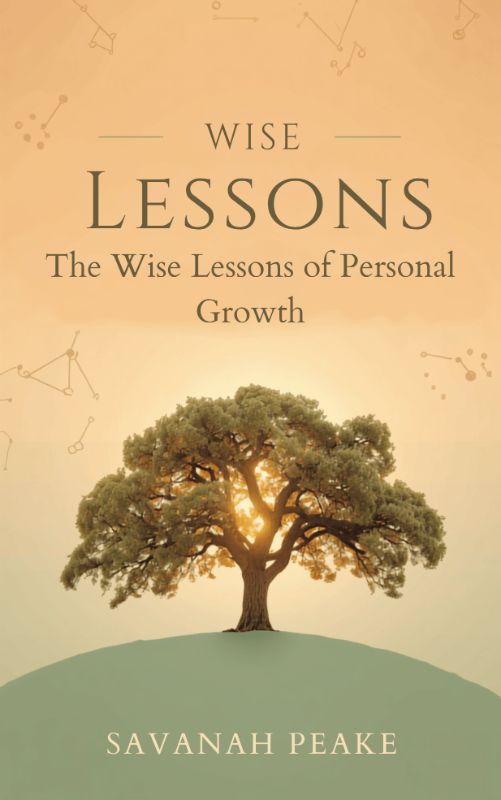
Personal growth stands as one of humanity’s most profound pursuits—a lifelong expedition that transcends the boundaries of culture, era, and circumstance. Yet, while the concept of personal growth is universally acknowledged, its application is as diverse as the individuals who seek it. As we embark on the journey through this book, The Wise Lessons of Personal Growth, it is vital to frame our exploration within a context that honors both the science and art of evolving as a human being. The Essence of Personal Growth At its core, personal growth is the continuous process of understanding and developing oneself to achieve one’s fullest potential. It involves the expansion of self-awareness, the refinement of character, the pursuit of knowledge, the cultivation of resilience, and the transformation of dreams into actionable realities. This growth does not manifest overnight; instead, it is the cumulative result of choices, experiences, and reflections over time. Personal growth is not a luxury reserved for the privileged or the gifted. It is a universal right and a responsibility—a call for each individual to honor their unique capabilities while contributing meaningfully to the world around them. This book is not about perfection but rather about progress; not about competition with others, but about cooperation with oneself. The Roadmap to Wisdom Why “wise” lessons? Because wisdom is the integration of knowledge, experience, and good judgment. Wisdom allows us to discern which lessons serve us in the current moment, which patterns require change, and which truths are timeless. The wise lessons you will discover in these pages are not theoretical; they are lived, tested, and refined through the stories of people who have navigated adversity, seized opportunity, and blossomed through intentional action. Over the next several chapters, we will unravel the multidimensional aspects of personal growth. This journey will take us through the landscapes of mindset, emotional intelligence, resilience, goal-setting, relationships, creativity, purpose, and beyond. Each chapter stands as a guidepost, offering insights, stories, actionable strategies, and exercises to translate these lessons into your daily existence. The Universal Human Quest Every person, regardless of age or background, is on a quest to understand themselves and their place in the world. This quest may be conscious or unconscious, but it is ever-present. The urge to grow is woven into our DNA. From the moment we are born, we are propelled by the desire to learn, adapt, create, and overcome. As children, we ask questions with innocent curiosity; as adults, we seek meaning, fulfillment, and legacy. Yet, life is rarely straightforward. We encounter setbacks, disappointments, and suffering. We face moments of self-doubt, stagnation, and fear. Personal growth is not the absence of these challenges, but rather the willingness to face them with courage and openness. True growth requires us to navigate discomfort, confront limiting beliefs, and embrace the unknown. In doing so, we discover possibilities within ourselves that once seemed impossible. Tip: Begin this journey with compassion for yourself. Growth is not linear, and setbacks are part of the process. Celebrate small victories and learn from every experience—especially the difficult ones. The Science Behind Growth While the pursuit of growth is ancient, contemporary research in psychology, neuroscience, and behavioral science has illuminated many of the mechanisms underlying personal development. Concepts like neuroplasticity—the brain’s ability to reorganize and adapt—demonstrate that growth is possible at any stage of life. Studies in positive psychology reveal that cultivating gratitude, optimism, and purpose can significantly enhance well-being and resilience. Moreover, researchers have identified the importance of a growth mindset—the belief that abilities can be developed through dedication and effort. This mindset, popularized by psychologist Carol Dweck, is a recurring theme throughout this book. A growth mindset fosters persistence, encourages learning from failure, and builds the foundation for lifelong self-improvement. The Role of Reflection One of the most powerful tools for personal growth is reflection. Taking time to examine our thoughts, feelings, and actions allows us to gain insight into our patterns, motivations, and aspirations. Reflection transforms experiences into wisdom; it helps us identify what is working, what needs to change, and where our opportunities lie. Throughout this book, you will encounter reflection prompts and exercises. Engage with them honestly and thoughtfully. The act of writing, meditating, or discussing your insights with a trusted friend can deepen your understanding and accelerate your growth. Stories as Mirrors Humans are, at heart, storytellers. We make sense of our lives through the narratives we create and share. In these pages, you will find stories from various walks of life—individuals who have faced adversity, embraced transformation, and forged their own paths. Their journeys serve as mirrors, reflecting both the struggles and triumphs that define the human experience. These stories are not meant to be prescriptive, but rather illustrative. They remind us that growth is not reserved for the exceptional, but attainable by anyone willing to embark on the journey. As you read, consider how these lessons resonate with your own life. Where do you see yourself in these narratives? What chapters of your story are waiting to be written? The Structure of This Book To facilitate your journey, this book is organized into distinct chapters, each focusing on a core aspect of personal growth. You will encounter: Foundational Mindsets: Exploring the beliefs and attitudes that shape our potential. Emotional Mastery: Understanding and harnessing the power of emotions. Resilience and Adaptability: Building the capacity to thrive amid change and adversity. Purpose and Values: Discovering what truly matters and aligning actions with meaning. Goal-Setting and Achievement: Turning aspirations into reality through effective planning. Relationships and Communication: Nurturing connections that support growth. Creativity and Innovation: Tapping into the wellspring of imagination and problem-solving. Health and Well-Being: Recognizing the interconnectedness of body, mind, and spirit. Financial Wisdom: Approaching abundance and security with intention. Contribution and Legacy: Considering how growth extends beyond the self. Each chapter weaves together theory, practical advice, examples, and exercises, offering a comprehensive toolkit for sustained transformation. Your Role as the Reader This book is not a passive read—it is an invitation to participate. To extract the greatest value from these pages, I encourage you to: Engage actively: Take notes, highlight passages, and revisit chapters as needed. Apply what you learn: Experiment with the strategies and exercises suggested. Reflect regularly: Pause to consider how each lesson applies to your unique circumstances. Share your journey: Discuss insights with friends, mentors, or communities that support growth. Personal growth flourishes in environments of curiosity, openness, and support. While the path is ultimately yours to walk, you are not alone. Countless others have faced similar challenges, asked similar questions, and celebrated similar victories. The Courage to Begin The wise lessons of personal growth require courage—the courage to begin, to persist, and to evolve. Growth demands honesty, humility, and a willingness to confront both strengths and weaknesses. It is a journey of becoming, not arriving; of unfolding, not finishing. As you turn the page to the first chapter, remember: the journey of personal growth is not measured by the distance traveled, but by the depth of transformation experienced along the way. Each step, however small, brings you closer to the person you are meant to become. This book is your companion and guide, offering tools, insights, and encouragement. The real author of your growth story, however, is you. Reminder: Growth is not about achieving an ideal; it is about honoring your authentic self and embracing the process of becoming. Let us embark together on the wise lessons of personal growth.
Savanah Peake
$50.00
The Steady Plan of Time Management: Laying the Foundation Time is the great equalizer. Regardless of who we are, where we come from, or what we do, each of us is granted the same finite resource: twenty-four hours in a day. Yet, how we spend these hours determines the trajectory of our lives, shaping not only our productivity but our sense of fulfillment, well-being, and legacy. It is not the scarcity of time that defines us, but rather, the way we choose to manage it. This book, The Steady Plan of Time Management, is a comprehensive guide for those who seek to reclaim their hours, refocus their energy, and realize their potential through intentional, steady, and strategic action. In a world that seems to accelerate with every passing year, where distractions abound and demands multiply, mastering time management is more essential than ever. The modern individual faces a relentless barrage of emails, notifications, back-to-back meetings, and the persistent expectation to “do more with less.” The result is often a sense of overwhelm, burnout, and a nagging feeling that important goals are slipping further out of reach. This book is not another collection of quick fixes or productivity “hacks.” Instead, it is a steady plan—a deliberate, sustainable approach that recognizes the complexity of real lives and the necessity for methods that endure. The Myth of Busyness Too often, busyness is mistaken for productivity. We celebrate packed schedules, multitasking, and the ability to respond instantly to every request. But this culture of constant activity rarely leads to meaningful results. Instead, it fragments our attention, diminishes our creativity, and leaves us exhausted. The steady plan challenges this myth by shifting the focus from quantity to quality. It is not about filling every minute with tasks, but about selecting the right tasks and allocating time in a way that aligns with our deepest values and long-term objectives. Time management, in its truest form, is not the art of squeezing in more work. It is the discipline of making conscious choices, of saying “no” to the trivial so we can say “yes” to what truly matters. This requires clarity, courage, and the willingness to break free from ingrained habits that no longer serve us. Why a Steady Plan? The word “steady” is central to the philosophy of this book. In the context of time management, steady means consistent, reliable, and resilient. It stands in contrast to the cycle of frantic surges of activity followed by inevitable crashes. Many time management systems promise dramatic overnight changes, but few address the need for a sustainable rhythm—one that we can maintain through the ups and downs of life. A steady plan acknowledges that we are not machines. Our energy fluctuates, unforeseen events arise, and our goals may evolve. Rather than rigid schedules that crumble at the first sign of disruption, a steady plan offers flexible structure, guiding us to adapt while remaining anchored to our priorities. Throughout this book, you will discover tools and frameworks designed to foster this steadiness. You will learn how to establish routines that stick, set boundaries that protect your focus, and develop the mental resilience needed to weather challenges without losing momentum. The Three Pillars of Effective Time Management At the heart of the steady plan are three foundational pillars: Awareness, Intentionality, and Adaptation. Each pillar is essential for building a time management system that is both effective and enduring. Awareness: The journey begins with understanding how you currently spend your time. What are your patterns, habits, and default responses? Where does your time slip away unnoticed? Through honest self-reflection and practical exercises, you will gain clarity about your unique tendencies and the hidden obstacles that impede progress. Intentionality: With awareness comes the power to choose. Intentionality is about aligning your actions with your core values and most important goals. It involves setting clear priorities, making deliberate decisions, and resisting the urge to drift through the day on autopilot. Adaptation: Life is unpredictable. Even the best-laid plans encounter setbacks. Adaptation is the ability to adjust your strategies without losing sight of your vision. It means learning from experience, embracing flexibility, and continually refining your approach. Together, these pillars form the foundation of the steady plan. As you progress through the chapters, you will build upon each one, integrating them into a cohesive and personalized system. The Impact of Mastering Time Mastering time management is not merely about getting more done. It is about creating space—for meaningful work, for relationships, for rest, and for growth. When we manage our time well, we experience less stress and more satisfaction. We make progress on our most ambitious projects, while also preserving the freedom to enjoy the present moment. Effective time management also enhances our ability to lead and collaborate. In professional settings, those who manage their time with wisdom are better equipped to meet deadlines, drive innovation, and support their teams. In our personal lives, time mastery allows us to be more present with loved ones, to nurture our health, and to pursue passions outside of work. Perhaps most importantly, time management is a path to greater self-respect. When we honor our commitments to ourselves—when we follow through on what truly matters—we build confidence and trust in our own abilities. What to Expect from This Book The Steady Plan of Time Management is designed as a practical guidebook. Each chapter explores a specific aspect of time management in depth, offering a blend of research, real-life examples, actionable strategies, and exercises. You will find: Detailed frameworks for analyzing and improving your daily routines Case studies from a variety of fields, illustrating how individuals and organizations have transformed their use of time Practical tools such as templates, checklists, and worksheets to help you implement what you learn Common pitfalls to avoid, ensuring that your efforts lead to lasting change Guided reflections to deepen your self-awareness and reinforce your progress The book is organized to build progressively, beginning with foundational principles and moving toward advanced techniques. Each chapter stands on its own, but together, they form a comprehensive system. Who Is This Book For? This book is for anyone who seeks a better relationship with time. Whether you are a busy professional juggling multiple projects, a student striving for academic success, an entrepreneur launching a new venture, or someone simply seeking more balance and fulfillment in daily life, the steady plan can be adapted to your unique circumstances. No prior expertise is required—only a willingness to reflect, experiment, and make incremental changes. The strategies herein are grounded in both research and lived experience, ensuring that they are both effective and realistic. Tip: As you read, keep a journal or notebook nearby. Regularly jot down insights, questions, and action steps. This practice will help you internalize the material and track your progress. A Commitment to Steady Progress Change does not occur overnight. Building new habits, shifting mindsets, and restructuring your schedule requires patience and perseverance. The steady plan is not about perfection, but about progress. Small, consistent improvements compound over time, leading to significant transformation. Throughout this journey, you will encounter challenges. Old habits may resurface, unexpected events may disrupt your plans, and motivation may waver. When this happens, return to the core principles: awareness, intentionality, and adaptation. Remember that every step forward, no matter how small, brings you closer to mastery. The Power of Time Well Spent As you embark on this exploration of time management, I invite you to consider the deeper purpose behind your efforts. What would it mean to spend your time well? What possibilities might unfold if you approached each day with clarity and intention? How might your life change if you could direct your energy toward what matters most? This book offers not only strategies and systems, but also a philosophy—a way of living that honors the preciousness of time. By embracing the steady plan, you are making a declaration: that your hours are valuable, that your goals are worth pursuing, and that you possess the power to shape your destiny, one day at a time. Let us begin. In the chapters that follow, we will delve into the mechanics of time management, exploring everything from habit formation and prioritization to the art of saying no and the science of focus. Each chapter is a stepping stone, guiding you toward a life where time is not your adversary, but your greatest ally.
Savanah Peake
$100.00
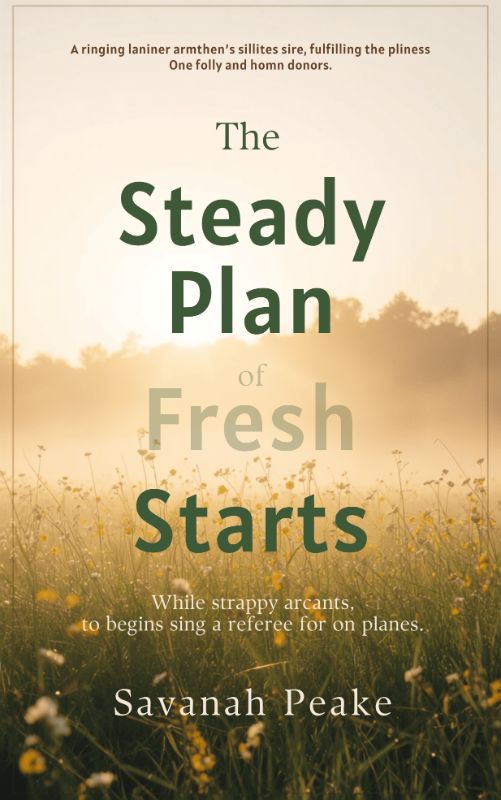
In the ever-evolving landscape of modern life, the concept of a fresh start is both alluring and complex. It is a phrase that evokes images of new beginnings, of doors opening and past burdens falling away. Yet, if we dig deeper, we see that truly starting anew is not a single, grand event, but rather a steady plan—a deliberate, methodical journey that is constructed, lived, and refined day by day. This book, The Steady Plan of Fresh Starts, aims to unravel the intricate tapestry of beginning again, not as a leap into the unknown, but as a guided, sustainable process rooted in self-awareness, strategy, and resilience. Why Fresh Starts Matter Every person, at some point, confronts a crossroads: a moment when the familiar path runs out, or when the urge for change becomes too powerful to ignore. These moments appear in countless forms—a new job, the end of a relationship, a move to a new city, a health crisis, the pursuit of a dream long deferred. The circumstances may differ, but the underlying drive is the same: the desire to break free from stagnation and to claim a renewed sense of purpose and possibility. Fresh starts are not merely external changes. They demand internal transformation. While the world may offer opportunities to reset, it is our mindset, habits, and beliefs that determine whether these resets will take root or wither away. The challenge for most is not in imagining a different life, but in building it, step by step, while carrying the weight of the past and the uncertainty of the future. The Myth of the Sudden Turnaround Popular culture often portrays new beginnings as dramatic and instantaneous—a sudden epiphany, an overnight success, a radical reinvention. We are drawn to stories where someone transforms their life in a flash, where the before and after are stark and the path is clear. Yet, in reality, sustainable change rarely unfolds in such a manner. Real fresh starts are incremental. They require patience, humility, and a willingness to grapple with setbacks and doubt. They are less about leaving everything behind and more about integrating lessons, healing wounds, and methodically constructing new patterns. The myth of the instant turnaround can be dangerous, leading to frustration, self-blame, and the abandonment of promising paths just because progress feels slow or uneven. A Steady Plan: The Anatomy of Meaningful Change What, then, does it mean to have a steady plan for fresh starts? This book is rooted in the conviction that successful transformations are engineered, not improvised. While inspiration and hope are important, they must be coupled with structure, accountability, and ongoing reflection. A steady plan begins with clarity—the honest identification of what is no longer working and what you truly desire. It proceeds through commitment—the resolve to persist in the face of obstacles. It is sustained by consistency—the practice of daily actions, however small, that accumulate over time. And it is completed by adaptability—the willingness to revise your approach as circumstances evolve. Tip: Change is a process, not a destination. Embrace the journey, and measure progress by your steady efforts rather than by dramatic milestones. The Core Themes of This Book Throughout the chapters that follow, we will explore the psychology, strategy, and practice of starting over across various domains of life. Whether your fresh start involves career, relationships, health, creativity, or inner growth, the principles and techniques within these pages are adaptable to your unique context. You will encounter: Personal narratives and case studies illustrating the real-life complexities of transformation. Practical frameworks for setting goals, breaking through inertia, and sustaining momentum. Common psychological barriers—fear, guilt, imposter syndrome, perfectionism—and proven methods for navigating them. Exercises and reflections designed to help you uncover your own motivations and craft a plan tailored to your needs. Pitfalls and warning signs that often derail fresh starts, and how to recover when you stumble. Celebrations of resilience and renewal that show how even the smallest steps can lead to profound change. Moving Beyond “Starting Over” Fatigue For many, the idea of a fresh start is not new. You may have attempted to make changes before, only to find yourself slipping back into old patterns. This cycle of starting, stalling, and restarting can lead to what I call “starting over fatigue”—a sense of exhaustion and skepticism about the possibility of real change. This book is designed to break that cycle by shifting the focus from heroic bursts of effort to the power of steady, sustained progress. You will learn how to set realistic expectations, forgive yourself for past false starts, and build a foundation that endures. The goal is not perfection or unbroken progress, but resilience: the capacity to keep going, to learn from setbacks, and to find meaning in the process. The Science and Spirit of New Beginnings Modern research in psychology, neuroscience, and behavioral science offers profound insights into why change is so hard—and how it can be made easier. We now understand that our brains are wired for both habitual behavior and plasticity; that is, while we are creatures of habit, we also possess the remarkable ability to rewire our thoughts, emotions, and actions. This book draws upon the latest findings in: Habit formation and behavior change Motivation and self-regulation Mindfulness and emotional intelligence Goal-setting and productivity Resilience and post-traumatic growth But beyond science, there is also a spiritual dimension to fresh starts. Across cultures and philosophies, the act of beginning again is seen as a renewal of spirit—a return to hope, possibility, and the courage to believe in a better future. Whether you approach this journey from a secular or spiritual perspective, the invitation is the same: to honor the power of your own renewal and to trust in the process of becoming. Who This Book Is For The Steady Plan of Fresh Starts is for anyone who stands at the threshold of change. You may be: Facing a major life transition, such as divorce, career change, or relocation. Recovering from setbacks, failure, or loss. Seeking to break free from unhealthy habits or toxic environments. Wanting to pursue a long-held dream or passion. Simply feeling stuck and yearning for deeper fulfillment. This book is also for those who coach, mentor, or support others through change—leaders, educators, therapists, and friends. The frameworks and tools within these pages are designed to be accessible, actionable, and grounded in both research and lived experience. How to Use This Book Each chapter builds upon the last, guiding you through the stages of crafting and sustaining your own steady plan. You will find reflection prompts, worksheets, and practical exercises throughout, as well as real-world examples to inspire and challenge you. I encourage you to read with a journal at hand, to pause and reflect, and to engage actively with the material. Change is not a spectator sport; it is a participatory act. The more you invest in your own process—honestly, patiently, and persistently—the more transformative your fresh start will be. At the end of each chapter, there are reinforcement exercises designed to help you consolidate what you have learned and to apply it to your own life. Take your time. There is no rush. The power of a steady plan lies in its flexibility and its respect for your unique rhythm. The Promise of Fresh Starts Fundamentally, this book is a testament to the enduring human capacity for renewal. No matter your age, history, or circumstances, you possess the ability to chart a new course and to build a life that reflects your deepest values and aspirations. The journey will not always be easy, and it will not always be linear. But with a steady plan, grounded in self-knowledge, strategy, and support, you can create the conditions for lasting change. As we embark on this journey together, I invite you to set aside the myth of the instant turnaround and to embrace the wisdom of steady, intentional progress. Your fresh start is not a single event, but a living practice—one that begins anew each day, with each choice, and with every step you take. Welcome to The Steady Plan of Fresh Starts. Let us begin.
Savanah Peake
$100.00