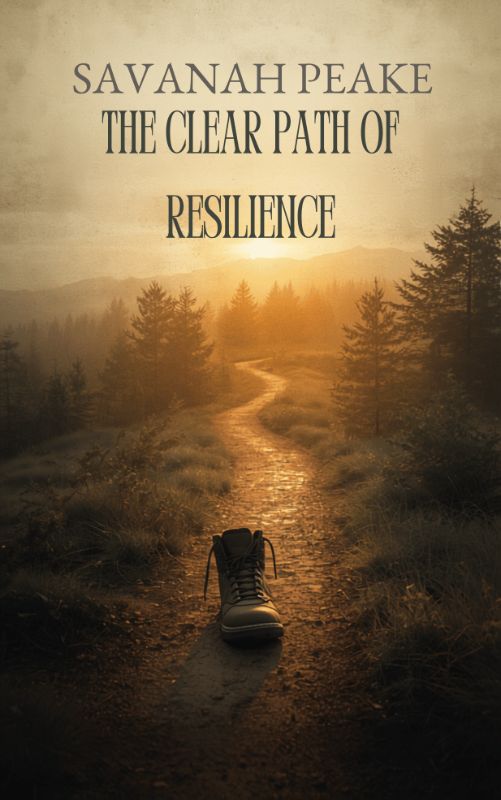
Resilience is a word that echoes with both simplicity and profound depth, a quality revered across cultures, generations, and disciplines. Yet, beyond its surface appeal, resilience is a complex tapestry woven from our experiences, beliefs, biology, and choices. To some, it is the quiet strength that carries one through hardship; to others, it is the creative force that transforms adversity into opportunity. In the heart of every story of triumph over challenge, there lies a lesson about the nature of resilience—a lesson that offers guidance, hope, and practical tools for anyone seeking a path through life’s inevitable storms.
This book, The Clear Path of Resilience, is an exploration and a guide: a journey through what it truly means to be resilient, how resilience is cultivated, why it sometimes fails us, and—most importantly—how we can nurture it in ourselves, our loved ones, and our communities. The pages ahead are built on the foundations of scientific research, lived experience, and the wisdom of those who have walked the hardest roads and emerged not only intact but transformed.
The Modern Quest for Resilience
Never before has the word “resilience” been uttered so often or with such urgency. In a world marked by accelerating change—technological, environmental, social, and personal—the ability to withstand, adapt, and thrive amid difficulty is not merely desirable; it is essential. From the boardrooms of Fortune 500 companies to the living rooms of families grappling with loss, from classrooms facing unprecedented disruption to individuals wrestling with invisible battles, resilience is the key that unlocks not just survival, but growth.
And yet, despite its importance, misconceptions about resilience abound. Is it an inborn trait, bestowed at birth to the lucky and denied to others? Is it a talent, a mindset, a set of skills, or something else entirely? Can it be taught, measured, or manufactured? These questions are not just academic; the answers shape how we respond to our own struggles and how we support others in theirs.
Resilience is not a magic shield. It does not mean never feeling pain, never faltering, or always “bouncing back.” Real resilience is nuanced and dynamic. It is about bending without breaking, about making meaning from hardship, about carrying scars that do not define us but remind us of what we are capable of enduring and becoming.
Laying the Groundwork: What This Book Offers
The journey ahead will be both broad and deep. We will move beyond platitudes and simplistic self-help advice, instead embracing a holistic perspective that weaves together multiple threads:
The Science of Resilience: What research tells us about how the brain and body respond to challenge, and why some people seem to “bounce back” more easily than others.
Practical Strategies: Concrete, actionable techniques that anyone can use to build their capacity for resilience, regardless of age, background, or circumstance.
Stories of Transformation: Real-life case studies and personal accounts that illustrate the principles in action, highlighting both triumph and struggle.
Common Pitfalls: The traps that can undermine resilience, and how to avoid them.
Exercises and Reflections: Tools and prompts to help you apply what you learn, deepen your self-awareness, and chart your own clear path of resilience.
Each chapter will focus on a specific dimension of resilience—mindset, emotion, relationships, identity, adversity, purpose, and more—building layer upon layer, always returning to the central question: How do we cultivate a resilient life? By the end, you will not only understand the theory but possess a practical blueprint for embodying resilience in your daily existence.
The Nature of Adversity
Before we can understand resilience, we must first confront the reality of adversity. Adversity comes in many shapes and sizes: a lost job, a broken relationship, a diagnosis, a global crisis, a betrayal, a dream deferred. Some adversity is acute and dramatic; other times, it is chronic and quietly eroding. Everyone will face adversity, but the timing, form, and impact will differ.
Tip: Adversity is not a sign of personal failure. It is a universal aspect of the human condition.
What distinguishes those who crumble from those who adapt is not the presence of difficulty, but the response to it. Resilience begins in this space—between what happens to us and how we choose to meet it. It is here that our beliefs, habits, and supports come into play.
Myth-Busting: What Resilience Is Not
To chart a clear path, we must first clear away the fog of misunderstanding:
Resilience is not stoicism. Enduring hardship without emotion is not resilience; allowing oneself to experience and process pain is critical to growth.
Resilience is not invulnerability. Even the most resilient people have moments of weakness, self-doubt, and despair. The difference is not in the absence of struggle, but in the willingness to keep moving forward.
Resilience is not self-reliance alone. While personal strength is important, connection to others—family, friends, mentors, communities—is often the lifeline that sustains us.
Resilience is not merely “bouncing back.” Sometimes adversity leaves us forever changed. Resilience is about integrating those changes and finding new ways to thrive.
Foundations: The Pillars of Resilience
Throughout history and across cultures, certain themes appear again and again in stories of resilient people. These pillars will serve as the structure for our exploration:
Self-Awareness: The ability to notice and name our thoughts, emotions, and patterns.
Adaptability: The willingness to adjust, learn, and grow in response to new challenges.
Purpose: A sense of meaning that anchors us during turbulence.
Connection: Relationships that provide support, inspiration, and perspective.
Hope and Optimism: The belief that improvement is possible and that our actions matter.
Self-Care: Practices that nurture body, mind, and spirit, replenishing our capacity to cope.
We will examine each of these in depth, exploring both their scientific underpinnings and their practical applications.
The Brain, the Body, and Beyond
Resilience is not just a matter of “mind over matter.” It is embedded in our biology, shaped by our experiences, and influenced by our environment. Neuroscience shows us that the brain is plastic—capable of rewiring itself in response to challenge and intentional practice. The body, too, holds wisdom: our stress response, our habits of movement and rest, our nutrition, all play crucial roles. Even our genes contribute, but they do not dictate our destiny.
We will explore how biology and environment interact, how trauma and healing are encoded in the nervous system, and how practices like mindfulness, exercise, and sleep can dramatically enhance resilience at every age.
Why Write This Book?
This book exists because the need for resilience is universal, but the path to achieving it is not always clear. Too often, we are told to “be strong” without being shown how. We are encouraged to “stay positive” without acknowledging the depth of our pain. We are urged to “move on” before we’ve made sense of what has happened.
The Clear Path of Resilience is my attempt to bridge the gap between inspiration and instruction, between theory and practice. My background—as a non-fiction author, a specialist in psychology and human development, and as someone who has faced my own share of adversity—has convinced me that resilience is not a destination, but a journey. It is a skill to be honed, a mindset to be cultivated, and a way of being that is available to all.
How to Use This Book
You may choose to read this book cover to cover, or you may dip into chapters that address your current needs. Either way, I encourage you to engage with the exercises, reflect on your own experiences, and approach each topic with curiosity and compassion.
Consider keeping a journal as you progress, noting insights, questions, and areas for further exploration. Share what resonates with others; resilience is strengthened in community. Above all, be gentle with yourself. The journey is not linear, and setbacks are part of the process.
A Preview of the Road Ahead
Here’s what you can expect in the upcoming chapters:
An in-depth look at the science of stress and adaptation
Techniques for cultivating self-awareness and emotional regulation
Strategies for building supportive relationships
Ways to find and strengthen your sense of purpose
Tools for maintaining hope and optimism, even in the darkest times
Actionable self-care routines for body and mind
Methods for transforming trauma and failure into growth
Practices for nurturing resilience in children, teams, and communities
Every chapter will end with a Resilience Practice—a practical exercise or reflection designed to help you integrate the material into your life.
An Invitation
You are not broken. You are not alone. No matter where you are starting from, resilience is within your reach. Whether you are facing a challenge right now or preparing for the uncertainties of the future, this book is for you.
Let us walk the clear path of resilience together—one step, one story, one practice at a time.
Reminder: Resilience is not about avoiding the storm, but learning to dance in the rain.
Let us begin.
The Clear Path of Resilience by Savanah Peake | eBookMarket Library