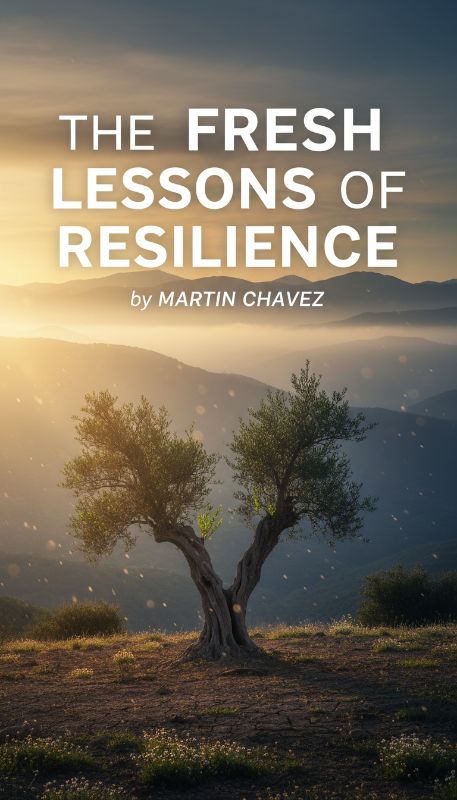
Resilience is a word that has been woven into the fabric of every culture, every generation, and nearly every personal narrative. Yet, in our modern world—where the pace of change and uncertainty often outstrips our capacity to prepare—resilience has taken on a new urgency and depth. This book, The Fresh Lessons of Resilience, seeks to illuminate not just the enduring power of resilience but also the evolving ways in which it shapes, sustains, and transforms lives across diverse landscapes.
The Rebirth of an Ancient Skill
The concept of resilience is as old as humanity itself. Our ancestors relied on it to survive harsh environments, adapt to unpredictable dangers, and nurture civilizations from the seeds of adversity. But in today’s interconnected, volatile, and rapidly shifting environment, the lessons of resilience are both ancient and startlingly new. We stand at a crossroads where traditional wisdom meets modern science, where age-old tales of endurance are enriched by fresh discoveries from psychology, neuroscience, and the lived experiences of people around the globe.
The freshness in these lessons lies not only in new research and insights but in the stories and strategies being born out of recent crises—global pandemics, economic upheavals, personal losses, and collective reckonings with injustice and inequality. We now understand that resilience is not just the ability to “bounce back,” but a dynamic, active process of adaptation and growth. It is about bending, not breaking—sometimes even breaking open, to allow change in.
Why Resilience Matters More Than Ever
In the twenty-first century, resilience has become a core competency for individuals, families, organizations, and societies. The world we live in presents unprecedented challenges:
Technological disruption is reshaping workplaces and social interactions.
Climate change is upending communities and demanding new responses.
Political and cultural polarization is testing the bonds of trust and cooperation.
Mental health crises are reaching epidemic levels, especially among youth.
Globalization exposes us to both opportunity and risk at a speed never imagined before.
Against this backdrop, resilience is not merely a “nice to have.” It is essential for well-being, productivity, leadership, and collective progress. It is the art and science of staying grounded in a storm, learning from setbacks, and emerging not just intact, but often wiser and stronger.
The Scope and Structure of This Book
The Fresh Lessons of Resilience is designed to be both a compass and a toolkit. The chapters that follow will guide you through a comprehensive exploration of resilience, from its psychological roots to its practical applications in everyday life. Each chapter is crafted to stand alone as a deep dive into a specific facet of resilience, yet together they create a holistic, actionable roadmap for thriving amid adversity.
You will find:
Foundational theory: What resilience really means—debunking myths and clarifying concepts.
Personal stories: Real-life examples of people who have navigated adversity with grace, grit, or inventiveness.
Scientific insight: The latest findings from psychology, neuroscience, and medicine that illuminate how resilience works in the body and mind.
Practical strategies: Step-by-step techniques, exercises, and habits for building and sustaining resilience.
Common pitfalls: Mistakes and misconceptions about resilience—and how to avoid them.
Reflection and integration: Questions, prompts, and summaries to help you internalize lessons and apply them to your unique context.
Whether you are facing a personal challenge, seeking to support others, or striving to build resilience within your organization or community, this book is for you.
The Many Faces of Resilience
One of the most important realizations in recent years is that resilience is not a one-size-fits-all phenomenon. It wears many faces, adapts to many roles, and manifests in myriad ways. It is as much about endurance as it is about adaptation; as much about acceptance as about action.
Consider:
The single parent rebuilding after job loss, finding strength in vulnerability and hope in small victories.
The community rallying after a natural disaster, discovering untapped reserves of solidarity and innovation.
The entrepreneur who learns to pivot after failure, transforming setbacks into stepping stones.
The activist who channels pain into purpose, sustaining momentum for justice over the long haul.
The teenager learning to cope with anxiety, finding tools to self-soothe and reach out for help.
Each of these stories reveals a different lesson of resilience—some fresh, some timeless, all essential.
The Science of Resilience: More Than Grit
For decades, resilience was often equated with grit or mental toughness—qualities associated with stoicism, perseverance, and willpower. While these traits are undeniably important, modern research has painted a much richer and more nuanced picture.
We now understand that resilience is:
Multidimensional: It involves emotional, cognitive, physical, social, and even spiritual components.
Learnable and dynamic: Resilience is not simply an innate trait, but a set of skills and attitudes that can be cultivated at any age.
Context-dependent: What works in one situation may not work in another; resilience is shaped by culture, environment, and relationships.
Linked to meaning and purpose: Those who find or create meaning in adversity are often the most resilient.
Powered by connection: Supportive relationships are among the strongest predictors of resilience.
Throughout this book, we will delve into each of these aspects, drawing on cutting-edge science and practical wisdom.
The Myths That Hold Us Back
Before we embark fully on our journey, it is worth addressing some common myths about resilience that can undermine our efforts to develop it.
Myth 1: Resilience means never feeling pain or distress.
In truth, resilience is not about avoiding pain but facing it, feeling it, and moving through it with self-compassion.
Myth 2: You’re born resilient, or you’re not.
Genetics and temperament play a role, but research shows resilience can be learned and strengthened over time.
Myth 3: Resilience is a solo endeavor.
In reality, resilience flourishes in relationships; connection is a powerful buffer against adversity.
Myth 4: Resilience is about “bouncing back” to your old self.
Often, resilience involves growing into a new self—changed, sometimes scarred, but also wiser and more capable.
Recognizing and dismantling these myths will free us to embrace resilience as a living, evolving process.
A Personal Invitation
As you read this book, I invite you to engage not only as a learner but as a participant in your own unfolding story of resilience. The pages ahead are filled with practical exercises and reflection prompts designed to help you:
Identify your existing strengths and resources.
Understand and work with your vulnerabilities.
Build habits and mindsets that support long-term flourishing.
Inspire and support resilience in others.
You are not alone on this journey. The path of resilience is one we all walk, sometimes knowingly, sometimes by necessity. By sharing insights, strategies, and stories, we create a community of practice—a network of support that extends beyond the pages of this book.
Looking Ahead
In the coming chapters, we will:
Define resilience with clarity and depth.
Explore the neuroscience and psychology of how resilience works.
Examine the role of adversity and stress in growth.
Learn from case studies across diverse cultures and contexts.
Practice actionable techniques for mind, body, and spirit.
Unpack the importance of community, leadership, and collective resilience.
Address unique challenges in a changing world, from digital overload to climate-related trauma.
Reflect on how to sustain resilience through life’s inevitable ups and downs.
Each chapter builds on the last, offering fresh lessons that are both timeless and timely.
Resilience is not a destination, but a journey—one that begins anew each day.
With curiosity, courage, and compassion, let us begin this journey together. The pages that follow are an invitation to discover, expand, and celebrate your capacity for resilience—no matter where you are starting from, no matter what you have faced or will face.
Welcome to The Fresh Lessons of Resilience.
The Fresh Lessons of Resilience by Martin Chavez | eBookMarket Library