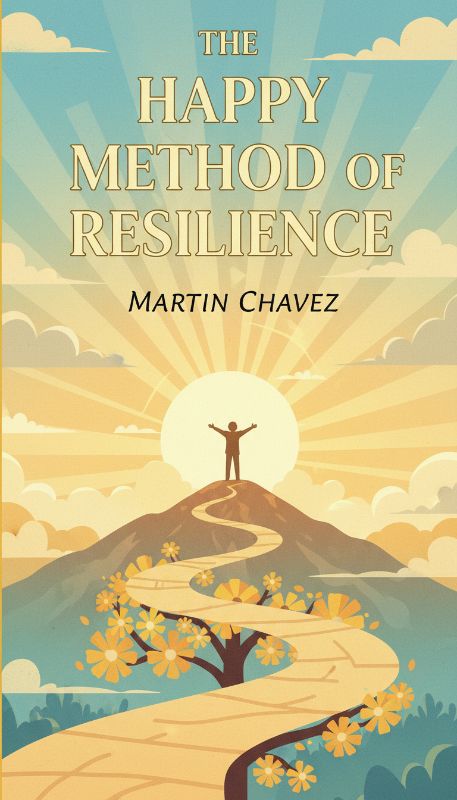
Resilience. It is a word that conjures images of strength, flexibility, and enduring spirit. Yet, for many, it remains a distant concept—reserved for heroes, adventurers, or those who have overcome unimaginable odds. In reality, resilience is not an exceptional trait possessed by a chosen few. Rather, it is an innate potential within each of us, waiting to be cultivated, refined, and celebrated. Welcome to The Happy Method of Resilience, a guide designed not only to introduce you to the science and art of resilience but to empower you to live it daily, joyfully, and authentically.
At the heart of this book lies a simple, transformative premise: happiness and resilience are deeply intertwined. True resilience is not a stoic suppression of difficulty, nor is it mere survival. It is the capacity to adapt, grow, and even thrive in the face of adversity—while preserving, and often enhancing, our sense of joy and meaning. The Happy Method of Resilience is both a roadmap and a companion on this journey, blending rigorous research, lived experience, psychological wisdom, and practical strategies to help you build a resilient life, day by day.
Why Resilience Matters More Than Ever
We inhabit a world of accelerating change, uncertainty, and complexity. From global crises to personal losses, from workplace anxieties to the quiet struggles that live in our hearts, challenges abound. Stress, burnout, anxiety, and depression have become common threads in the fabric of modern existence. Yet, amid these pressures, some people seem to bend but not break, to recover quickly, to find opportunity in the midst of hardship, and to retain an inner lightness regardless of external events.
What is their secret? Decades of psychological research confirm that resilience is not about avoiding hardship—it is, instead, about how we respond to it. Resilient people are not immune to pain or disappointment. Rather, they possess a set of skills, mindsets, behaviors, and support systems that enable them to navigate adversity with courage, creativity, and hope.
Resilience is not a fixed trait. It is a set of learnable, improvable capacities. This book is your invitation to unlock and strengthen those capacities within yourself.
The Promise and Power of Happiness
You might ask: What role does happiness play in resilience? Isn’t resilience about grit and toughness, not smiles and laughter?
The latest research in positive psychology reveals a different story. Happiness—defined here not as fleeting pleasure but as a deeper sense of satisfaction, purpose, and well-being—serves as both fuel and outcome of resilience. People who cultivate joy, gratitude, optimism, and meaningful connections are better equipped to weather life’s storms. Their happiness is not naïve; it is a profound resource that helps them bounce back stronger and grow from adversity.
The Happy Method of Resilience is built on this insight. It is a practical, step-by-step approach that integrates the best of resilience science with the transformative habits of happiness. This method is not about denying pain or pretending all is well. Rather, it is about embracing the full spectrum of human experience with openness, curiosity, and compassion, allowing happiness to coexist with challenge and, in doing so, to multiply our capacity for endurance and renewal.
What This Book Will Do for You
This book is for anyone who wants to:
Face adversity with greater confidence and composure
Transform stress into growth and opportunity
Cultivate habits of optimism, gratitude, and emotional agility
Build supportive relationships and resilient communities
Let go of perfectionism, shame, and self-doubt
Recover from setbacks faster and with greater wisdom
Find deeper meaning and joy even during difficult times
Develop practical skills, rituals, and mindsets for lifelong resilience
Whether you are a student facing exams, a professional navigating career turbulence, a parent managing family demands, a leader responsible for others’ well-being, or someone simply seeking more joy and balance, the Happy Method is for you.
The Structure of the Book
The Happy Method of Resilience is organized into a series of chapters, each building upon the last. The journey begins by exploring the foundations of resilience: what it is, why it matters, and how it works in our brains and bodies. You’ll learn to identify the beliefs and behaviors that support or sabotage your resilience, and you’ll discover the crucial role of emotions—how to work with them, rather than against them.
From there, we delve into the core pillars of the Happy Method: mindset, self-compassion, connection, meaning, and daily practices. Each chapter provides:
Deep explanations of key concepts, grounded in science and real-life stories
Practical tools and exercises you can apply immediately
Case studies illustrating resilience in action, across diverse settings and backgrounds
Common pitfalls to avoid and strategies for overcoming obstacles
Reflection prompts to personalize your learning and growth
The final chapters focus on integration and mastery: how to sustain resilience over the long haul, how to help others become more resilient, and how to build environments—at work, at home, in communities—that support flourishing for all.
Defining Resilience: Beyond Bouncing Back
Before we embark, it’s important to clarify what resilience is—and what it is not.
Resilience is sometimes described as the ability to “bounce back” after hardship. While this metaphor captures the idea of recovery, it falls short of the full reality. Resilient people do more than return to baseline; they often emerge wiser, stronger, and more compassionate than before. In psychological terms, this is called post-traumatic growth—the process by which adversity catalyzes profound personal development.
Resilience involves a dynamic interplay between:
Biology: Our genes, brain chemistry, and nervous system responses
Psychology: Our beliefs, habits, and thought patterns
Social context: Our relationships, environments, and cultural narratives
It is not invulnerability. Resilient people still experience stress, fear, sadness, and grief. But they have learned to process these emotions skillfully, to seek support, and to draw meaning from their experiences.
The Myths and Realities of Resilience
Let’s dispel a few common myths:
Myth: “Resilience means never feeling bad.”Reality: Resilience is about allowing yourself to feel, then finding healthy ways to respond.
Myth: “Some people are just born resilient.”Reality: While temperament matters, resilience is shaped far more by what we do than by what we’re born with.
Myth: “Resilience is about going it alone.”Reality: Connection—to others and to purpose—is a cornerstone of lasting resilience.
Myth: “Resilience is just about coping.”Reality: True resilience is transformative. It enables growth, creativity, and the capacity to help others.
If you have ever doubted your ability to be resilient, know this: you are already more resilient than you realize. Every challenge you’ve faced, every loss you’ve mourned, every setback you’ve survived has strengthened your inner core. This book will help you recognize, nurture, and amplify that core.
The Science Behind the Happy Method
Throughout this book, you will encounter insights from:
Neuroscience, explaining how the brain and body respond to stress and how we can rewire our responses
Positive psychology, focusing on strengths, well-being, and the habits of flourishing people
Mindfulness and self-compassion research, showing how presence and kindness transform our inner lives
Behavioral science, clarifying how habits are formed and sustained
Social science, illuminating the power of relationships and community
But science alone is not enough. The Happy Method is equally informed by the lived experiences of people from all walks of life—survivors, innovators, caregivers, leaders, parents, and everyday heroes—whose stories will appear in these pages.
Getting the Most from This Book
To fully benefit from The Happy Method of Resilience, I invite you to:
Read actively: Pause to reflect, journal, or discuss insights with others.
Practice the exercises: The real transformation occurs not in reading, but in doing.
Be patient with yourself: Building resilience is a journey, not a quick fix.
Share what you learn: Teaching, supporting, and connecting with others strengthens your own resilience.
Tip: Keep a dedicated journal or notebook as you move through the chapters. Use it to capture your thoughts, track your progress, and record “aha” moments.
Embracing the Journey Ahead
As we begin, remember: resilience does not mean avoiding difficulty; it means meeting it with courage, creativity, and hope. The Happy Method is an invitation to become not just a survivor, but a thriver—a person who can find light in darkness, opportunity in challenge, and happiness in the journey itself.
This is your story. This is your resilience. Let’s begin.
The Happy Method of Resilience by Martin Chavez | eBookMarket Library