The Essence of Resilience in Modern Life
In a world characterized by rapid change, relentless demands, and unforeseen obstacles, the concept of resilience has never been more pertinent. Every day, individuals from all walks of life—students, professionals, parents, athletes, and leaders—encounter challenges that test their resolve, adaptability, and inner strength. Yet, not everyone emerges from these trials with the same sense of composure, hope, or determination. What separates those who falter from those who flourish is not merely luck or innate toughness; it is the deliberate cultivation of a balanced routine of resilience.
Resilience is often misunderstood as a fixed trait—a hardwired ability to withstand adversity without breaking. However, research and lived experience alike reveal a much richer and more dynamic truth. Resilience is not simply about “bouncing back” from hardship; it is about growing through adversity, learning from setbacks, and developing a robust toolkit of mental, physical, and emotional strategies that enable sustained well-being. At its core, resilience is a process, a set of skills, and, most importantly, a way of living that can be learned, practiced, and strengthened over time.
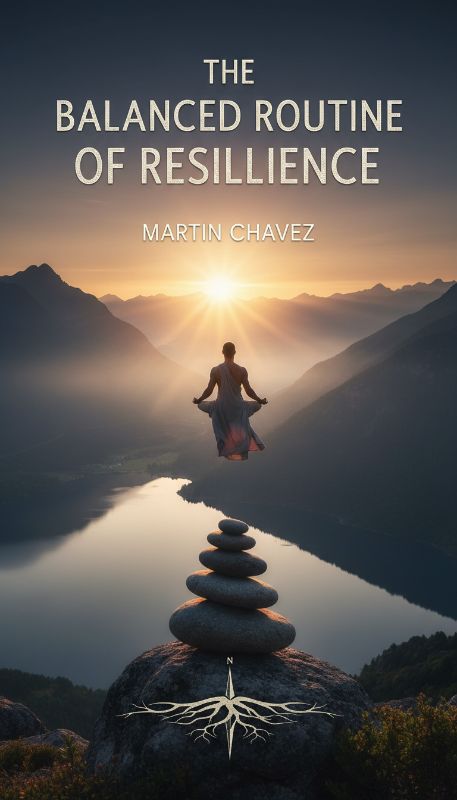
This book, The Balanced Routine of Resilience, is an exploration and a practical guide to building a life that weathers life’s storms and, crucially, finds meaning and vitality in the aftermath. It is about constructing daily habits and mindsets that foster not only endurance but also joy, purpose, and growth.
Why a “Balanced Routine”?
The title of this book is deliberate. Too often, resilience is framed as heroic endurance or solitary grit. But true resilience is rarely cultivated in isolation, nor is it sustained by sheer willpower alone. It is the product of balance—the harmonious integration of body, mind, heart, and spirit. A balanced routine acknowledges that resilience is not forged in a single act of courage or a burst of motivation, but in the consistent, mindful actions we weave into our daily lives.
A routine is more than a schedule; it is a rhythm that anchors us, providing structure amid chaos and predictability amid uncertainty. When our routines are balanced—nourishing all facets of our being—they become the scaffolding that supports us through life’s inevitable ups and downs. Through intentional routines, we develop the capacity to adapt, recover, and even thrive in the face of adversity.
This book will illuminate the components of a balanced routine—physical health, emotional regulation, cognitive flexibility, social support, and spiritual grounding—and provide practical tools for integrating them into life. Whether you are navigating a personal crisis, striving to enhance your performance, or simply seeking greater peace and purpose, the strategies herein will empower you to build resilience from the inside out.
The Science and Art of Resilience
Over the past decades, resilience has emerged as a central theme in psychology, neuroscience, and leadership studies. Researchers have identified key factors that facilitate resilience, such as optimism, social connection, self-regulation, and meaning-making. Neuroscience has shed light on the brain’s remarkable plasticity—the ability to rewire itself in response to repeated experiences and practices. This means that everyone, regardless of background or temperament, can become more resilient by adopting specific habits and mindsets.
However, the art of resilience goes beyond the laboratory or the therapist’s office. It is found in the stories of people who have endured loss, failure, trauma, and change—and emerged with greater wisdom and strength. These stories, alongside evidence-based strategies, form the backbone of this book. Each chapter will blend scientific insights with real-world examples, practical exercises, and reflective prompts to ensure that the principles of resilience are accessible and actionable.
Common Misconceptions About Resilience
Before delving into the practicalities, it is important to address some common myths that can hinder our understanding and application of resilience.
Myth 1: Resilience means never feeling pain or distress.
In reality, resilience does not shield us from hardship or negative emotions. Rather, it allows us to experience them fully, process them healthily, and recover in a way that promotes growth.
Myth 2: Resilient people are always positive.
While optimism is a component of resilience, authentic resilience involves acknowledging reality, accepting difficulties, and responding with appropriate emotions. It is not about blind positivity, but realistic hope.
Myth 3: You are either resilient or you are not.
Resilience is not a fixed trait; it is a set of skills and attitudes that can be cultivated by anyone, at any stage of life.
Myth 4: Resilience is an individual endeavor.
Social support and connectedness are crucial. The most resilient individuals draw strength from relationships and community.
The Structure of This Book
The Balanced Routine of Resilience is structured to provide a deep, multifaceted exploration of resilience, moving from foundational concepts to advanced strategies. The chapters are sequenced to build progressively, allowing you to integrate each element into your life at your own pace. Topics will range from the physiological underpinnings of stress and recovery, to the cultivation of emotional intelligence, to the role of purpose and values, to the integration of mindfulness and movement.
Each chapter contains:
Clear explanations of key concepts and their relevance.
Compelling case studies and stories that bring resilience to life.
Actionable techniques and exercises for daily practice.
Common pitfalls to avoid, based on research and experience.
Reflective prompts to foster self-awareness and growth.
At the end of each section, you will find a brief summary and a set of practical steps to reinforce your learning and facilitate real change.
Who Is This Book For?
This book is for anyone who wants to live with greater strength, flexibility, and meaning. Whether you are facing overwhelming stress, recovering from loss, or simply seeking to enhance your daily well-being, the principles here are universally relevant. Students grappling with academic pressures, parents juggling multiple roles, professionals navigating workplace challenges, athletes striving for peak performance, and leaders guiding teams through uncertainty—all will find value in these pages.
Resilience is not reserved for the extraordinary; it is a birthright of all human beings. Whatever your starting point, this book is designed to meet you where you are and guide you toward greater balance and resilience.
A Personal Note on the Journey Ahead
Writing this book has been both a professional endeavor and a personal journey. In my years as a specialist in this subject, I have witnessed firsthand the transformative power of resilience—not only in my own life but in the lives of countless individuals and communities. I have learned that resilience is not about escaping difficulty, but about engaging with it intentionally, with courage, curiosity, and compassion.
As you embark on this journey, I invite you to approach these pages with an open mind and a willingness to experiment. Some practices will resonate immediately; others may require patience and adaptation. Progress may be gradual, and setbacks are a natural part of growth. Remember that resilience is not about perfection; it is about persistence and the ongoing commitment to your own well-being.
Tip: As you read, keep a journal to record your reflections, insights, and progress. The act of writing can deepen your self-awareness and reinforce new habits.
Setting Intentions
Before we begin, take a moment to consider your own relationship with resilience. What challenges have you faced recently? What strengths have you discovered in yourself? What areas do you wish to grow? Setting an intention for your journey can provide clarity and motivation as you move forward.
Resilience is a practice, a journey, and a gift you give yourself and those around you. Through balance, routine, and mindful action, you can cultivate a life of greater strength, peace, and fulfillment.
Looking Ahead
In the chapters that follow, we will explore the building blocks of resilience—starting with the foundations of physical well-being and moving toward emotional, cognitive, social, and spiritual dimensions. Each chapter will equip you with tools, insights, and inspiration to create your own balanced routine of resilience.
Let us begin this journey together, with the conviction that resilience is not only possible but accessible to all who seek it.
“Resilience is not about avoiding the storms. It is about learning to dance in the rain.”